
Loadable Dumbbells for Low Dumbbell Flyes: Space-Saving Guide
Optimize your home gym layout with loadable dumbbells. Learn how interchangeable plates enable perfect low dumbbell flyes in compact spaces.

The Spatial Economics of Home Gym Layouts
Designing a high-performance home gym in a constrained footprint requires ruthless spatial economics. The traditional 5-to-50-pound fixed hex dumbbell rack consumes roughly 8 square feet of floor space, projects 24 inches from the wall, and weighs over 1,000 pounds. For garage gyms, spare bedrooms, and apartment layouts, this footprint is untenable. The solution for maintaining exercise fidelity—especially for precise isolation movements like low dumbbell flyes—is the loadable dumbbell with interchangeable plates.
By transitioning to a loadable system, you compress your entire dumbbell inventory into a single vertical storage tree that occupies less than 2.5 square feet. But space optimization is not just about storage; it is about how the equipment functions within your active workout zone. This guide breaks down the biomechanical requirements, spatial layout strategies, and specific equipment models needed to execute chest isolation work flawlessly in a compact 2026 home gym environment.
Space Savings Metric: A standard 3-tier commercial dumbbell rack requires a 48" W x 24" D clearance zone. A loadable dumbbell plate tree requires just a 14" x 14" footprint, freeing up to 6.5 square feet of active floor space for bench placement and movement clearance.Biomechanical Nuances of Low Dumbbell Flyes
When we discuss low dumbbell flyes in a home gym context, we are primarily targeting the lower sternocostal fibers of the pectoralis major, often performed on a flat or very slight 15-degree decline bench. According to ExRx.net's biomechanical database, the dumbbell fly relies on horizontal adduction with a massive moment arm at the shoulder joint. This biomechanical reality dictates two critical equipment requirements: lighter overall loads and precise micro-loading capabilities.
The Micro-Loading Advantage
Unlike a heavy compound press where jumping from 25 lbs to 30 lbs per hand is manageable, the long lever arm of a flye makes 5-pound increments feel like a 20% increase in perceived exertion. Loadable dumbbells excel here because you can purchase fractional plates (e.g., 1.25 lb and 2.5 lb steel or urethane fractionals). These micro-plates take up virtually zero storage space on your tree but allow you to progress your low dumbbell flyes in safe, sustainable 2.5 lb total increments.
The Floor-Strike Edge Case
This is the most critical real-world troubleshooting insight for compact gyms. Standard flat utility benches sit at a height of 17 to 18 inches. If you are performing low dumbbell flyes to maximize the eccentric stretch at the bottom of the movement, plate diameter becomes a severe limiting factor.
If you load your handles with standard 10-pound cast iron plates (which typically have a 6.5-inch diameter), the bottom of the plates will strike the floor before your shoulder reaches full extension, effectively robbing you of the deepest, most hypertrophic portion of the stretch.
- The Fix: Use loadable handles equipped with fractional bumper plates or specialized 2.5 lb grip plates that maintain a smaller 4-inch to 5-inch profile.
- Alternative: Use steel fractional plates which are incredibly dense and feature a minimal 3-inch diameter, preserving the deep stretch required for lower-pec activation without needing to elevate your bench on unstable risers.
Top Loadable Dumbbell Systems Evaluated
Not all loadable handles are created equal. The sleeve length, collar mechanism, and handle knurling dictate how well the dumbbell performs during the extreme supination and horizontal adduction required for flyes. Below is a matrix of the top loadable systems available on the current market.
| Model | Price Range | Sleeve Length & Type | Flye Suitability |
|---|---|---|---|
| Ironmaster Quick-Lock V2 | $399 (Base Set) | 5.5" (Proprietary Square) | Excellent. Square blocks do not roll away if dropped, but the blocky ends can feel slightly cumbersome at the very bottom of a deep stretch. |
| Rogue Loadable Handles | $175 / pair | 1.75" (Olympic 2") | Superior. Bronze bushings allow smooth rotation during the concentric phase. Requires Olympic fractional plates to avoid floor-strike. |
| Yes4All 14" Standard | $45 - $60 / pair | 4.5" (Standard 1") | Good budget option. Spinlock collars require O-rings to prevent slippage during the eccentric phase of the flye. |
For dedicated chest isolation work, the Rogue Loadable Dumbbell Handles offer the best biomechanical feel due to their traditional round plate compatibility and smooth bushing rotation, provided you pair them with low-profile urethane fractionals. The Ironmaster Quick-Lock V2 remains the undisputed king of durability and space-saving storage, though lifters must adapt to the square weight blocks at the extreme bottom of the flye arc.
Layout Design: Positioning Your Bench for Flyes
Optimizing your room layout is just as important as the equipment you buy. To safely perform low dumbbell flyes without striking walls or furniture, you must calculate your active clearance zone.
Calculating Your Clearance Arc
The formula for your lateral clearance zone is: (Shoulder Width + Arm Length + Dumbbell Handle Length + Plate Width) x 2.
For an average male lifter (70 inches tall), the total wingspan holding 14-inch loadable dumbbells is approximately 68 inches. Therefore, your bench must be centered in a minimum 6-foot by 6-foot clear zone.
Layout Warning: Never place your adjustable bench parallel and flush against a wall when performing flyes. If you lose control of the eccentric phase, the loadable plates will smash into the drywall. Always position the bench perpendicular to the longest wall, with at least 36 inches of clearance on both lateral sides.Plate Tree Placement
Position your loadable plate storage tree in the corner of your 6x6 rubber-matted zone, ideally behind the head of the bench. This allows you to sit at the head of the bench, reach back to load or unload your interchangeable plates, and immediately lie back into position for your low dumbbell flyes without taking more than two steps.
Real-World Failure Modes and Troubleshooting
Loadable dumbbells introduce mechanical variables that fixed dumbbells do not. Understanding these failure modes is critical for safety and equipment longevity.
Collar Slippage During Eccentric Phases
The dumbbell flye features a high-velocity eccentric (lowering) phase followed by a dead stop at the bottom stretch. This sudden deceleration generates significant inward inertia. On standard 1-inch loadable handles with smooth spinlock collars, this inertia can cause the collar to back off the threads, resulting in plates sliding onto your face or floor.
- Solution: Always use rubber O-rings between the plate and the collar to increase friction. For Olympic loadable handles, invest in spring-clip collars (like Rogue HG Collars) rather than traditional screw-down clamps, as spring clips maintain constant tension against the plates regardless of inertial shifts.
Sleeve Length Limitations
Many budget loadable handles feature sleeves that are too short to accommodate the plates required for heavy compound movements, forcing lifters to buy multiple handle sizes. For a space-optimized gym, buy handles with at least 4.5 inches of usable sleeve length. This allows you to stack enough 5 lb and 10 lb fractionals to reach 40+ lbs per hand for presses, while still stripping it down to micro-plates for your low dumbbell flyes.
Frequently Asked Questions
Can I use loadable dumbbells for drop sets on flyes?
Yes, but traditional loadable dumbbells with screw-on collars make drop sets painfully slow. If drop sets are a staple of your chest routine, consider a hybrid approach: use a quick-adjust dial system (like Nuobell) for your flye drop sets, and reserve your loadable handles for heavy, low-rep compound presses where micro-loading and maximum durability are required.
Do I need a decline bench for low dumbbell flyes?
Not necessarily. While a 15-degree decline bench specifically isolates the lower pecs, you can achieve similar lower-fiber activation on a standard flat bench by altering your arm path. Instead of flaring your elbows out to 90 degrees, tuck them slightly to 70 degrees and drive the dumbbells toward your hips rather than your chest. This requires less space and eliminates the need to store a bulky, specialized decline bench in a compact home gym.
How do I maintain the threads on loadable handles?
Cast iron dust and sweat will destroy handle threads over time. Once a month, use a wire brush to clean the threading on both the handle and the inside of the collars, then apply a dry PTFE lubricant. Avoid wet oils like WD-40, as they attract dust and create a gritty paste that accelerates thread degradation.
More gear to consider
All reviews
Olympic vs Standard Plates for Your Single Dumbbell Tricep Extension

EZ Bar vs Straight Bar: Budget & Good Chest Exercises with Dumbbells

Barbell Collar & Clamp Guide: Squats to Dumbbell Front Lat Raise
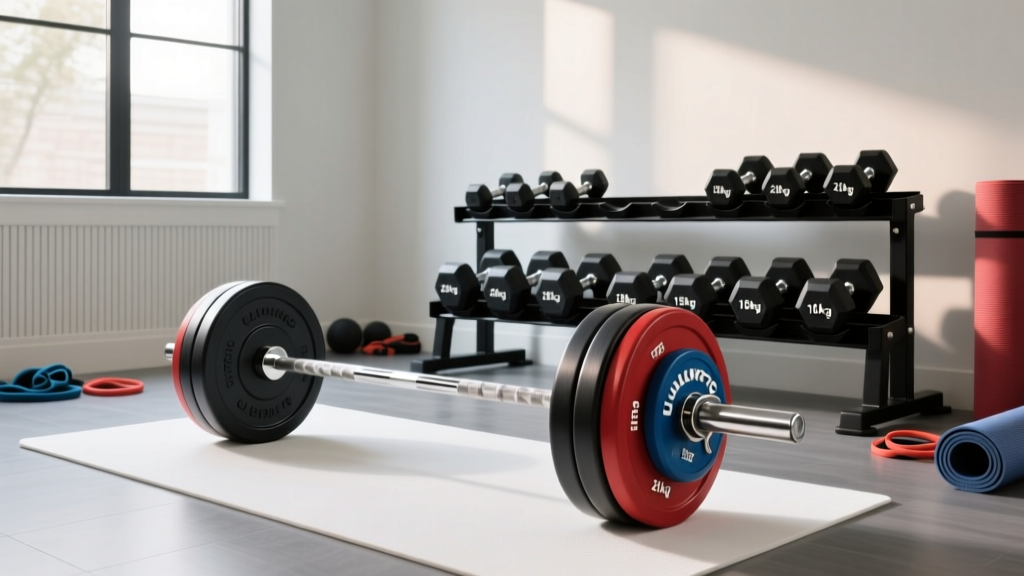
Olympic Barbell Setup and Side Dumbbell Curls: Full Gym Walkthrough
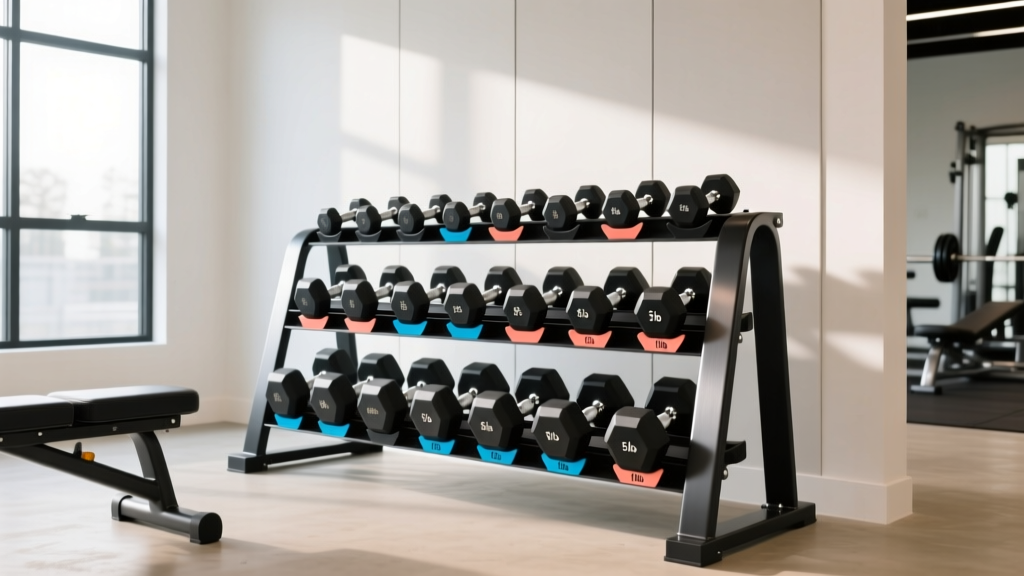
Dumbbell Racks for Weighted Sit Ups: 2026 Storage Market Trends
