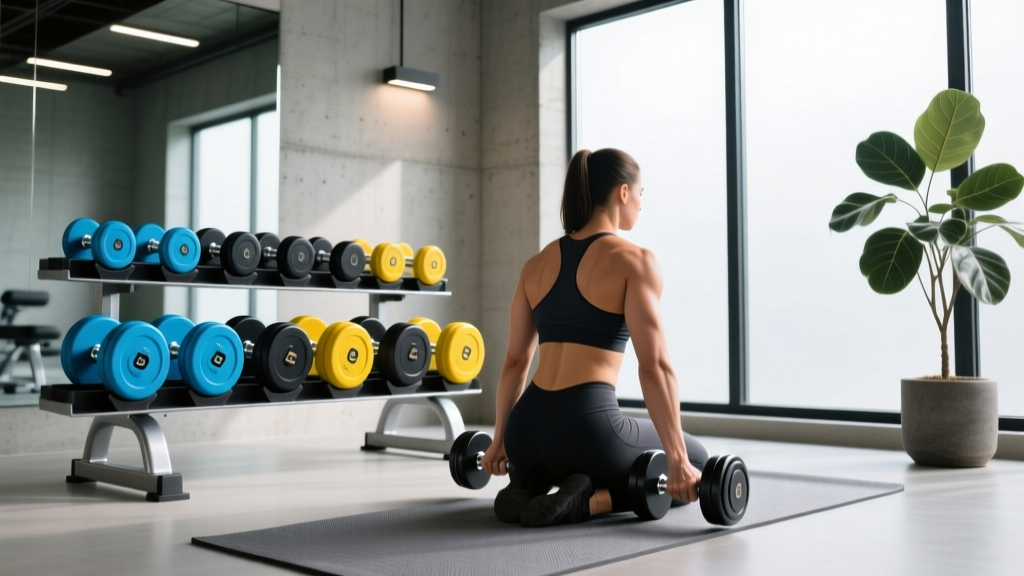
Top Neoprene Dumbbells for a Perfect Dumbbell Chest Fly Workout
Compare top neoprene dumbbells for home use and learn how to optimize your dumbbell chest fly workout with expert grip, form, and progression tips.

The Grip Factor: Why Neoprene Matters for Isolation Movements
When programming a dumbbell chest fly workout at home, the equipment you choose dictates the quality of the eccentric stretch and the safety of your shoulder joints. While adjustable urethane dumbbells dominate heavy pressing, fixed-weight neoprene dumbbells remain the undisputed kings of high-repetition isolation, aerobic conditioning, and rehabilitative floor work. But not all neoprene coatings are created equal.
Neoprene (polychloroprene) is a synthetic rubber that provides a soft, floor-friendly exterior over a cast-iron core. However, during a chest fly, your hands are subjected to significant lateral torque at the bottom of the movement. If the neoprene coating is too smooth, or if the handle diameter is poorly matched to your hand size, grip fatigue will end your set before your pectoralis major reaches true muscular failure. According to biomechanical analyses of the dumbbell fly on ExRx.net, the horizontal adduction required in this movement places immense stabilizing demands on the wrist and forearm flexors. A secure, tactile grip is non-negotiable.
Material Science Insight: Budget neoprene dumbbells often use a dip-coating process that results in a 1.5mm thick, overly glossy finish. Premium models use a molded, vulcanized neoprene sleeve (2.5mm to 3mm thick) that retains a matte, chalk-like texture even when exposed to the chloride ions present in human sweat.Head-to-Head: Top Neoprene Dumbbells for Home Isolation
To determine which fixed-weight dumbbell best supports a high-tension chest fly, we tested three of the most popular neoprene models on the 2026 market, focusing on handle ergonomics, coating durability, and weight distribution.
1. Amazon Basics Neoprene Dumbbell (AB-ND Series)
The Amazon Basics AB-ND series is the volume leader in home fitness. The 10-pound pair (Model AB-ND-10) features a traditional hexagonal cast-iron core dipped in a standard neoprene coating. The handle diameter measures exactly 1.18 inches (30mm), which is ideal for users with smaller hands. However, the glossy finish of the AB-ND series becomes notably slick during high-rep fly sets once palmar sweating begins. At roughly $26.99 per pair in 2026, it is an excellent budget entry, but requires the user to apply liquid chalk for heavy isolation work.
2. Yes4All Neoprene Coated Dumbbells (YN Series)
Yes4All has aggressively captured the mid-tier market with their YN series. The standout feature here is the contoured handle and a slightly thicker, matte-finish neoprene coating (approx. 2.2mm). The handle diameter tapers slightly toward the center, measuring 1.25 inches at the ends and 1.15 inches in the middle. This ergonomic curve naturally locks the hand into place during the eccentric phase of the chest fly, reducing wrist strain. Priced around $28.50 for a 10-pound pair, the YN series offers superior grip security without breaking the bank.
3. Tone Fitness Ergonomic Neoprene Dumbbells
Tone Fitness approaches the neoprene dumbbell from an aerobic and functional fitness perspective. Their handles feature a pronounced, almost aggressive ergonomic curve with a rubberized, textured under-layer beneath the neoprene. While the weight distribution is slightly more compact (the heads are shorter and wider than the Yes4All), this compact profile prevents the dumbbell heads from clanking together at the top of the fly movement. At $32.00 per pair, they are the most expensive of the three, but the tactile feedback is unmatched for mind-muscle connection.
Comparison Matrix: Specs, Pricing, and Fly-Suitability
| Feature | Amazon Basics (AB-ND) | Yes4All (YN Series) | Tone Fitness Ergonomic |
|---|---|---|---|
| Core Material | Sand-Cast Iron | Die-Cast Iron | Sand-Cast Iron |
| Coating Thickness | ~1.5mm (Glossy) | ~2.2mm (Matte) | ~2.5mm (Textured) |
| Handle Diameter | 1.18" (Straight) | 1.15"-1.25" (Tapered) | 1.20" (Curved) |
| Price (10lb Pair, 2026) | $26.99 | $28.50 | $32.00 |
| Chest Fly Grip Rating | 6.5 / 10 | 8.5 / 10 | 9.0 / 10 |
Execution Guide: Optimizing the Dumbbell Chest Fly Workout
Using fixed-weight neoprene dumbbells for chest flys requires a specific approach to tempo and joint alignment. Because you cannot micro-load neoprene dumbbells in 2.5 lb increments like you can with adjustable sets, you must manipulate time under tension (TUT) to stimulate hypertrophy. The Mayo Clinic's strength training guidelines emphasize that controlled, deliberate movements yield better muscle fiber recruitment and reduce injury risk.
- The Setup: Lie on a flat bench or the floor. Press the dumbbells up with a neutral grip (palms facing each other). Maintain a 10-degree bend in your elbows to shift the load away from the biceps tendon and onto the sternal head of the pectoralis.
- The Eccentric (3 Seconds): Lower the weights in a wide arc. Focus on pulling the handles apart rather than just dropping them. The Yes4All and Tone Fitness ergonomic handles excel here, as the taper prevents the dumbbell from rotating in your sweaty grip.
- The Stretch (1 Second Pause): Stop when you feel a deep stretch in the pecs, typically when the elbows are 1-2 inches above the floor or bench. Do not bounce.
- The Concentric (2 Seconds): Squeeze the pecs to bring the weights back up. Stop just before the dumbbells touch to maintain constant tension on the chest muscles.
Pro-Tip for Home Lifters: If your 15 lb neoprene dumbbells feel too light for standard flys, transition to a 1-and-a-half rep style. Perform a full rep, lower to the bottom, come only halfway up, lower again, and then complete the full rep. This doubles the time spent in the stretched position where the most muscle damage (and subsequent growth) occurs.
The 20-Pound Ceiling: When to Retire Neoprene
It is vital to recognize the mechanical limitations of neoprene dumbbells. Most manufacturers cap their neoprene lines at 15 or 20 pounds per hand. For a beginner, a 15 lb dumbbell chest fly workout is highly effective. However, once a lifter can perform 3 sets of 15 reps with 20 lb dumbbells with perfect form, they have hit the 'neoprene ceiling.'
Warning: The Degradation Edge CaseDo not attempt to extend the life of heavy neoprene dumbbells by wrapping them in tape. Over time, the adhesive bonding the neoprene to the cast-iron core degrades due to repeated exposure to sweat and temperature fluctuations in home gyms. If you notice the neoprene sleeve sliding or twisting independently of the iron core during a fly, discard the dumbbell immediately. A shifting sleeve alters the center of gravity mid-rep, which can lead to severe rotator cuff strains.
Once you outgrow the 20 lb ceiling, it is time to transition to a pair of 5-50 lb adjustable urethane dumbbells (such as the PowerBlock Elite or Bowflex SelectTech 1090). Urethane is vastly more durable than neoprene, resists sweat degradation entirely, and allows for the precise 5 lb micro-loading necessary for advanced chest fly progressions.
Frequently Asked Questions
Can I do a dumbbell chest fly workout on the floor?
Yes, the floor fly is an excellent variation, especially for home gym users without an adjustable bench. The floor acts as a physical barrier, preventing your elbows from traveling past your torso. This limits the range of motion slightly but drastically reduces the risk of overstretching the anterior deltoid and pectoral tendon at the bottom of the movement.
Why do my wrists hurt during neoprene dumbbell flys?
Wrist pain during flys is usually caused by grip fatigue leading to wrist extension (bending backward) under load. Neoprene handles that are too thick or too slippery force you to over-squeeze, fatiguing the forearm flexors. Ensure you are using a dumbbell with a handle diameter under 1.3 inches, and consider using lifting straps if your grip fails before your chest muscles do.
How do I clean neoprene dumbbells without ruining the coating?
Never use bleach, ammonia, or alcohol-based sanitizers on neoprene, as these chemicals break down the polychloroprene polymers, causing the coating to crack and peel. Instead, wipe them down after every workout with a microfiber cloth dampened with a mild solution of warm water and dish soap, then dry immediately.
More gear to consider
All reviews
Space-Saving Racks for Chest and Arm Exercises with Dumbbells

EZ vs Straight Bar: Compact Layouts & Weighted Dips Dumbbell
Troubleshooting Barbell or Dumbbell Deadlifts: Power Rack vs Squat Stand
Incline Dumbbell Press vs Shoulder Press: Rack & Storage Budget Guide
Olympic Barbell Weight, Knurling & Dumbbell Hammer Preacher Curl