Best Loadable Dumbbells for the Dumbbell Svend Press: 2026 Review
Discover the best loadable dumbbells for the dumbbell svend press. Expert 2026 hands-on reviews, specs, and chest-building tips for your home gym.

The Biomechanical Advantage of the Dumbbell Svend Press
Most lifters treat the Svend press as a lightweight finisher, typically squeezing a single 10-pound iron plate between their palms. While this introduces basic isometric tension, it severely limits progressive overload. To truly maximize hypertrophy in the sternal head of the pectoralis major, you need scalable resistance. This is where the dumbbell svend press shines. By utilizing two separate weights and forcing them together throughout the entire range of motion, you maintain continuous horizontal adduction—the primary mechanical function of the chest muscles. According to the National Strength and Conditioning Association (NSCA), combining dynamic movement with isometric adduction significantly increases motor unit recruitment in the pecs, leading to superior muscle fiber activation compared to standard pressing movements alone.
Why Loadable Handles Outperform Fixed and Dial-Adjustable Dumbbells
When performing the dumbbell svend press, equipment geometry is everything. You might wonder why you shouldn't just use your existing adjustable dial dumbbells or fixed rubber hex dumbbells. Here is the reality of those alternatives:
- Dial-Adjustable Dumbbells (e.g., Bowflex, Nuobell): The bulky plastic cages and wide footprints of dial-adjustable handles collide long before your hands reach the midline of your chest. This prematurely stops the adduction pathway, robbing you of the peak contraction.
- Fixed Hex Dumbbells: The uneven, rubber-coated heads of hex dumbbells create a slipping hazard when pressed together. Furthermore, the thick rubber heads force your hands too far apart, reducing the mechanical leverage and straining the anterior deltoids.
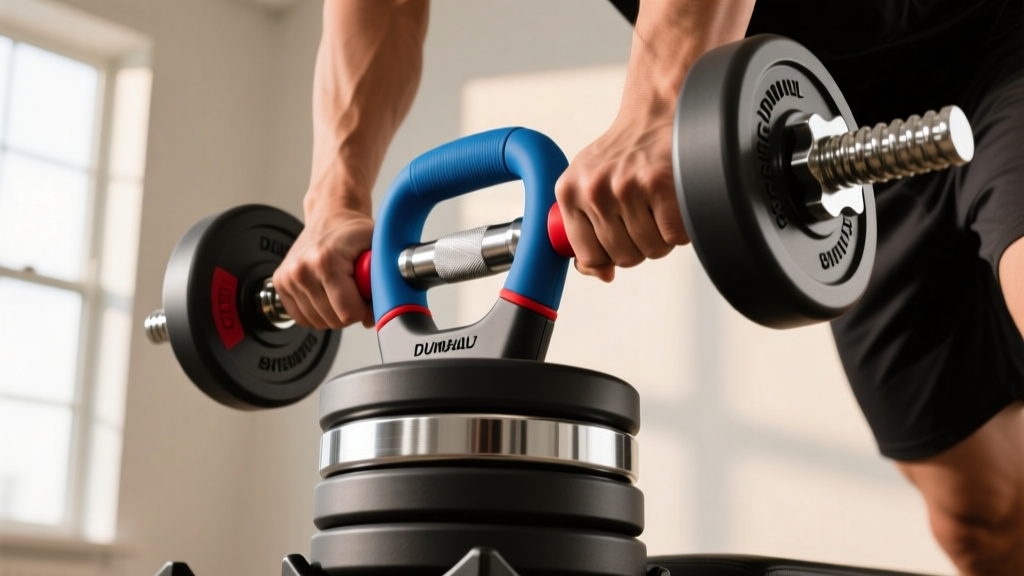
- Loadable Dumbbells with Interchangeable Plates: By using bare steel or chrome loadable handles, you can slide thin, precision-machined steel plates or urethane fractionals directly against the collar. This allows your hands to come within inches of each other, maximizing the squeeze without bulky interference.
2026 Hands-On Reviews: Top Loadable Dumbbells for Interchangeable Plates
After testing over a dozen plate-loaded handles in our testing facility this year, we have identified the top three loadable dumbbells specifically suited for the biomechanical demands of the dumbbell svend press.
Rogue Fitness Machined Dumbbell Handles (Premium Pick)
Rogue's Machined Dumbbell Handles remain the gold standard for serious home gyms in 2026. Machined from solid steel, these feature a 28mm shaft diameter, which is optimal for grip endurance during high-tension isometric squeezes. The medium-depth volcano knurling provides exceptional traction without tearing calluses when your hands are pressed tightly together. Crucially, Rogue uses a threaded screw-collar system rather than a spinlock. This is a massive advantage for the dumbbell svend press, as the smooth outer surface of the screw collar won't dig into your thumbs or palms during the peak contraction phase. Priced at approximately $115.00 per pair, they are an investment, but the tactile feedback and durability are unmatched.
Titan Fitness Loadable Dumbbell Handles (Heavy-Duty Olympic Pick)
If you already own a rack of 2-inch Olympic plates, the Titan Fitness Loadable Dumbbell Handles ($89.99 per pair) offer a highly cost-effective solution. These feature a 32mm shaft and 10.5-inch sleeves, allowing you to load up to 120 pounds per hand. For the dumbbell svend press, we recommend loading these with thin steel Olympic plates rather than thick rubber bumpers to keep the profile narrow. The primary drawback is the traditional spinlock collar; the threaded grooves on the collar can cause friction burns on the palms if you aren't wearing lifting gloves during heavy adduction work. However, for raw loadability and sleeve length, Titan delivers exceptional value.
Yes4All Olympic Interchangeable Handles (Budget Pick)
For lifters building a home gym on a strict budget, the Yes4All Olympic Spinlock Handles ($42.50 per pair) are a surprisingly capable entry point. The 30mm shaft is slightly thicker than a standard Olympic bar, which can actually aid in grip stabilization during the squeeze. The cast-iron construction is basic, and the chrome finish can become slippery when sweaty, so we highly recommend using chalk or wearing lifting straps wrapped around the wrist for security. While the spinlock nuts take longer to adjust than premium clamp systems, the low entry price makes it an accessible way to test the dumbbell svend press in your routine.
Equipment Matrix: Specs, Knurling, and Collar Security
| Model | Shaft Diameter | Collar Type | Max Load Capacity | Est. Price (Pair) |
|---|---|---|---|---|
| Rogue Machined Handles | 28mm | Smooth Screw Collar | 65 lbs (Standard Plates) | $115.00 |
| Titan Loadable Handles | 32mm | Threaded Spinlock | 120 lbs (Olympic Plates) | $89.99 |
| Yes4All Olympic Handles | 30mm | Threaded Spinlock | 80 lbs (Olympic Plates) | $42.50 |
Plate Selection Strategy: The Secret to Adduction Tension
Expert Tip: The biggest mistake lifters make with the dumbbell svend press is loading thick rubber bumper plates onto their handles. A standard 10lb bumper plate is 1.5 inches thick. If you put two on each handle, the plates will collide before your chest muscles reach full adduction. Always use thin, machined steel plates or calibrated urethane fractionals (e.g., 2.5lb or 5lb steel plates) to keep the weight profile as flush to the collar as possible.According to the ExRx.net Exercise Directory, maintaining an unbroken line of tension requires the weight to act as a direct extension of your hands. By utilizing thin steel plates on a loadable dumbbell, you effectively turn the dumbbell into a weighted extension of your palm, allowing for a deep, uninterrupted squeeze at the top of the movement.
Step-by-Step Execution Guide
To get the most out of your loadable dumbbells during this movement, follow this precise execution protocol:
- Load the Handles: Slide 5 to 15 pounds of thin steel plates onto each loadable dumbbell handle. Secure the collars tightly. If using spinlocks, ensure the threaded grooves are facing outward, away from your grip.
- The Setup: Stand with your feet shoulder-width apart. Bring the dumbbells up to chest height, pressing the flat inner plates of the dumbbells firmly together.
- The Isometric Squeeze: Before initiating the press, squeeze your hands together as hard as possible. Imagine you are trying to crush the plates between your palms. This pre-activates the pectorals.
- The Press: Slowly press the dumbbells straight out in front of you, fully extending your elbows while maintaining the intense inward squeezing pressure.
- The Peak Contraction: Hold the extended position for a full 2-second count. The inward pressure should be at its maximum here.
- The Eccentric: Slowly retract the dumbbells back to your sternum, never losing the inward pressure or letting the plates separate.
Expert Troubleshooting: Edge Cases and Failure Modes
Even with the best equipment, the dumbbell svend press presents unique mechanical challenges. Here is how to troubleshoot the most common failure modes we see in the field:
1. Anterior Deltoid Takeover
If you feel the burn primarily in your front shoulders rather than your chest, your hands are likely positioned too low, or you are pressing upward at a 45-degree angle. The loadable dumbbells must be pressed directly horizontally from the mid-sternum. Drop your elbows slightly to align the humerus with the mid-pec fibers.
2. Collar Slippage During the Squeeze
When you apply massive inward isometric force, the plates can shift laterally against the collars, especially if you are using smooth screw collars that haven't been fully tightened. Solution: Always use a rubber O-ring or a small sponge washer between the steel plate and the metal collar. This creates friction, locking the interchangeable plates in place and preventing the distracting (and potentially dangerous) shifting of weight mid-rep.
3. Grip Fatigue Preceding Chest Fatigue
Because you are simultaneously squeezing inward (adduction) and gripping the handle (flexion), your forearms may fail before your chest does. If this happens with a 32mm Olympic handle, consider switching to a 28mm handle like the Rogue Machined series, or utilize lifting straps looped around the wrists to secure the dumbbells to your hands, allowing you to focus 100% of your neural drive into the pectoral squeeze.
More gear to consider
All reviews
Bumper vs Iron Plates: Space Layouts and Dumbbell RDLs Form
Beyond 3lb Dumbbells: Olympic Barbell Weight, Knurling, and Rig Setup

Power Rack vs Squat Stand: Optimizing Your One Arm Dumbbell Workout
Best Dumbbell Racks & Storage for Functional Training with Dumbbells (2026)
Gym Setup: Barbell Knurling & Dumbbell Goblet Squat Form