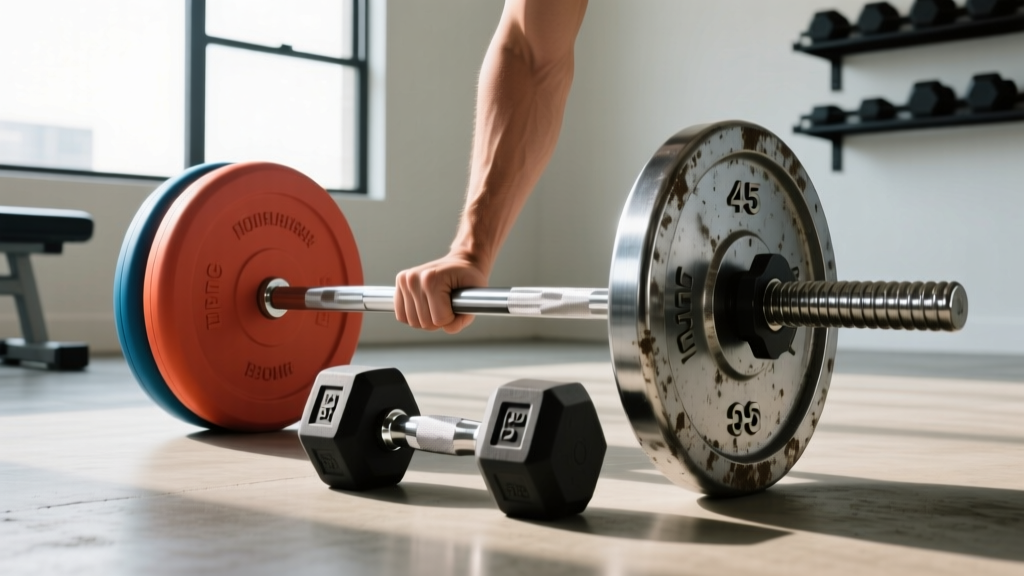
Sitting Dumbbell Press Errors & Olympic Barbell Knurling Guide
Troubleshoot sitting dumbbell press form errors and master our Olympic barbell buying guide for weight tolerances, shaft specs, and knurling types.

The Overhead Pressing Dilemma: Dumbbells vs. Barbells
Overhead pressing is a cornerstone of upper-body strength, shoulder hypertrophy, and athletic performance. However, equipment mismatches and biomechanical errors frequently stall progress and invite injury. Whether you are troubleshooting the sitting dumbbell press to isolate the anterior deltoids or navigating an Olympic barbell buying guide to find the perfect shaft for heavy strict pressing, the margin for error is remarkably slim. In 2026, the fitness equipment market is saturated with hyper-specialized gear, making it harder than ever to distinguish between marketing gimmicks and genuine engineering. This comprehensive troubleshooting guide dissects common execution mistakes in the sitting dumbbell press and provides a definitive breakdown of Olympic barbell weight tolerances, shaft dimensions, and knurling profiles.
Troubleshooting the Sitting Dumbbell Press: Form and Bench Mistakes
The sitting dumbbell press is often prescribed to bypass the lower-back limitations of a standing barbell press while allowing for a greater range of motion. Yet, lifters consistently make three critical errors regarding equipment setup and biomechanics.
1. The 90-Degree Bench Myth
Most lifters assume a perfectly vertical (90-degree) backrest is optimal for the sitting dumbbell press. In reality, a true 90-degree angle forces the humerus into a position that can exacerbate shoulder impingement, particularly for those with poor thoracic mobility. According to BarBend's overhead press exercise mechanics guide, a slight incline of 80 to 85 degrees aligns the scapular plane more naturally, reducing acromioclavicular joint stress while maintaining maximum anterior deltoid activation. When shopping for an adjustable bench, look for models like the Rogue Monster Utility Bench 2.0, which features a precise 85-degree ladder lock. If your commercial gym bench feels slightly reclined, it is likely an 85-degree ergonomic design, not a broken mechanism.
2. Wrist Extension and Grip Width Failures
When pressing heavy dumbbells (e.g., 80+ lbs per hand), the wrist joint becomes the weakest link. A common failure mode is excessive wrist extension, where the dumbbell rests near the fingers rather than directly over the radius and ulna bones. This creates a massive moment arm at the wrist, leading to chronic tendinopathy.
- The Fix: Adopt a neutral or slightly pronated grip, ensuring the handle sits in the meat of the palm, directly above the heel of the hand.
- Equipment Check: If your dumbbells have excessively thick handles (e.g., 40mm+), consider using wrist wraps (18-inch to 24-inch length) to provide structural support during heavy sets of 5-8 reps.
3. Ignoring the Scapular Upward Rotation
Unlike the barbell press, the sitting dumbbell press requires the shoulder blades to rotate upward and around the rib cage at the top of the movement to fully engage the serratus anterior and upper trapezius. Lifters who artificially pin their scapulae down and back (a cue meant for the bench press) will experience a grinding sensation and a premature ceiling on their strength curve.
Olympic Barbell Buying Guide: Weight and Shaft Specs
Transitioning from dumbbells to the barbell strict press introduces a new variable: the bar itself. An Olympic barbell buying guide must prioritize weight tolerance, shaft diameter, and tensile strength, as these factors dictate your micro-loading capabilities and grip comfort.
⚠️ Troubleshooting Warning: Whip vs. StiffnessFor the overhead strict press, you want a stiff bar. Weightlifting bars (designed for the snatch and clean & jerk) have high 'whip' to absorb impact when caught on the shoulders. Using a whippy bar for a strict press will cause the bar to oscillate violently at lockout, wasting your kinetic energy. Look for bars with a tensile strength between 190,000 PSI and 205,000 PSI for the ideal balance of stiffness and durability.
Standard Weight Tolerances and Dimensions
Not all 20kg bars are created equal. Cheap import bars can weigh anywhere from 18kg to 22kg, completely ruining your progressive overload tracking. Premium manufacturers adhere to International Weightlifting Federation (IWF) or International Powerlifting Federation (IPF) tolerances.
| Barbell Type | Nominal Weight | Shaft Diameter | IWF Tolerance | Best Use Case |
|---|---|---|---|---|
| Men's Olympic | 20 kg (44 lbs) | 28 mm | +/- 15 grams | Heavy Strict Press, Snatch |
| Women's Olympic | 15 kg (33 lbs) | 25 mm | +/- 15 grams | Smaller Hands, Technique Work |
| Powerlifting Bar | 20 kg (44 lbs) | 29 mm | +/- 50 grams | Squat, Bench, Deadlift (Stiff) |
Decoding Barbell Knurling for Overhead Pressing
Knurling is the machined cross-hatch pattern on the barbell shaft designed to increase friction. For the strict press, your grip is the only point of contact transferring force from your kinetic chain to the bar. If the knurl is too passive, the bar rolls in your hands; if it is too aggressive, it shreds your calluses during high-volume hypertrophy work. According to BarBend's comprehensive barbell knurling guide, understanding knurl geometry is non-negotiable for serious lifters.
The Three Knurl Profiles
- Hill Knurl: The peaks of the knurl are rounded off. This feels smooth and is common on cheap, general-purpose gym bars. Verdict: Avoid for heavy overhead pressing; chalk will not compensate for the lack of bite.
- Mountain Knurl: Sharp, prominent peaks that dig deeply into the skin. Common on powerlifting deadlift bars. Verdict: Too aggressive for high-rep dumbbell or barbell pressing; it will tear your hands and create excessive friction against the collarbone during the clean or front rack position.
- Volcano Knurl: The gold standard for overhead pressing. The peaks are machined with a small dip in the center, creating four distinct gripping edges per peak rather than one sharp point. Verdict: Provides immense grip security with chalk without tearing the skin. The Rogue Fitness Ohio Bar specifications highlight their proprietary volcano knurl as a primary feature, making it a top-tier choice for 2026 home gym setups (retailing around $245).
The Center Knurl Controversy
IWF rules mandate a center knurl on men's Olympic bars to aid grip during the clean. However, for the strict overhead press, the center knurl can be a major nuisance. As the bar passes the chin and nose, an aggressive center knurl will scrape the skin, causing bleeding and hesitation in the lift. If your primary focus is the strict press and bench press, consider a bar with a very passive, smooth center knurl, or a dual-purpose bar that omits it entirely.
Real-World Maintenance and Failure Modes
Even the best volcano knurl will fail if not maintained. Sweat, dead skin, and magnesium carbonate (chalk) accumulate in the knurl valleys, effectively turning an aggressive bar into a smooth pipe.
Expert Maintenance Protocol: Once a month, scrub your barbell knurl with a stiff brass wire brush and a few drops of 3-in-One oil or specialized barbell oil. Never use steel brushes, as they will strip the zinc or cerakote coating, leading to rapid oxidation and rust, especially in humid garage gyms.
Edge Case: Coating Friction. The finish of the barbell drastically alters how the knurl feels. A bare steel or black oxide bar will feel significantly more aggressive than a Cerakote or bright zinc bar, even if the underlying machined knurl is identical. When buying a bar for overhead work, factor in the coating thickness; Cerakote adds roughly 1-2 mils of thickness, slightly softening the bite of the knurl.
FAQ: Overhead Pressing Gear Troubleshooting
Can I use lifting straps for the sitting dumbbell press?
No. Lifting straps are designed for pulling movements (deadlifts, rows) to bypass grip fatigue. The sitting dumbbell press is a pushing movement requiring active wrist stabilization. Using straps would dangerously compromise your joint integrity and offer zero mechanical advantage.
What is the ideal bench angle for avoiding shoulder pain during dumbbell presses?
Set your adjustable bench to 75 or 80 degrees rather than a full 90 degrees. This slight decline from vertical allows the scapula to move freely and reduces the impingement of the supraspinatus tendon under the acromion process.
Why does my Olympic barbell spin wildly during the strict press?
Olympic bars feature needle or bushing bearings in the sleeves to allow the plates to spin independently of the shaft during explosive Olympic lifts. If the shaft is spinning in your hands, your grip is failing. Improve your grip strength, use more chalk, or switch to a bar with a more aggressive volcano knurl profile.
More gear to consider
All reviews
Rubber Hex vs Urethane: Is the Round Dumbbell Set Obsolete?

Brachialis Workout Dumbbells & Barbell Knurling: Top Buying Mistakes

Best Loadable Dumbbells for the Single Arm Dumbbell Row (2026)

Adjustable Dumbbell Squat Workout: 2026 Setup & Gear Guide

EZ Bar vs Straight Bar & Face Pull Dumbbell Alternative Care