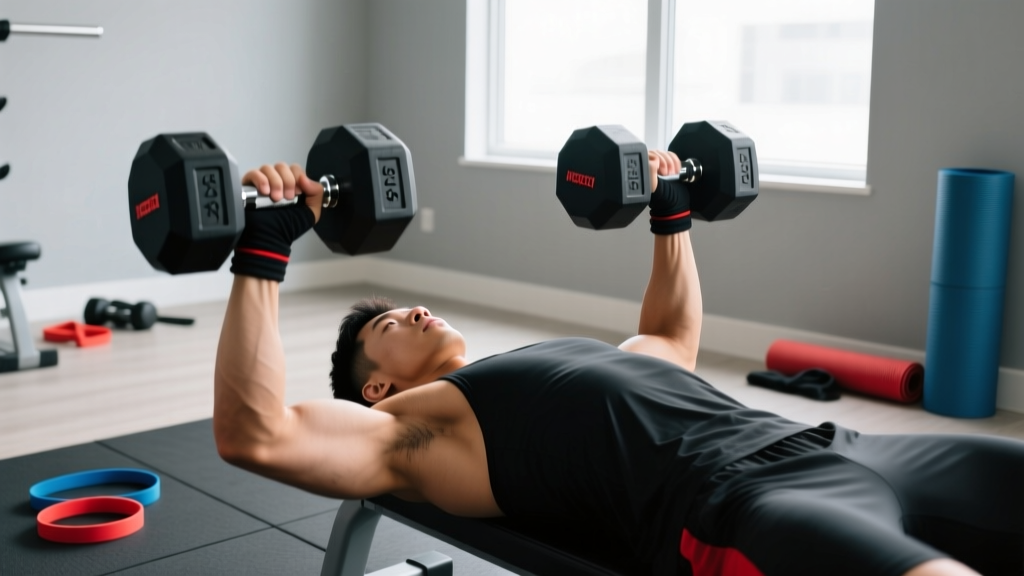
Chest Exercises with Dumbbells: Neoprene Mistakes & Troubleshooting
Master chest exercises with dumbbells at home. Avoid common neoprene coated dumbbell mistakes, fix your form, and troubleshoot your workout routine today.

Building a home gym often starts with a simple purchase: a rack of neoprene-coated dumbbells. They are quiet, they protect your hardwood floors, and they look clean. However, when it comes to executing heavy, high-tension chest exercises with dumbbells, this specific coating introduces unique biomechanical and material challenges that most lifters completely overlook. As of 2026, neoprene sets from brands like CAP Barbell, Yes4All, and Amazon Basics dominate the budget home-gym market, typically priced between $1.50 and $2.50 per pound. But treating them exactly like bare cast iron or premium urethane is a fast track to stalled progress and potential injury.
This troubleshooting guide dissects the most common mistakes lifters make when using neoprene dumbbells for chest development, offering concrete, expert-level solutions to fix your form, protect your equipment, and maximize pectoral hypertrophy.
The Material Reality: Why Neoprene Changes Your Chest Day
Neoprene is a synthetic rubber that provides a soft, compressible outer shell over a cast-iron core. While excellent for dropping lightly on a yoga mat, it lacks the structural rigidity and surface friction required for heavy pressing. According to ExRx.net's kinesiology guide on the dumbbell bench press, optimal pectoral activation requires a secure grip and an unobstructed range of motion (ROM). Neoprene inherently compromises both if you do not adapt your technique.
⚠️ Quick Diagnostic Checklist:- Do your dumbbells clash together at the bottom of a fly?
- Does your grip fail before your chest muscles burn out?
- Is the rubber tearing near the metal handle junction?
If you answered yes to any of these, your equipment is sabotaging your chest day. Read on for the fixes.
Mistake #1: Ignoring Grip Degradation on Flyes and Presses
The most immediate failure point when performing chest exercises with dumbbells made of neoprene is grip slip. Unlike knurled steel or textured urethane, neoprene handles are completely smooth. When your core temperature rises and your palms begin to sweat during heavy incline presses or deep dumbbell flyes, the coefficient of friction on a neoprene handle drops dramatically.
Troubleshooting Grip Slip During Dumbbell Pullovers and Presses
When your grip slips, your forearms and central nervous system (CNS) overcompensate, pulling tension away from the pectoralis major. To troubleshoot this without buying new equipment:
- Switch to Liquid Chalk: Traditional powder chalk ruins home gym floors and degrades the neoprene coating over time. A high-quality liquid chalk (like Spider Chalk or FrictionLabs) applied 60 seconds before your set creates a micro-textured barrier that bonds to the smooth rubber, increasing grip security by up to 40%.
- Utilize the 'False Grip' with Caution: Some lifters wrap their thumbs over the top of the handle (thumbless grip) to reduce forearm fatigue. On smooth neoprene, this is highly dangerous for heavy benching. Stick to a full wrap, but use lifting straps or wrist wraps to stabilize the carpal joints, allowing you to squeeze the smooth handle harder without wrist pain.
- Neutral Grip Pressing: If sweat is uncontrollable, switch your flat bench press to a neutral-grip (palms facing each other) press. This aligns the wrist and reduces the lateral slip risk inherent to smooth handles.
Mistake #2: The 'Bulky Head' ROM Restriction (The Hidden Hypertrophy Killer)
This is the most critical, non-obvious edge case in home gym training. A standard 50lb cast-iron hex dumbbell has a relatively compact head width. However, because neoprene coating adds significant bulk, and budget manufacturers often use wider, lower-density internal casting molds to accommodate the rubber, a 50lb neoprene dumbbell can be up to 30% wider than its iron counterpart.
When you perform chest exercises with dumbbells that have oversized heads—specifically the dumbbell chest fly or the bottom portion of a deep bench press—the bulky rubber heads will physically collide with each other, or smash into your ribcage, long before your pectoral muscles achieve a full, loaded stretch.
'Muscle hypertrophy is heavily driven by loading the muscle in its lengthened position. If your equipment physically blocks you from reaching that deep stretch, you are leaving massive gains on the table.' — ACE Fitness Exercise Library Guidelines
The Troubleshooting Fix: Altering the Angle
If your neoprene dumbbells are clashing at the bottom of the movement, you must alter your biomechanics to bypass the physical width of the weights:
- The Floor Press Workaround: Lie on the floor instead of a bench. Your elbows will hit the floor, stopping the movement safely before the dumbbells clash, while still allowing for heavy tricep and inner-chest overload.
- Decline or Slight Incline Shift: Moving to a 15-degree incline changes the arc of the fly, often providing just enough clearance for the bulky neoprene heads to pass each other without colliding.
- Eccentric-Only Focus: If the stretch is blocked, focus on a slow 4-second eccentric (lowering) phase, stopping exactly one inch before the weights touch, maximizing time-under-tension (TUT) to compensate for the lost ROM.
Mistake #3: Improper Storage Causing Coating Delamination
Neoprene is highly susceptible to UV degradation and ozone cracking. A common mistake home gym owners make is storing their dumbbell rack next to a sunlit window or in an unclimate-controlled garage. Over 12 to 18 months, the neoprene dries out, shrinks, and begins to delaminate (peel away) from the metal handle junction.
When the coating tears near the handle, it creates a sharp, uneven ridge that will tear your calluses during heavy chest presses. The Fix: Store neoprene weights in a cool, dry, UV-blocked room. If delamination has already started, use a sharp utility knife to carefully trim the peeling rubber away from the metal neck, and apply a thin layer of flexible silicone sealant to the exposed metal-to-rubber gap to prevent moisture from rusting the iron core.
Material Showdown: Is Neoprene Right for Heavy Chest Days?
If you are consistently troubleshooting your equipment, it may be time to evaluate your investment. Below is a 2026 market comparison for lifters focusing on heavy chest hypertrophy.
| Material Type | Avg. Cost (per lb) | Grip Quality | Head Bulk / ROM Impact | Best For |
|---|---|---|---|---|
| Neoprene Coated | $1.50 - $2.50 | Poor (Smooth) | High (Restricts deep flyes) | Light floor work, beginners, HIIT |
| Cast Iron Hex | $1.20 - $1.80 | Good (Knurled) | Low (Compact heads) | Heavy pressing, budget hypertrophy |
| Virgin Urethane | $3.50 - $5.00 | Excellent | Minimal (Dense, slim profile) | Advanced lifters, commercial gyms |
Form Troubleshooting: Adapting to Neoprene Constraints
If you are locked into your current neoprene set and need to run a chest hypertrophy block, implement these specific form adjustments to bypass the material's limitations:
1. The 'Pre-Exhaust' Isolation Method
Because your grip will likely fail on heavy 50lb+ neoprene dumbbell presses before your chest does, use a cable fly machine or resistance bands to pre-exhaust the pectorals. Perform 3 sets of band flyes to near failure, then immediately move to your neoprene dumbbell floor press. The lighter weights required post-exhaustion will mitigate the grip-slip issue while still triggering mechanical tension.
2. The 1.5 Rep Technique
To maximize time under tension without needing to hoist massive, bulky neoprene weights that restrict your ROM, use the 1.5 rep method. Lower the dumbbells to the bottom of the press, bring them halfway up, lower them back to the bottom, and then press to full lockout. That equals one rep. This doubles the time spent in the stretched position without requiring heavier, wider dumbbells.
Frequently Asked Questions (FAQ)
Can I use chalk on neoprene dumbbell handles?
Block chalk is not recommended as it cakes into the microscopic pores of the rubber, eventually creating a slippery, hardened paste. Liquid chalk is the superior choice for neoprene handles as it dries cleanly and wipes off with a damp cloth post-workout.
Why do my neoprene dumbbells smell like chemicals?
Cheaper neoprene sets off-gas volatile organic compounds (VOCs) when new, especially when heated by a warm garage or direct sunlight. Wipe them down with a 50/50 mix of white vinegar and water, and leave them in a well-ventilated, shaded area for 72 hours to neutralize the odor.
Are adjustable dumbbells better for chest exercises than fixed neoprene?
For chest hypertrophy, yes. High-quality adjustable dumbbells (like Nuobell or PowerBlock) use dense steel or urethane, offering a compact head profile that allows for a full, unobstructed stretch at the bottom of a fly or press, entirely eliminating the 'bulky head' ROM restriction inherent to fixed neoprene sets.
More gear to consider
All reviews
Rubber Hex vs Urethane Dumbbells for the Dumbbell Bench

Rubber Hex vs Urethane Care for a Home Dumbbell Workout for Women

Back Squats with Dumbbells: Beginner Guide Using Neoprene Weights
Build a Good Dumbbell Workout Routine: Adjustable Guide
Olympic vs Standard Plates: Best for Dumbbell Chest Exercises
