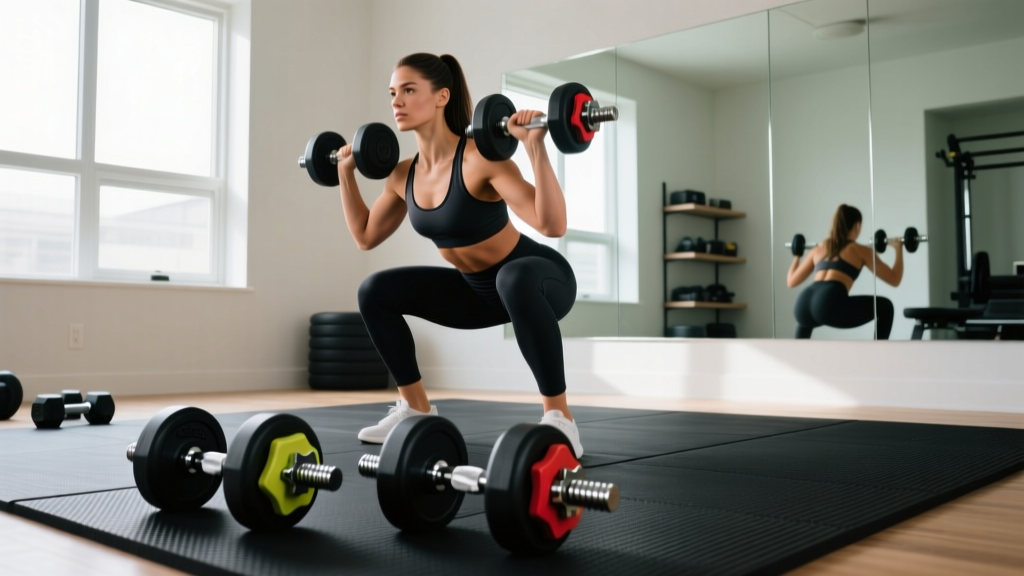
Maintaining Loadable Dumbbells for the Incline Dumbbell Press
Learn how to maintain plate-loaded dumbbells to prevent collar slippage and sleeve wear during heavy incline dumbbell press workouts.

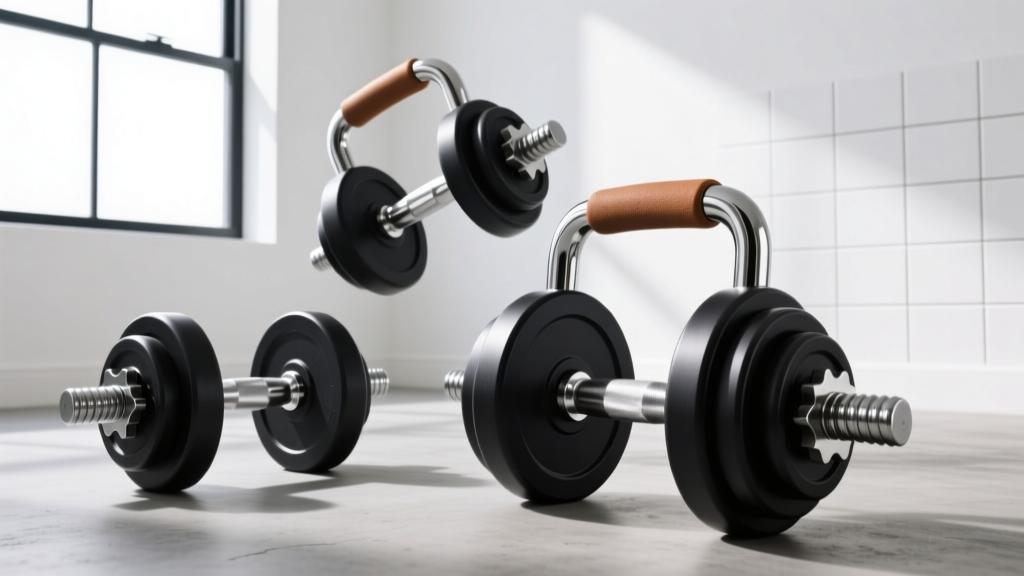
Loadable dumbbells with interchangeable plates are a staple in serious home gyms and commercial facilities. They offer the tactile feel of a traditional barbell, infinite weight progression, and a smaller footprint than a full rack of fixed-weight rubber hex dumbbells. However, because they rely on manual assembly and mechanical collars, they require rigorous maintenance to ensure safety and longevity. This is especially true when performing complex, multi-planar movements like the incline dumbbell press, where equipment failure can lead to severe injury.
The Biomechanical Stress of the Incline Dumbbell Press
When analyzing equipment wear, most lifters focus on the impact of dropping weights. However, the biomechanical breakdown of the incline dumbbell press reveals a unique stress profile for plate-loaded handles. During a flat bench press, the gravitational vector pulls straight down through the sleeve and into the bench. During an incline press (typically set at 30 to 45 degrees), the gravitational pull creates an axial shear force against the collar.
As you press the weight up and slightly back over your clavicle, the plates shift microscopically against the inner sleeve lip. If your collar system is compromised, degraded, or improperly lubricated, this repeated angled friction will gradually inch the collar outward. A shifting center of mass mid-rep on a heavy incline press forces the rotator cuff to compensate instantly, frequently resulting in tears or dropped weights. Proper maintenance of your loadable dumbbell handles is not just about preserving the metal; it is a critical safety protocol.
Common Failure Modes in Plate-Loaded Handles
Before diving into the maintenance routine, it is vital to understand how loadable dumbbells degrade over time. Models like the Rogue Loadable Dumbbell ($175 per handle) and the Titan Fitness Olympic Loadable Dumbbell ($89.99) are built from high-quality steel, but they are not immune to physics and neglect.
1. Thread Stripping on Spinlock Collars
Standard 25mm (1-inch) loadable dumbbells typically use a threaded spinlock mechanism. Over-tightening these collars, especially when sweat acts as a corrosive binding agent, can strip the shallow cut threads on both the sleeve and the nut. Once the thread depth is compromised, the collar will cross-thread under the angled load of an incline press, rendering the handle unsafe.
2. Sleeve Scoring from Bumper Plates
Olympic loadable dumbbells (50mm sleeves) are often paired with fractional bumper plates. The stainless steel or hard chrome sleeves can develop deep longitudinal scratches if plates with damaged brass or steel inserts are forced on and off. These scores create friction points that make plate changes difficult and accelerate the wear of the plate inserts themselves.
3. Knurling Oxidation and Chalk Impaction
The aggressive knurling required to keep a loadable dumbbell secure during heavy pressing acts as a magnet for dead skin, sweat, and gym chalk. Left uncleaned, this mixture forms a hardened, acidic paste in the knurl valleys that initiates localized rust, eventually dulling the grip and compromising the structural integrity of the handle's surface.
Step-by-Step Maintenance Protocol
To keep your loadable dumbbells performing flawlessly and safely for the incline dumbbell press, implement this tiered maintenance schedule.
Weekly: The Dry Brush and Wipe
- Brush the Knurling: Use a stiff nylon bristle brush (never brass or steel wire, which will damage the zinc or chrome plating) to vigorously scrub the knurling while the handle is dry. This dislodges impacted chalk and skin.
- Wipe the Sleeves: Use a microfiber cloth lightly dampened with isopropyl alcohol to wipe down the 50mm or 25mm sleeves. This removes sweat residue that causes surface oxidation.
- Inspect Plate Inserts: Check the brass or steel inserts on your interchangeable plates. If you feel sharp burrs, sand them lightly with 400-grit sandpaper to prevent them from scoring the dumbbell sleeve during your next workout.
Monthly: Thread and Collar Lubrication
- Disassemble Completely: Remove all collars, end-caps, and bushings from the handle.
- Clean the Threads: Spray the threaded sections of standard spinlock handles with a dedicated degreaser or electrical contact cleaner. Wipe away the black sludge that accumulates in the thread grooves.
- Apply Lubricant: Apply your chosen lubricant (see matrix below) sparingly to the threads and the interior bore of the collar. Spin the collar on and off three times to distribute the lubricant evenly.
- Torque Check: For Olympic clamp collars, check the tension of the cam-lever or the tightening bolt. A loose cam-lever will vibrate open during the eccentric phase of a heavy press.
Lubricant Selection Matrix for Gym Equipment
Using the wrong lubricant on gym equipment is a common mistake that attracts dust and creates a slipping hazard. Below is a comparison of common lubricants for loadable dumbbell maintenance.
| Lubricant Type | Best Application | Pros | Cons |
|---|---|---|---|
| Dry PTFE (Teflon) Spray | Knurling, Sleeve surfaces, Threaded spinlocks | Dries instantly, repels dust/chalk, leaves no greasy residue. | Requires reapplication every 4-6 weeks under heavy use. |
| 3-in-One Multi-Purpose Oil | Internal bushings, Cam-lever hinges on clamp collars | Excellent penetration, cheap, readily available. | Stays wet, attracts gym chalk and dust, smells strongly. |
| White Lithium Grease | Heavy-duty bolt threads on Olympic clamp collars | High load-bearing capacity, water-resistant, long-lasting. | Messy, can transfer to hands and barbell knurling if over-applied. |
| Silicone Spray | Rubber/Neoprene weight plates | Restores shine to rubber, prevents drying/cracking. | Extremely slippery; NEVER use on handles, sleeves, or collars. |
Upgrading Your Collar System for Incline Press Safety
If you are exclusively using standard spring-clip collars on 50mm Olympic loadable dumbbells, you are introducing an unnecessary risk factor into your incline dumbbell press. Spring clips lose their tension over time and are highly susceptible to vibrating loose under the dynamic arc of the press.
⚠️ Safety Warning: Never use standard spring clips for heavy incline or decline movements. The angled gravitational pull combined with the micro-vibrations of muscular fatigue will cause the clip to slide outward. Upgrade to lock-jaw collars or competition-style clamp collars (like the Rogue HG Collars or Titan Fitness Clamp Collars) which utilize a mechanical cam-lever or bolt-tension system to physically bind the collar to the sleeve.For 25mm standard handles, consider upgrading from traditional threaded star-nuts to quick-release lever collars, provided the handle has a smooth, unthreaded sleeve end. If your handle is fully threaded, ensure you are using a nylon-insert locknut (nyloc nut) rather than a standard steel spinlock, as the nylon insert provides friction-based resistance against the vibrations of the press.
Storage and Environmental Controls
The longevity of your loadable dumbbells is heavily dictated by how they are stored between sets and workouts. Tossing fully loaded dumbbells onto a hard floor will bend the sleeves, making it impossible to slide plates on and off smoothly.
- Use a Dedicated Tree or Rack: Store handles horizontally on a saddle-style rack or vertically on a dumbbell tree. This prevents the sleeves from resting on concrete, which causes localized moisture buildup and rust.
- Control Humidity: If your garage gym experiences humidity swings above 60%, invest in a dehumidifier. Uncoated steel and even zinc-plated handles will develop surface flash-rust within 48 hours in high-humidity environments.
- Unload Between Sessions: Leaving heavy plates clamped tightly against the collar for weeks at a time can compress the internal polyurethane or brass bushings, leading to a permanent deformation that causes the collar to sit crookedly on the sleeve.
Conclusion
Loadable dumbbells are an incredible investment for progressive overload, but they demand respect and routine maintenance. By understanding the unique axial shear forces generated during the incline dumbbell press, selecting the correct dry lubricants, and upgrading to mechanical clamp collars, you ensure that your equipment remains as safe and reliable as your training program. Implement this weekly and monthly protocol, and your plate-loaded handles will easily outlast a decade of heavy lifting.
More gear to consider
All reviews
What Are Dumbbells Made Of? Neoprene Home Gym Setup Guide
Space-Saving Kettlebell Guide & Arm Exercises at Home with Dumbbells
Neoprene Dumbbell Station Setup: What Does One Arm Dumbbell Row Work?
Kettlebell Care: Cast Iron vs Competition & Dumbbell Reverse Crunch
Curved Dumbbell Handles & Loadable Plates: Value Guide