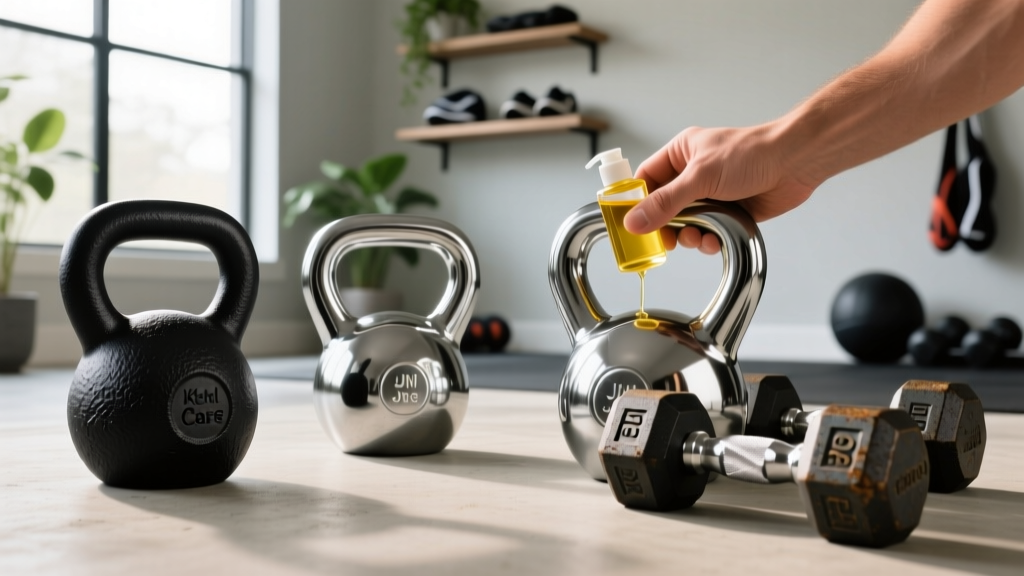
Kettlebell Care: Cast Iron vs Competition & the Dumbbell JM Press
Master kettlebell longevity with our cast iron vs competition maintenance guide. Plus, essential handle care tips for the dumbbell JM press and more.

The Anatomy of Kettlebell Longevity: Cast Iron vs. Competition Steel
Building a resilient home gym in 2026 requires more than just purchasing premium equipment; it demands a rigorous understanding of metallurgy, coating technologies, and environmental maintenance. When navigating the modern kettlebell buying guide: cast iron vs competition, most lifters focus solely on price per pound or handle geometry. However, the true cost of ownership is dictated by how well these tools withstand oxidation, mechanical abrasion, and humidity over a decade of use.
Furthermore, your maintenance protocols must adapt to the specific implements in your arsenal. The care required for a smooth-horned kettlebell differs drastically from the aggressive knurling maintenance required for dumbbells used in specialized upper-body movements like the dumbbell JM press. Below, we break down the exact longevity frameworks for cast iron, competition steel, and knurled dumbbells.
Cast Iron Kettlebells: Fighting the Oxidation Battle
Standard cast iron kettlebells (typically priced between $1.50 and $2.50 per pound in 2026) are poured into sand molds, resulting in a porous surface that is highly susceptible to moisture intrusion. To combat this, manufacturers apply various protective coatings. Understanding your specific coating is the first step in longevity care.
Coating Types and Vulnerabilities
- E-Coating (Electrophoretic Deposition): A thin (1-2 mils) electrostatic finish that preserves the tactile feel of the iron. It offers moderate rust resistance but can wear thin on the handle after heavy chalk use.
- Powder Coating: A thicker (3-5 mils) baked-on polymer resin. As noted by equipment specialists at Rogue Fitness, high-quality powder coating provides superior abrasion resistance, though cheap applications can chip if dropped on concrete, exposing the raw iron beneath.
- Enamel Paint: The most budget-friendly but least durable option. Enamel is brittle and prone to flaking, requiring frequent touch-ups.
Competition Kettlebells: Hollow Cores and Paint Chips
Competition kettlebells ($4.50 to $7.00+ per pound) are engineered to a universal standard: a 35mm handle diameter and a standardized bell dimension, regardless of weight. They are constructed from stamped steel shells, hollow inside, and filled with a precise mixture of sand, steel shot, or ball bearings to achieve the target weight.
The Hidden Threat: Internal Condensation
Because competition bells are hollow, they face a unique longevity threat: internal condensation. If stored in a garage gym with high diurnal temperature swings, moisture can condense inside the bell. Over time, this causes the internal steel shell to rust, weakening the structural integrity and potentially causing the bottom window weld to fail.
Preventative Action: Store competition kettlebells in a climate-controlled environment or use a 50-pint dehumidifier in your garage gym to keep ambient humidity below 45%. Inspect the bottom welding seams annually for micro-fractures.
Maintenance Matrix: Cast Iron vs. Competition vs. Dumbbells
To streamline your weekly equipment care, reference this structural comparison matrix. Note how the maintenance philosophy shifts depending on the tool's intended biomechanical use.
| Equipment Type | Primary Material | Main Vulnerability | Cleaning Tool | Repair Method |
|---|---|---|---|---|
| Cast Iron KB | Gray Iron / Powder Coat | Surface oxidation, handle slickness | Nylon brush, mild soap | Sand & Rust-Oleum enamel |
| Competition KB | Stamped Steel Shell | Internal condensation, paint chips | Microfiber cloth, isopropyl | Automotive touch-up paint |
| Hex Dumbbells | Steel Core / Rubber Urethane | Knurling clogging, rubber degradation | Brass wire brush, 3-in-1 oil | Deep solvent soak, re-knurl |
The Handle Factor: Kettlebell Horns vs. the Dumbbell JM Press
One of the most overlooked aspects of equipment longevity is handle maintenance, which is entirely dictated by the exercise being performed. Consider the dumbbell JM press—a hybrid triceps-dominant pressing movement popularized by powerlifter JM Blakley. When executed with dumbbells (often on a slight decline to target the triceps medial head), the lifter relies on aggressive, deep-volcano knurling to prevent the handle from rolling or slipping out of the sweaty palm during the lockout phase.
Knurling Care vs. Smooth Horn Care
Because the dumbbell JM press demands intense grip friction, the knurling on your dumbbells acts as a magnet for dead skin cells, sweat salts, and lifting chalk. If left uncleaned, this sludge packs into the knurling valleys, creating a breeding ground for bacteria and accelerating steel oxidation from the inside out.
Conversely, kettlebell sport requires the bell to rotate smoothly around the wrist during snatches and cleans. Kettlebell horns must remain relatively smooth. Using a steel wire brush on a kettlebell handle will ruin the glide, causing severe skin tearing during high-rep ballistic work. Therefore, your maintenance toolkit must be bifurcated: brass wire brushes and white lithium grease for dumbbell knurling, and nylon brushes with light mineral oil for kettlebell horns.
Step-by-Step Restoration Protocol for Neglected Iron
If you have acquired a vintage cast iron kettlebell or neglected your current set, follow this precise restoration protocol endorsed by facility maintenance guidelines from the National Strength and Conditioning Association (NSCA) for refurbishing oxidized iron implements.
- Mechanical Stripping: Secure the kettlebell in a vise. Use an 80-grit sanding flap wheel attached to an angle grinder to strip away flaking enamel and deep rust scale. Do not grind the handle; use 120-grit sandpaper by hand to preserve the factory contour.
- Chemical Prep: Wipe the entire bell down with acetone or mineral spirits to remove grinding dust and residual oils. Allow it to flash-dry for 10 minutes.
- Base Coating: Apply a cold galvanizing compound (such as Rust-Oleum Professional Cold Galvanizing Compound) to the bare iron. This zinc-rich primer provides cathodic protection against future rust.
- Top Coating: Once the primer cures (usually 24 hours), apply two light coats of hammered metal enamel. The hammered texture hides future micro-chips and provides a rugged, tactile grip.
- Handle Sealing: For the handle, skip the enamel. Instead, rub in a thin layer of boiled linseed oil or 3-in-1 oil, wiping off the excess to prevent a sticky residue.
Environmental Controls for 2026 Home Gyms
The lifespan of your free weights is inextricably linked to your storage environment. According to modern facility management standards, keeping ambient humidity below 50% is the single most effective way to prevent iron oxidation.
If your home gym is located in an unconditioned garage or basement, invest in a smart dehumidifier that integrates with your home network, allowing you to monitor humidity spikes during seasonal transitions. Additionally, avoid storing kettlebells directly on bare concrete floors, which can wick moisture upward and cause the flat bottoms of cast iron bells to rust. Use high-density EVA foam mats or dedicated steel storage racks to promote airflow beneath the equipment.
Final Verdict on Equipment Lifespan
Whether you are swinging a 32kg competition steel bell, grinding through heavy cleans with a powder-coated cast iron original, or stabilizing your grip for a heavy set of the dumbbell JM press, proactive maintenance is non-negotiable. Cast iron requires vigilant coating protection and moisture management, while competition bells demand environmental control to prevent internal structural failure. By matching your cleaning tools to the specific metallurgy and biomechanical purpose of the implement, you ensure your free weights remain safe, hygienic, and functional for decades of training.
More gear to consider
All reviews
Rubber Hex vs Urethane Dumbbells: Dumbbell Pullover Care Guide

Barbell Collar Types: Heavy Lifts & Dumbbell Complex Workout Safety
Standing Dumbbell Kickbacks: Power Rack vs Squat Rack vs Stand

Upper Body Workout Dumbbells Only vs Competition Kettlebells

Olympic Barbell Setup & Best Lat Exercises With Dumbbells
