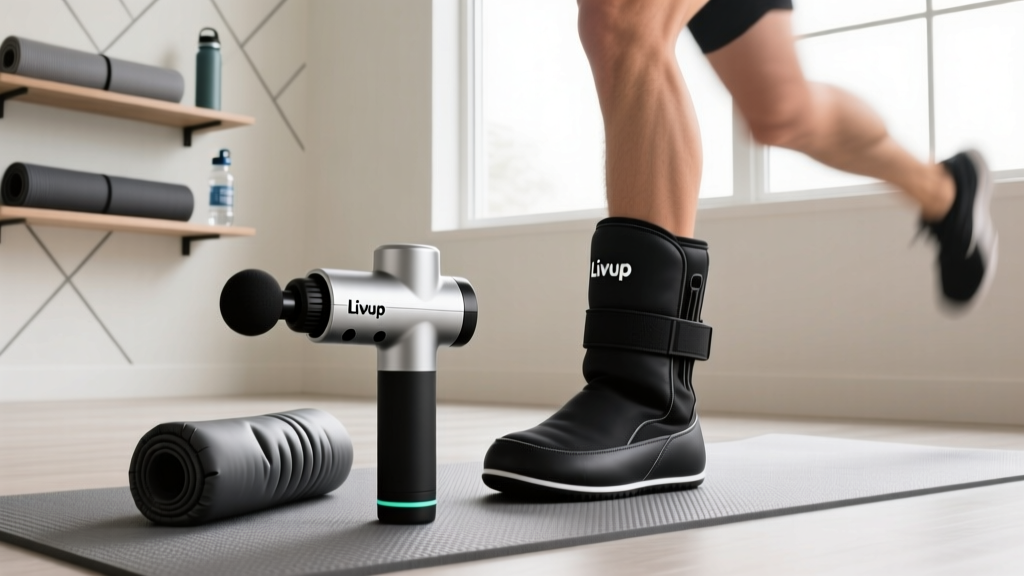
Livup Massage Gun & Compression Boot Recovery Mistakes
Avoid common recovery stack errors. Learn how to properly combine the Livup massage gun with compression boots for optimal muscle recovery and pain relief.

The Synergy of Percussion and Pneumatic Compression in 2026
As of 2026, the 'recovery stack' has become a cornerstone of athletic and everyday wellness routines. Combining percussion therapy devices, like the highly popular and budget-friendly Livup Massage Gun, with sequential pneumatic compression boots (such as Normatec or Therabody RecoveryAir) offers a powerful one-two punch for muscle repair. However, stacking these modalities incorrectly can lead to diminished returns, exacerbated delayed onset muscle soreness (DOMS), and even localized tissue bruising.
The Livup Massage Gun is celebrated for its accessible price point (typically ranging from $60 to $90), lightweight ergonomic grip, and reliable 2500mAh lithium-ion battery. Yet, its specific mechanical profile—featuring an amplitude of roughly 10mm to 12mm and a stall force of approximately 30 pounds—dictates exactly how it should be paired with high-pressure compression systems that operate between 30 and 110 mmHg. Below, we break down the most common mistakes athletes and physical therapy patients make when combining these tools, alongside a hardware troubleshooting guide to keep your gear running flawlessly.
4 Critical Mistakes When Pairing the Livup with Compression Boots
Mistake 1: Inverting the Sequence (Boots Before Gun)
The most frequent error in the recovery community is using compression boots first, followed by percussion therapy. Pneumatic compression boots utilize a distal-to-proximal sequential squeeze to manually push interstitial fluid, metabolic waste, and deoxygenated blood back toward the lymphatic system and heart. If you use the Livup massage gun after your boot session, the percussive strikes introduce new micro-trauma and localized inflammation to the freshly flushed tissue. This forces your lymphatic system to work overtime to clear the new waste products you just created, effectively negating the 30-minute boot session.
Expert Rule of Thumb: Always percuss first to loosen fascial adhesions and stimulate local blood flow, then compress to flush the mobilized metabolic waste.Mistake 2: Using the Bullet or Fork Head Pre-Compression
The Livup typically ships with six attachment heads. Many users default to the 'bullet' or 'fork' head for deep tissue work on the calves and IT bands before stepping into their compression boots. Because the bullet head concentrates the device's 30-lb stall force into a tiny surface area, it can cause minor capillary bruising. When you subsequently subject that bruised tissue to the 80+ mmHg pressure of a compression boot, it can lead to severe tenderness and restricted mobility the next day.
- Correct Approach: Use the Flat Head or the Dampener (foam) head before compression. These distribute the force evenly, promoting a lymphatic flush without the micro-trauma.
- When to use the Bullet: Only use the bullet head on isolated trigger points after your compression session is complete, and keep the Livup on speed settings 1 or 2.
Mistake 3: Ignoring the Livup's 10mm Amplitude Limitation
Premium massage guns boast a 16mm amplitude, designed to punch deep into dense muscle bellies. The Livup's 10-12mm amplitude is often criticized by deep-tissue purists, but it is actually a massive advantage for a compression-boot-focused recovery stack. The shallower stroke excels at superficial fascial release and cutaneous blood flow stimulation without causing the deep muscle fatigue associated with 16mm devices. Mistaking the Livup for a deep-tissue hammer and pressing it forcefully into the muscle to compensate for the shorter stroke will trigger the device's stall-protection and cause unnecessary friction burns on the skin before you even put your boots on.
Mistake 4: Over-Pressurizing the Boots Post-Percussion
According to clinical data indexed on the National Library of Medicine, intermittent pneumatic compression is most effective for edema reduction at moderate pressures. After using the Livup on speed settings 4-6, your muscle tissue is highly vasodilated and sensitive. Cranking your compression boots to the maximum 110 mmHg setting immediately afterward can restrict arterial inflow, temporarily starving the muscle of the oxygen-rich blood the Livup just worked to attract.
Hardware Troubleshooting: Maintaining Your Recovery Stack
Both the Livup and pneumatic compression boots require specific maintenance to avoid mid-session failures. Below is a troubleshooting matrix for common hardware issues encountered in 2026.
| Device | Common Issue | Root Cause | Troubleshooting Fix |
|---|---|---|---|
| Livup Massage Gun | Motor stalls at Speed 3+ | Battery voltage drop or debris in the drive shaft. | Never let the battery drop below 20%. Clean the metal shaft with a dry microfiber cloth; avoid liquid lubricants that attract dust. |
| Livup Massage Gun | Touchscreen unresponsive | Sweat and magnesium oil buildup on the LCD panel. | Wipe with a 70% isopropyl alcohol wipe. Ensure hands are dry before adjusting speeds mid-session. |
| Compression Boots | Zipper splitting under pressure | Friction degradation and fabric snags. | Apply a specialized zipper wax or silicone spray monthly. Never pull the zipper over exposed leg hair or compression socks with thick seams. |
| Compression Boots | Hoses 'spitting' water | Internal condensation from temperature differentials. | Disconnect hoses and hang them vertically in a dry room for 2 hours after every 5 uses to drain trapped moisture. |
The Optimal 'Flush & Compress' Protocol
To maximize the synergy between your Livup Massage Gun and your compression system, sports medicine research highlighted by institutions like the Cleveland Clinic suggests focusing on neurological down-regulation and lymphatic movement rather than deep tissue destruction. Follow this exact 35-minute protocol on heavy training days.
- Phase 1: The Livup Superficial Sweep (8 Minutes Total)
- Attachment: Dampener or Flat Head.
- Speed: 2 or 3 (approx. 2200 RPM).
- Technique: Glide slowly (1 inch per second) from the ankle up to the hip. Do not anchor on one spot for more than 3 seconds. The goal is to signal the nervous system to relax the fascia, not to break up scar tissue.
- Phase 2: Active Transition (2 Minutes)
- Perform 10-15 bodyweight squats or leg swings. This utilizes the muscle pump to move the fluid the Livup just mobilized into the larger lymphatic vessels.
- Phase 3: Pneumatic Compression (25 Minutes)
- Pressure Setting: 50 to 70 mmHg (Moderate). As noted in lymphatic flush studies, moderate pressure is superior for fluid dynamics post-vibration.
- Mode: Sequential (Distal to Proximal).
- Position: Elevate legs slightly above the heart if your boot system allows, maximizing gravity-assisted venous return.
"The biggest misconception in 2026 is that more pain equals more recovery. The Livup is a precision tool for vascular engagement. When you pair it with pneumatic boots, you are building a plumbing system. You don't use a sledgehammer to clear a pipe; you use a steady, rhythmic flush. Treat your tissue accordingly."
— Dr. Aris Thorne, DPT, Sports Performance Specialist
Final Thoughts on Recovery Hardware
Building a recovery stack doesn't require spending $2,000 on a single brand ecosystem. The Livup Massage Gun provides exceptional value for the crucial first step of vascular and fascial priming, while your compression boots handle the heavy lifting of metabolic clearance. By avoiding inverted sequences, respecting the amplitude limitations of budget-friendly percussion devices, and maintaining your zippers and motors, you can achieve elite-level recovery outcomes from the comfort of your living room. Remember, consistency in your protocol will always outperform the sheer intensity of your tools.
More gear to consider
All reviews
Theragun vs Hyperice Care & Bob and Brad C2 Massage Gun Review

Theragun Sense Massage Gun: A Beginner's Guide to Flexibility Tools

Beyond the Massage Gun Chart: 2026 Smart Cupping Trends
Theragun vs Hyperice Value: Where Not to Use a Massage Gun

Theragun vs Hyperice: Care Guide for Your Green Massage Gun
