
Ekrin Athletics Massage Gun & Stretching Tools: Beginner Guide
Learn how to pair your Ekrin Athletics massage gun with stretching equipment. A beginner-friendly step-by-step flexibility guide for better mobility.

The Synergy of Percussive Therapy and Mechanical Stretching
If you have ever felt like you are hitting a brick wall with your flexibility routine, you are not alone. Static stretching alone often triggers the myotatic reflex—a neurological response where your muscle spindle fibers contract to protect the tissue from overstretching. This is where integrating an Ekrin Athletics massage gun into your flexibility protocol changes the game. By using percussive therapy immediately before utilizing stretching equipment, you can effectively down-regulate the nervous system, alter the thixotropy (fluidity) of your fascia, and achieve a deeper, safer range of motion.
This beginner-friendly, step-by-step guide will show you exactly how to pair your Ekrin device with specific stretching tools to unlock stubborn joints and improve your overall mobility.
The Science: Why Ekrin First?
According to research published in the Journal of Sports Science & Medicine, percussive therapy significantly increases acute range of motion without the performance deficits often associated with prolonged static stretching. The Ekrin B37 and B37S models deliver up to 56 lbs of stall force and 3200 RPM. When applied to a muscle belly for 60 to 120 seconds, this mechanical vibration stimulates the Golgi Tendon Organs (GTOs), signaling the brain to relax the muscle's resting tone. Once the neurological "brakes" are released, mechanical stretching tools can safely lengthen the tissue.
Essential Flexibility Tools to Pair with Your Ekrin
You do not need a massive gym setup to see results. Here is a comparison matrix of the most effective, budget-friendly stretching equipment to pair with your percussive therapy routine.
| Stretching Tool | Best Target Areas | Avg. Cost | Ideal Ekrin Attachment |
|---|---|---|---|
| 8-Loop Nylon Stretch Strap | Hamstrings, Calves, Shoulders | $10 - $18 | Flat Head or Large Round |
| Incline Slant Board | Soleus, Gastrocnemius, Achilles | $30 - $55 | Fork Head or Dampener |
| Yoga Blocks (Cork/EVA) | Hips, Thoracic Spine, Pec Minor | $15 - $25 | Flat Head |
| PNF Stretching Machine (Leg) | Hip Flexors, Hamstrings, Adductors | $150 - $300 | Large Round |
Step-by-Step Routine: Hamstrings & Calves
Tight posterior chains are the most common complaint among beginners. This protocol utilizes the Ekrin B37 alongside a standard stretching strap and a slant board.
Step 1: Percussive Neuromuscular Priming
- Attachment: Snap on the Flat Head attachment.
- Settings: Power on your Ekrin B37 to Speed 3 (approx. 2400 RPM). This is the sweet spot for neurological down-regulation without causing tissue bruising.
- Execution: Glide the device over the belly of the hamstring (biceps femoris and semitendinosus) for 90 seconds per leg. Apply only 1 to 2 lbs of pressure—let the 56 lbs of stall force do the work. Avoid the back of the knee joint.
- Calf Prep: Switch to the Fork attachment. Run it along the sides of the Achilles tendon and directly over the gastrocnemius muscle for 60 seconds.
Step 2: Active Isolated Stretching (AIS) with a Strap
The Mayo Clinic recommends dynamic and active stretching methodologies for safe flexibility gains. Lie on your back, loop your 8-loop nylon strap around the arch of your foot, and keep your leg straight.
- Actively contract your quadriceps to lift your leg until you feel a mild tension.
- Use the strap to gently pull the leg 5 degrees further into the stretch.
- Hold for exactly 2 seconds, then release.
- Repeat 10 to 12 times per leg. Because the Ekrin suppressed the stretch reflex, you will notice a significantly higher apex on your 5th repetition compared to your 1st.
Step 3: Sustained Load via Slant Board
Stand on the slant board with your heels at the bottom edge. Keep your knees completely locked. Lean forward slightly from the hips. Hold this passive stretch for 90 seconds. The prior percussive therapy on the calf bellies will allow the stretch to penetrate deeper into the soleus and Achilles complex without triggering spasms.
Step-by-Step Routine: Thoracic Spine & Shoulders
Desk workers and lifters often suffer from kyphotic posture and tight pectorals. Here is how to use the Ekrin B37S (which features a 15-degree angled handle, making it superior for upper-body reach) with yoga blocks.
Step 1: Targeted Percussive Release
- Attachment: Use the Dampener attachment to protect bony prominences like the collarbone and scapula.
- Settings: Speed 2 (approx. 1800 RPM).
- Execution: Use the angled handle of the B37S to reach your own pectoralis minor (just below the collarbone, near the shoulder joint). Apply light pressure for 45 seconds per side. Next, target the latissimus dorsi along the side of your rib cage.
Step 2: Block-Supported Thoracic Extensions
Place two cork yoga blocks horizontally on the floor, set to their medium height. Lie back so the blocks sit directly under your thoracic spine (the mid-back, just below the shoulder blades). Support your head with your hands, keep your glutes on the floor, and gently arch your upper back over the blocks. Take 10 deep diaphragmatic breaths, allowing the rib cage to expand now that the lats and pecs have been released by the Ekrin.
⚠️ Safety Callout: When NOT to Use Percussive TherapyNever use your Ekrin Athletics massage gun directly over joints, the spine, or the front/sides of the neck. Furthermore, if you are dealing with an acute muscle tear, severe strain, or localized inflammation, skip the massage gun and stretching tools entirely. Consult a physical therapist. Percussive therapy is for recovery and mobility prep, not acute injury rehabilitation.
Common Beginner Mistakes to Avoid
Even with the best equipment, poor technique will yield poor results. Avoid these frequent pitfalls:
- Over-pressurizing the Ekrin: Pushing the device deep into the tissue does not increase flexibility; it causes micro-trauma and bruising. The 3200 RPM vibration is what alters the tissue tone, not brute force.
- Stretching Cold Tissues: While the Ekrin increases local blood flow, it is still best to perform 3-5 minutes of light cardiovascular movement (like jumping jacks or cycling) before starting your percussive and stretching routine.
- Ignoring the Antagonist: If your hamstrings are tight, your hip flexors might be overactive and pulling your pelvis into an anterior tilt. Always assess and stretch the opposing muscle groups.
"Flexibility is not just about the physical length of the muscle; it is about the nervous system's willingness to allow that length. Percussive tools act as a neurological key to unlock the body's natural range of motion."
— Sports Biomechanics & Recovery Principles
Frequently Asked Questions
How long should I wait between using the Ekrin and stretching?
Zero minutes. The neurological down-regulation provided by the percussive therapy is acute and temporary. You should transition into your mechanical stretching equipment (straps, blocks, or machines) within 30 to 60 seconds of finishing your Ekrin routine for maximum benefit.
Which Ekrin model is best for flexibility routines?
Both the B37 and B37S are exceptional. However, if your flexibility routine heavily targets the upper body (lats, traps, pecs), the Ekrin B37S (retailing around $259) is highly recommended due to its 15-degree angled handle, which drastically reduces wrist strain when reaching your own back and shoulders. For lower-body dominant routines, the standard B37 ($229) is perfectly adequate.
Can I use the Ekrin on my stretching days if I didn't work out?
Absolutely. The American Heart Association and other major health organizations advocate for regular flexibility work independent of cardiovascular or resistance training. Using your Ekrin on rest days to prep tissues for deep stretching is an excellent way to maintain joint health and reduce daily stiffness.
Final Thoughts on Building a Mobility Habit
Combining an Ekrin Athletics massage gun with dedicated stretching equipment transforms flexibility work from a painful, frustrating chore into an efficient, science-backed recovery ritual. By respecting the neurological components of muscle tension and utilizing tools like stretch straps and slant boards to mechanically lengthen the primed tissue, you will see measurable improvements in your range of motion within just two to three weeks of consistent practice. Start with the 10-minute routines outlined above, listen to your body's feedback, and enjoy the freedom of pain-free movement.
More gear to consider
All reviews
Heat Pads vs Wraps: Troubleshooting & MySQL Recovery Tool Fixes

Home Cold Plunge Tub and Sonic Handheld Percussion Massage Gun Care

Theragun vs Hyperice: Beyond the Toloco EM26 Massage Gun Manual
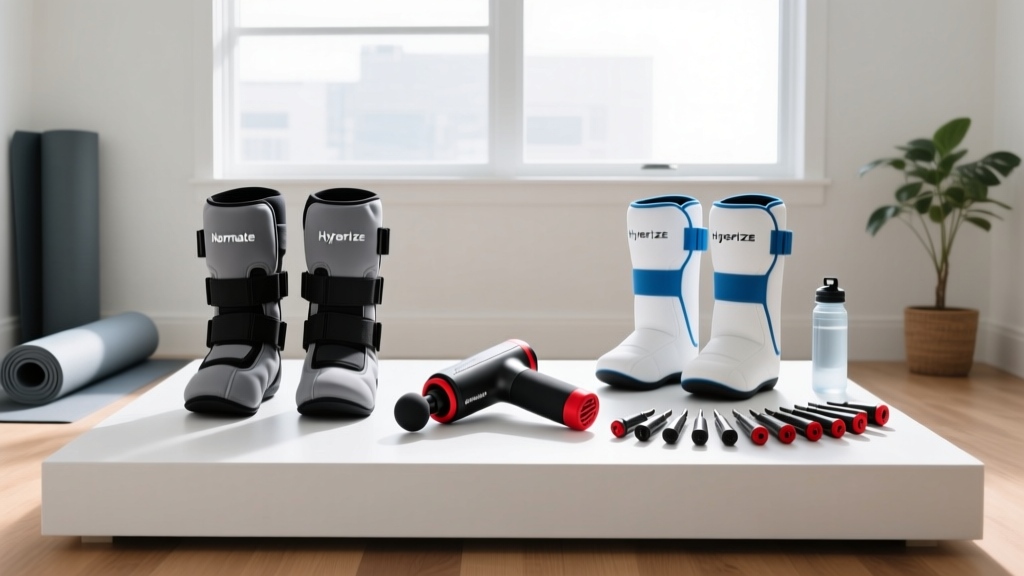
Recovery Station Setup: Boots & 16 Head Massage Gun Deep Tissue

Foam Roller Density Guide: Can You Use a Massage Gun While Pregnant?
