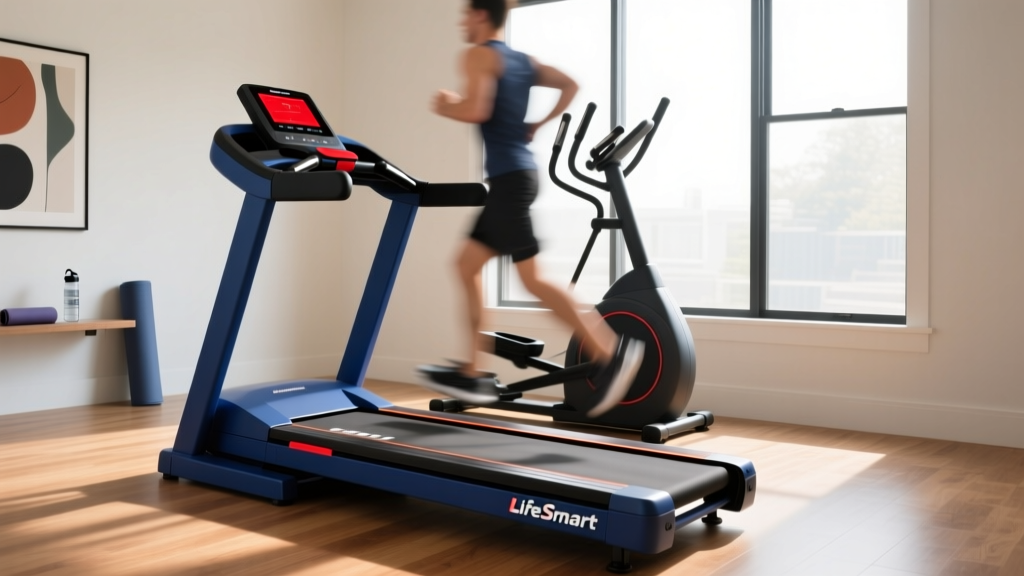
LifeSmart TM2202 3 in 1 Treadmill vs Elliptical: Value Analysis
Is the LifeSmart TM2202 3 in 1 treadmill a smart budget hack? We break down its true value against dedicated ellipticals and treadmills for 2026.

The Home Cardio Dilemma: Dedicated Machines vs. The Budget Hybrid
When outfitting a home gym on a strict budget, fitness enthusiasts inevitably face the classic 'elliptical vs treadmill' debate. Do you prioritize the high-impact, bone-density-building benefits of a treadmill, or the low-impact, full-body engagement of an elliptical? In the current 2026 fitness equipment market, inflation has pushed the price of entry-level dedicated machines from brands like Horizon and Schwinn well past the $600 mark.
Enter the budget wildcard: the LifeSmart TM2202 3 in 1 treadmill. Marketed as a hybrid solution combining a walking treadmill, an elliptical strider, and a stepper, it promises the versatility of a commercial gym for under $300. But does this multi-functional approach actually deliver biomechanical value, or is it a masterclass in engineering compromises? In this budget breakdown, we dissect the true cost of ownership, real-world failure modes, and the caloric ROI of the LifeSmart TM2202 compared to dedicated cardio machines.
Biomechanical Baseline: Elliptical vs. Treadmill
Before evaluating the hybrid, we must establish what dedicated machines actually offer your body. The choice between an elliptical and a treadmill fundamentally comes down to joint loading and muscle recruitment.
- Treadmills: Provide a predictable, consistent surface for walking or running. The impact forces (up to 2.5 times your body weight) stimulate osteogenesis, improving bone mineral density. However, this repetitive impact can exacerbate knee and lower back issues.
- Ellipticals: Utilize a continuous stride path that eliminates the heel-strike impact. They actively recruit the glutes, hamstrings, and upper body (via moving arm poles), making them ideal for active recovery or users with joint degeneration.
According to the Mayo Clinic, elliptical machines offer a low-impact aerobic alternative to treadmills, significantly reducing stress on the knees, hips, and back while providing comparable cardiovascular benefits.
Deconstructing the LifeSmart TM2202 3 in 1 Treadmill
The LifeSmart TM2202 attempts to bridge the gap between these two modalities by housing a treadmill belt and elliptical arms on a single, shared steel chassis. Priced typically between $249 and $299, it targets the ultra-budget demographic. Here is a deep dive into the actual specifications you are getting for that price point:
Motor and Belt Limitations
The treadmill component is powered by a 1.25 HP (Continuous Duty) motor. In the 2026 landscape of home fitness, a 1.25 HP motor is strictly rated for walking only. Attempting to jog on this machine will outpace the motor's torque capacity, causing belt hesitation and rapid heat buildup. Furthermore, the running surface measures a cramped 40 inches long by 13 inches wide. For context, a standard entry-level dedicated treadmill like the Horizon T101 offers a 55" x 18" belt. The TM2202's short belt forces taller users (over 5'8") to clip their natural stride, altering their gait biomechanics and potentially causing hip flexor strain.
The Elliptical and Stepper Mechanics
Unlike dedicated ellipticals that use heavy front-drive flywheels (typically 15-20 lbs) to generate momentum, the elliptical function on the TM2202 is largely manual or relies on a low-tension shared belt system. The stride length is approximately 12 inches, which feels much closer to a stair stepper than a true elliptical glide.
Value Matrix: True Cost of Ownership
To understand the financial reality of the 'elliptical vs treadmill' debate, we must look beyond the sticker price. Below is a comparative breakdown of the LifeSmart hybrid versus entry-level dedicated machines.
| Feature / Metric | LifeSmart TM2202 (3-in-1) | Horizon T101 (Dedicated Treadmill) | Schwinn 430 (Dedicated Elliptical) |
|---|---|---|---|
| Average Retail Price | $279 | $599 | $699 |
| Primary Drive System | 1.25 HP Motor / Manual Stride | 2.5 HP Motor | 18 lb Flywheel (Magnetic) |
| Footprint (L x W) | 50" x 25" | 70" x 32" | 70" x 28" |
| Max User Weight | 250 lbs | 300 lbs | 300 lbs |
| Warranty (Frame/Parts) | 1 Year / 90 Days | Lifetime / 1 Year | 10 Years / 1 Year |
| Estimated Lifespan | 1 - 3 Years | 7 - 10+ Years | 7 - 10+ Years |
Engineering Trade-Offs and Real-World Failure Modes
When manufacturers combine three distinct machines into one sub-$300 chassis, physics and economics demand compromises. Based on teardowns and long-term user reports, here are the specific failure modes you should anticipate with the LifeSmart TM2202 3 in 1 treadmill:
- Pivot Point Degradation: The elliptical arms on the TM2202 connect to the base using plastic bushings rather than sealed steel bearings. Under the lateral torque of a 200+ lb user, these bushings wear down rapidly, leading to a pronounced squeak and a 'wobbly' arm feel after roughly 100 hours of use.
- Thermal Overload: Because the 1.25 HP motor is tasked with moving the belt while the user's weight is distributed unevenly across the combo frame, the motor runs hotter than a dedicated treadmill. Users frequently report the machine triggering its internal thermal shutoff switch during 45+ minute continuous walking sessions.
- Frame Flex: Dedicated ellipticals weigh upwards of 130 lbs to anchor the user's momentum. The TM2202 weighs roughly 75 lbs. During vigorous elliptical striding, the lightweight frame exhibits noticeable lateral flex, forcing the user to grip the stationary handles tightly, which defeats the purpose of a hands-free core workout.
Caloric ROI: What Does the Science Say?
If your primary goal is weight management, the modality you choose dictates your caloric expenditure. According to Harvard Health Publishing, a 155-pound person burns approximately 324 calories in 30 minutes on an elliptical, compared to 252 calories walking at a 3.5 mph pace on a treadmill.
However, the LifeSmart TM2202 complicates this data. Because the elliptical stride is only 12 inches (compared to the 20-inch stride on the Schwinn 430), your range of motion is severely restricted. You are essentially performing a shallow stepper motion rather than a full-leg elliptical glide. Consequently, the actual caloric burn on the TM2202's elliptical function is likely 15-20% lower than a dedicated machine, as the glutes and hamstrings are not fully engaged at the bottom of the shortened stride.
The Verdict: Where Should Your Budget Go?
The 'elliptical vs treadmill' debate cannot be solved by a machine that attempts to be both without mastering either. The LifeSmart TM2202 3 in 1 treadmill is not a scam, but it is a highly specialized tool that only fits a very narrow demographic.
Who Should Buy the LifeSmart TM2202?
- Apartment Dwellers with Severe Space Constraints: If you have less than 10 square feet of dedicated floor space and cannot store two separate machines.
- Active Recovery Walkers: Users who only want a light, 20-minute daily walk while working at a standing desk, and occasionally want to use the stepper arms for light upper-body mobility.
- Strict Sub-$300 Budgets: If you absolutely cannot stretch your budget to $600 and accept that this is a 2-year disposable appliance, not a lifetime fitness investment.
Who Should Buy Dedicated Machines Instead?
- Runners and Joggers: The TM2202 cannot safely accommodate running. You must buy a dedicated treadmill with at least a 2.5 HP motor and a 55-inch belt.
- Users with Joint Pain Seeking True Low-Impact: The short stride and frame wobble of the TM2202 will aggravate knees and hips. Invest in a dedicated front-drive elliptical with a 20-inch stride and a heavy flywheel.
- Tall Users (Over 5'10"): The 40-inch treadmill belt and 12-inch elliptical stride will force you into unnatural, cramped biomechanical patterns.
Final Takeaway: In the realm of home cardio equipment, the adage 'you get what you pay for' remains absolute. The LifeSmart TM2202 3 in 1 treadmill offers undeniable upfront savings and a compact footprint. However, when you factor in the shortened lifespan, restricted biomechanics, and high risk of post-warranty mechanical failure, financing a dedicated entry-level treadmill or elliptical remains the superior long-term value analysis for serious home fitness in 2026.
More gear to consider
All reviews
Rowing Machine Guide: Technique & Universal Remote for Treadmill Tech

Air Bike vs Assault Bike: Duke Treadmill Score by Age Training
Lorde Treadmill Motor HP Guide: Troubleshoot Mistakes

Elliptical vs Treadmill: Is the 95ti Treadmill Worth the Cost?

Fixing Motor Stalls at 4 Miles Per Hour on Treadmill: HP Sizing Guide
