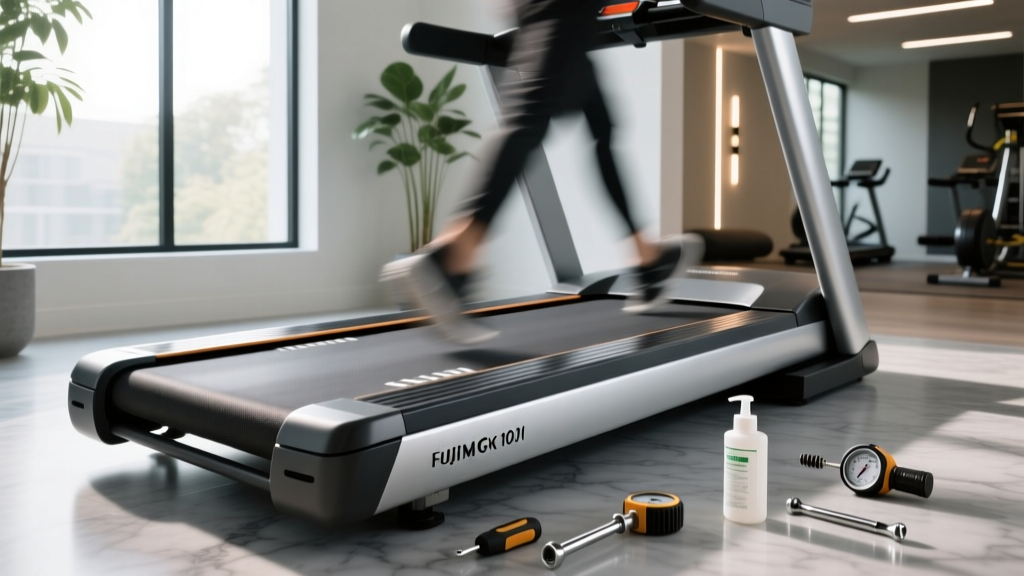
Treadmill and Back Pain: Top Rowing Machines to Switch to in 2026
Struggling with treadmill and back pain? Compare the top 3 rowing machines for 2026 and learn the spine-safe technique to build a pain-free posterior chain.

The Biomechanics: Why Treadmill and Back Pain Go Hand-in-Hand
If you have been researching the correlation between treadmill and back pain, you are not alone. While walking and running are excellent for cardiovascular health, the repetitive impact forces generated on a treadmill belt can compress the intervertebral discs in your lumbar spine. According to the Mayo Clinic, repetitive stress and poor shock absorption are primary culprits for chronic lower back aches in runners and avid walkers.
Furthermore, treadmill users often develop a forward-leaning posture, especially when increasing the incline or holding onto the handrails. This anterior pelvic tilt places immense shear force on the lumbar vertebrae. The solution? Transitioning to a non-impact, posterior-chain-dominant cardio machine. Enter the rowing machine.
Rowing eliminates ground reaction forces entirely while actively strengthening the erector spinae, glutes, and hamstrings—the exact muscle groups required to support a healthy spine. However, not all rowers are created equal, and poor technique can negate the benefits. Below is our definitive 2026 buying guide and technique manual for escaping treadmill-induced back pain.
Head-to-Head: Top 3 Rowing Machines for Spinal Health (2026)
When selecting a rower specifically to rehabilitate or prevent back pain, you must evaluate the seat ergonomics, resistance smoothness, and feedback mechanisms. We tested the top three models on the market to see which offers the best spine-safe experience.
1. Concept2 RowErg (Standard with PM5)
Price: $1,095 | Resistance: Air | Max User Weight: 500 lbs
The Concept2 RowErg remains the undisputed gold standard in clinical and athletic settings. For back pain sufferers, the RowErg’s air resistance is its biggest asset. Air resistance is entirely user-determined; the harder you pull, the more resistance you feel, but it naturally tapers off at the end of the stroke, preventing sudden jolts to the lower back. The molded plastic seat is firm, which physiotherapists often prefer over plush seats because it prevents pelvic rocking during the drive phase.
- Pros: Unmatched durability, infinite resistance curve, PM5 monitor tracks exact drag factor (allowing you to keep resistance low for rehab), massive 500 lb weight capacity.
- Pros: Easy to separate into two pieces for storage.
- Cons: The standard 14-inch seat height can be difficult for users with severe mobility restrictions (though the Tall Legs upgrade to 20 inches is available for an extra $150).
2. Hydrow
Price: $2,495 | Resistance: Electromagnetic | Max User Weight: 375 lbs
If your back pain stems from poor form, the Hydrow is the ultimate corrective tool. Its patented electromagnetic drag mechanism perfectly simulates the feel of water, offering a buttery-smooth catch that puts zero sudden strain on the lumbar spine. The true advantage here is the 22-inch HD touchscreen featuring live, on-water coaching. Instructors constantly cue posture, core bracing, and hinge mechanics, acting as a virtual physical therapist to ensure you aren't rounding your lower back.
- Pros: Extremely smooth catch phase, immersive coaching enforces spine-safe technique, sleek aesthetic.
- Cons: Premium price point, requires a mandatory $44/month subscription to access the form-coaching library, heavy footprint (145 lbs).
3. NordicTrack RW900
Price: $1,699 | Resistance: Magnetic (26 levels) | Max User Weight: 250 lbs
The NordicTrack RW900 offers a middle-ground solution with magnetic resistance and a folding design. Magnetic resistance is notably quieter than air and provides a highly consistent, predictable pull. For users with acute back pain who need to strictly cap their resistance levels to avoid muscle spasms, the 26 digital levels allow for micro-adjustments. The 30-degree reclining seat is slightly more forgiving on the sit bones than the Concept2, though it requires strict core engagement to avoid sinking into a posterior pelvic tilt.
- Pros: Folds vertically for small spaces, quiet magnetic operation, iFIT integration offers guided rehab-style rowing programs.
- Cons: Lower weight capacity (250 lbs), the folding hinge can develop a slight rattle over time, requires $39/month iFIT subscription for full functionality.
2026 Feature Comparison Matrix
| Feature | Concept2 RowErg | Hydrow | NordicTrack RW900 |
|---|---|---|---|
| Best For | Pure rehab & data tracking | Form correction & coaching | Small spaces & quiet use |
| Resistance Type | Air (Variable) | Electromagnetic (Simulated Water) | Magnetic (26 Levels) |
| Seat Ergonomics | Firm, contoured (14" or 20" height) | Contoured, moderate cushion | 30-degree recline, plush |
| Footprint (In Use) | 96" x 24" | 86" x 25" | 87" x 22" |
| Base Price | $1,095 | $2,495 | $1,699 |
The Spine-Safe Rowing Technique: A Step-by-Step Guide
Transitioning away from the treadmill is only half the battle. If you row with a rounded lumbar spine, you will exacerbate your disc issues. According to the Concept2 official technique guidelines, the rowing stroke is a highly coordinated sequence that must be driven by the legs, not the lower back. Here is the exact biomechanical sequence to protect your spine.
Phase 1: The Catch (The Setup)
Slide forward until your shins are completely vertical. Do not compress past vertical, as this forces your pelvis to tuck under (posterior tilt), which immediately rounds the lower back. Your torso should be hinged forward at roughly 11 o'clock. Critical Cue: Brace your core as if preparing for a punch. Your lats should be engaged, pulling your shoulders down and away from your ears.
Phase 2: The Drive (The Power)
This is where treadmill users make their biggest mistake: pulling with their back. The drive sequence is strictly Legs, Core, Arms. Push through your heels to extend the knees. Your torso angle must remain locked at 11 o'clock until the handle passes your knees. Only then do you swing the hips open to 1 o'clock, followed by pulling the handle to your lower ribs.
Phase 3: The Finish
At the end of the stroke, your legs are flat, your torso is leaning back slightly (1 o'clock), and the handle is resting at your sternum. Your wrists must remain perfectly flat. Bending the wrists at the finish places unnecessary strain on the forearms and disrupts the kinetic chain.
Phase 4: The Recovery (The Reset)
The recovery is the exact reverse of the drive: Arms, Core, Legs. Extend the arms fully, hinge the torso forward from the hips back to 11 o'clock, and only then allow the knees to bend as you slide back to the catch. Rushing the recovery is a primary cause of lower back fatigue.
⚠️ Warning: 3 Form Errors That Cause Rower Back Pain
- Shooting the Slide: When your legs push back but your upper body stays still, the handle doesn't move. This transfers 100% of the load directly to your lumbar discs. Hinge and push simultaneously.
- Over-Compressing at the Catch: Sliding too far forward forces the pelvis to tuck, rounding the lumbar spine. Stop the slide the moment your shins hit vertical.
- Pulling to the Neck: Finishing the stroke at your collarbone forces you to shrug your shoulders and arch your upper back. Always pull to the lower ribs/sternum.
Frequently Asked Questions
Can I use a rowing machine if I have a herniated disc?
Always consult your orthopedic specialist first. However, many physical therapists utilize rowing for herniated disc rehabilitation because it strengthens the posterior chain without axial loading (spinal compression). The key is keeping the resistance (drag factor) low—around 100 to 110 on a Concept2—and focusing purely on leg drive and core bracing.
How long should my rowing sessions be to replace my treadmill cardio?
Rowing recruits approximately 86% of the body's musculature, compared to roughly 40-50% on a treadmill. Therefore, a 20-minute moderate-intensity rowing session yields a cardiovascular and caloric equivalent to a 35-40 minute treadmill jog. Start with 10-minute intervals (e.g., 3 minutes rowing, 1 minute rest) to allow your lower back muscles to adapt to the new stimulus.
Is air or magnetic resistance better for back pain?
Air resistance (like the Concept2) is generally preferred for rehab because the resistance curve is parabolic—it naturally lightens at the very end of the stroke, protecting the lower back from sudden eccentric loading. Magnetic resistance is excellent for strict, capped resistance levels, but air offers a more organic, joint-friendly feel.
Final Verdict: Making the Switch in 2026
If the endless cycle of treadmill and back pain is derailing your fitness goals, the rowing machine is the ultimate biomechanical pivot. For pure, unadulterated rehab and data-driven progress, the Concept2 RowErg at $1,095 is the smartest investment you can make for your spine. If you require real-time visual feedback to correct a rounded back, the Hydrow justifies its $2,495 premium through its elite coaching library. Ditch the impact, master the hinge, and build a bulletproof posterior chain this year.
More gear to consider
All reviews
Fixing Your Treadmill for CrossFit: 6 Common WOD Mistakes & Solutions

iFIT App for NordicTrack Treadmill & Home Stair Climber Setup

Rowing Buying Guide: Technique & How to Use a Treadmill for Beginners
Pre Postnatal Treadmill 2026: Belt Maintenance & Market Wear Trends
Treadmill Movie Theater Setup: NordicTrack X32i vs Peloton Tread+