Leg Exercises with Dumbbells for Women: Setup & Plate Types
Master your home gym setup for leg exercises with dumbbells for women. We compare Olympic vs standard plates and walk through complete rack installation.

The Core Dilemma: Olympic vs Standard Weight Plates
Before you unbox your power rack and lay down your horse-stall mats, you must make the most critical hardware decision in your gym: the weight plate ecosystem. Many beginners mistakenly purchase 'standard' plates due to their lower upfront cost, only to realize they are incompatible with the heavy, dynamic movements required for progressive overload. According to equipment specifications outlined by ExRx, the dimensional and structural differences between standard and Olympic plates dictate the safety and longevity of your entire setup.
Standard Plates (1-Inch Center Hole)
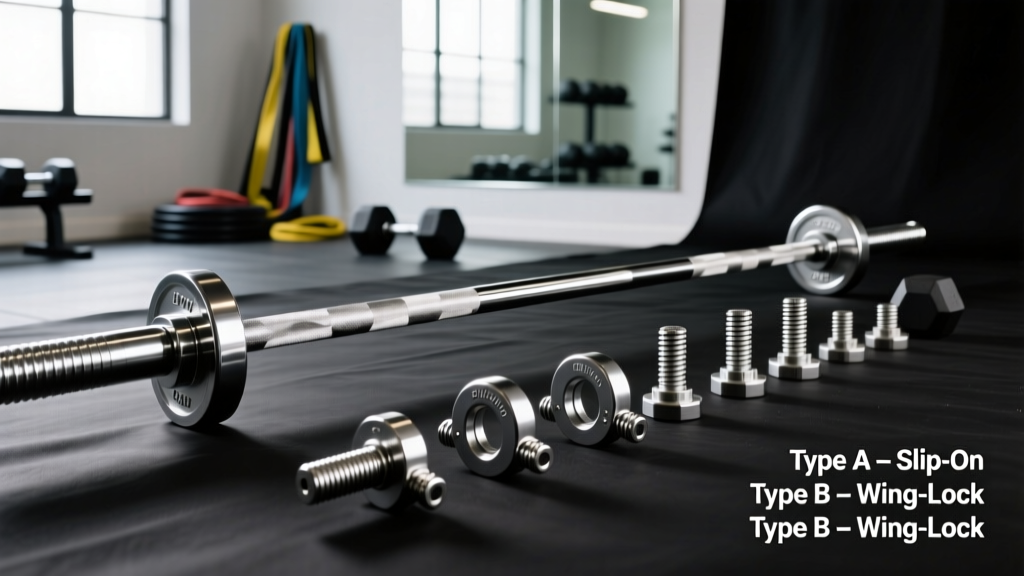
Standard plates feature a 1-inch center hole and are typically paired with solid, non-rotating steel bars. While adequate for light isolation work or basic home fitness, standard bars lack rotating sleeves. When you attempt heavy squats or cleans, the torque generated by the plates transfers directly into the barbell, causing it to bend or warp. Furthermore, standard bars typically max out at a 200 to 250-pound load capacity before structural failure becomes a severe risk. In 2026, standard cast iron plates average around $1.20 per pound, but their inability to safely handle heavy bilateral leg movements makes them a poor investment for a serious lower-body setup.
Olympic Plates (2-Inch Center Hole)
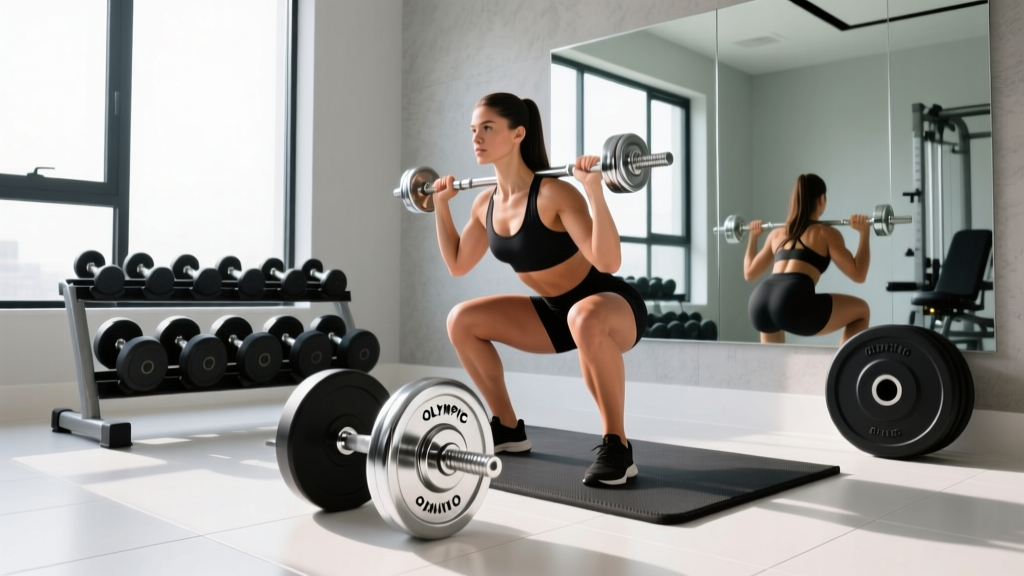
Olympic plates feature a 2-inch center hole, designed to slide onto bars with rotating sleeves (utilizing bushings or needle bearings). This rotation absorbs rotational torque, protecting your wrists and the barbell's structural integrity. High-quality Olympic plates—whether cast iron, urethane, or calibrated steel—are engineered for drops, heavy loads, and precise weight increments. A standard 45-pound Olympic bumper plate can withstand thousands of drops from overhead without cracking. For any home gym focused on serious leg development, Olympic is the only viable standard.
| Feature | Standard (1-Inch) | Olympic (2-Inch) |
|---|---|---|
| Center Hole Diameter | 1 inch (25.4 mm) | 2 inches (50.8 mm) |
| Bar Sleeve Rotation | No (Solid Bar) | Yes (Bushings/Bearings) |
| Safe Load Capacity | 200 - 250 lbs | 500 - 1,500+ lbs |
| 2026 Avg. Cost (Per Lb) | $1.00 - $1.40 | $2.00 - $4.50 |
| Material Options | Cast Iron, Cement/Vinyl | Urethane, Rubber, Calibrated Steel |
Complete Power Rack Installation Walkthrough
With your Olympic plate ecosystem selected, it is time to install the anchor of your gym: the power rack. For this walkthrough, we are using a standard 84-inch tall, 11-gauge steel 4-post rack (similar to the REP PR-1100 or Rogue SML-1). Proper installation is non-negotiable for safety, especially when failing a heavy squat.
Step 1: Floor Preparation and Layout
Clear a minimum footprint of 8x8 feet. Lay down 3/4-inch thick vulcanized rubber horse stall mats. Do not anchor the rack directly through the rubber mats into the concrete; the compression of the rubber over time will loosen your anchor bolts. Instead, cut the mats to fit *around* the base plates of the rack, or use specialized high-density rubber shims under the base plates.
Step 2: Upright and Crossmember Assembly
Assemble the base crossmembers first, leaving the bolts finger-tight. Stand the four 11-gauge uprights into the base sockets. Attach the top crossmembers and the rear stabilizer. Use a rubber mallet to seat the uprights fully. Once the frame is square (measure corner-to-corner diagonally to ensure equal distance), tighten all structural bolts using a 1/2-inch drive torque wrench. Torque to the manufacturer's specification, typically around 60 to 80 ft-lbs.
Step 3: Concrete Anchoring (The Critical Safety Step)
If you are bolting down to a concrete slab, you must use 1/2-inch x 5-1/2-inch wedge anchors.
- Mark the bolt holes on the concrete through the rack's base plates.
- Move the rack aside and use a hammer drill with a 1/2-inch masonry bit to drill 4.5 inches deep into the concrete.
- Vacuum the concrete dust out of the holes (crucial for anchor grip).
- Move the rack back into position, slide the wedge anchors through the base plates, and hand-tighten the nuts.
- Use a torque wrench to tighten the nuts to exactly 60 ft-lbs. This expands the wedge at the base of the anchor, locking it permanently into the concrete.
Step 4: Rigging the Safety Spotter Arms
Install your safety spotter arms at the appropriate height. For squats, set the pins one inch below your lowest squat depth. This ensures you can safely dump the weight backward without the barbell crushing you, while also preventing the bar from bouncing off the safeties during a heavy rebound.
Designing the Dumbbell Zone for Unilateral Work
While the barbell is king for bilateral strength, the most effective leg exercises with dumbbells for women (and men) rely on unilateral loading to correct muscular imbalances, improve hip stability, and reduce spinal compression. The National Strength and Conditioning Association (NSCA) heavily emphasizes unilateral training for injury prevention and functional athletic development. To accommodate this, your gym layout must feature a dedicated dumbbell zone adjacent to the rack.
Equipment Requirements for the Dumbbell Zone
- Adjustable Dumbbells: Space is a premium. Invest in a pair of high-end adjustable dumbbells that go up to at least 50 lbs (e.g., Nuobell or PowerBlock Elite). For advanced lifters doing heavy Bulgarian split squats, a 70-90 lb adjustable set or a dedicated pair of fixed urethane hex dumbbells is required.
- Plyometric Box: A 3-in-1 foam-topped plyo box (20/24/30 inches) is essential for deficit reverse lunges and elevated split squats. The foam top prevents shin injuries during missed reps.
- Slant Board or Wedges: Elevating the heel during goblet squats or single-leg RDLs increases knee flexion and targets the vastus medialis (VMO) and glutes more effectively.
Spatial Layout and Drop Zones
Position the dumbbell rack exactly three feet away from the power rack. This allows you to easily transition from heavy barbell back squats to walking lunges without crossing the gym. Ensure the flooring in this zone is reinforced; dropping 50-pound adjustable dumbbells repeatedly can crack standard home tiles or damage the internal mechanisms of the dumbbells. Use a dedicated 2-inch thick crash pad or drop zone mat specifically for your dumbbell accessory work.
Programming the Setup: Barbell vs. Dumbbell Days
Now that your rack is bolted down and your Olympic plates are loaded, how do you utilize the space? A highly effective 2026 lower-body split alternates between heavy bilateral barbell days and high-volume unilateral dumbbell days.
Sample Lower Body A (Barbell Focus): Barbell Back Squats (5x5), Romanian Deadlifts (4x8), and Leg Press. Utilize the power rack's safeties to push to absolute failure safely.
Sample Lower Body B (Dumbbell Focus): Deficit Bulgarian Split Squats (4x10 per leg), Single-Leg Dumbbell RDLs (3x12), and Goblet Squats with a heel wedge (3x15). This zone is where the targeted leg exercises with dumbbells for women truly shine, building the stabilizer muscles and glute medius that heavy barbell work often neglects.
Frequently Asked Questions
Can I use standard plates on an Olympic barbell?
No. Standard plates have a 1-inch hole and will not fit over the 2-inch sleeves of an Olympic barbell. You can purchase plastic adapter rings to use standard plates on a standard bar, but mixing ecosystems in a serious home gym is highly discouraged due to safety and load-capacity limitations.
Do I need to bolt my power rack to the floor?
If you are using a 4-post rack with a flat-foot base and loading it with heavy Olympic plates, bolting it down is strongly recommended to prevent tipping during kipping pull-ups or failed squats. If you cannot drill into your floor (e.g., renting a garage), you must use a rack with an extended rear stabilizer and load the rear base with heavy sandbags or plate storage pegs to counterbalance the front.
What is the best dumbbell weight range for women's leg exercises?
While strength varies wildly by individual, most intermediate female lifters will require dumbbells ranging from 15 lbs to 50 lbs per hand for exercises like goblet squats and lunges. Advanced lifters will frequently exceed 60 lbs per hand for Bulgarian split squats, making heavy-duty adjustable dumbbells or a dedicated set of fixed hex dumbbells a necessary investment.
More gear to consider
All reviews
Walking With Dumbbells Workout: Hex vs Urethane Space Guide

Front Dumbbell Press Troubleshooting & Adjustable Dumbbell Reviews
Barbell Knurling: Rogue vs Titan & Supinated Dumbbell Biceps Curl

Best Adjustable Dumbbells for a Heavy Leg Workout With Dumbbells
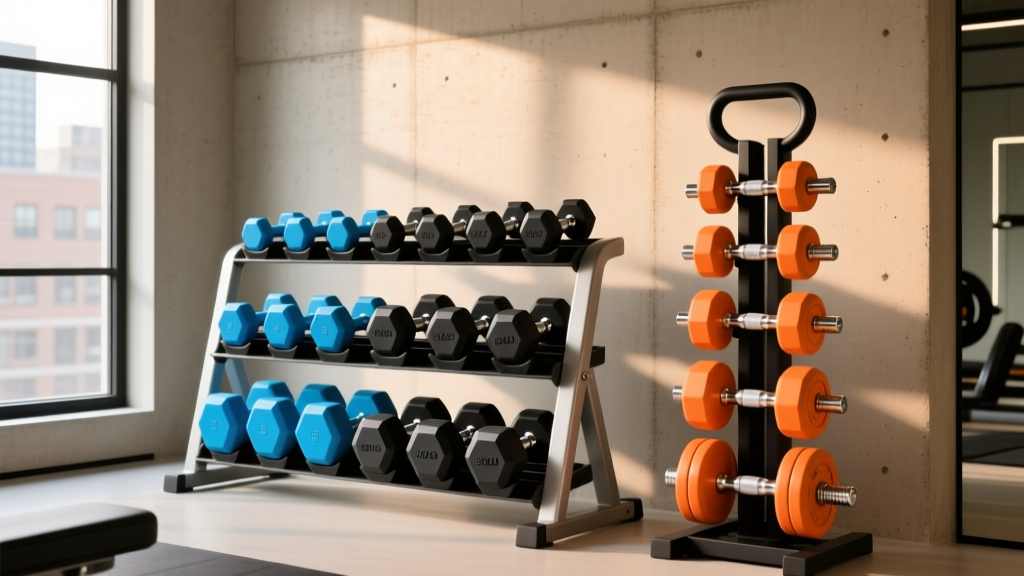
Organizing Your Dumbbell Core: 2026 Rack & Storage Trends