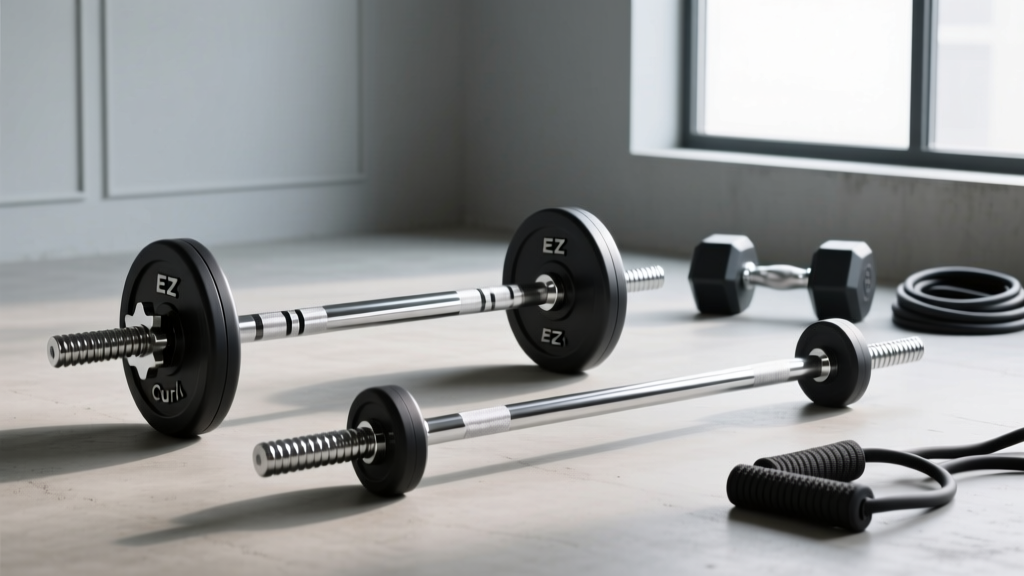
Olympic vs Standard Plates: Setup for the Best Dumbbell Back Workout
Compare Olympic vs standard weight plates to build the ultimate home gym. Discover which setup supports the best dumbbell back workout for heavy rows.

The Foundation of Heavy Pulling: 1-Inch vs 2-Inch Architecture
When assembling a home gym, most lifters obsess over the bench or the rack, treating weight plates as an afterthought. But if your goal is to execute the best dumbbell back workout—featuring heavy single-arm rows, chest-supported variations, and dumbbell pullovers—the type of plates you buy dictates your long-term progression. The market is split into two distinct ecosystems: Standard (1-inch center hole) and Olympic (2-inch center hole).
In 2026, the gap in entry-level pricing between these two tiers has narrowed, yet the functional differences remain massive. Standard plates are typically paired with inexpensive spinlock dumbbell handles, while Olympic plates require either a full barbell setup or specialized loadable dumbbell handles (like the Rogue Loadable Dumbbells or IronMaster Quick-Locks). Understanding this head-to-head comparison is critical before you drop hundreds of dollars on iron or urethane.
⚠️ The Sleeve Length Bottleneck: The hidden limitation of standard plates isn't just the 1-inch hole; it's the handle sleeve length. Most standard spinlock handles feature a 6.5-inch sleeve. Once you load two 10lb plates and one 5lb plate per side, you run out of physical space, capping your dumbbell weight at roughly 45 lbs. The latissimus dorsi is a massive, powerful muscle group that will outgrow a 45 lb ceiling in a matter of months.Head-to-Head Comparison Matrix
Below is a direct comparison of the Standard and Olympic plate ecosystems as they relate to free weight training and dumbbell compatibility.
| Feature | Standard Plates (1-Inch) | Olympic Plates (2-Inch / 50mm) |
|---|---|---|
| Center Hole Diameter | 1 inch (25.4mm) | 2 inches (50.8mm) |
| Dumbbell Compatibility | Threaded spinlock handles | Loadable Olympic dumbbell handles |
| Max Weight Per Dumbbell | ~35 to 55 lbs (sleeve dependent) | 100 to 165 lbs (handle dependent) |
| Collar Security | Threaded star nuts (slow to change) | Spring clamps / Lock-Jaw collars (instant) |
| Drop Tolerance | Low (cast iron chips; cement cracks) | High (especially rubber/urethane bumpers) |
| Average 2026 Cost | $1.00 - $1.40 per lb | $1.60 - $3.00+ per lb |
Biomechanics and the Best Dumbbell Back Workout
Why does plate type matter specifically for back training? According to kinesiology data regarding the force production of the posterior chain, the muscles targeted during back workouts—namely the latissimus dorsi, rhomboids, and trapezius—are among the strongest in the human body. As noted by the exercise biomechanics databases at ExRx.net, the lats can generate immense pulling force, requiring heavy, incremental loading to stimulate hypertrophy once you pass the novice stage.
The Single-Arm Row Clearance Issue
Consider the heavy single-arm dumbbell row, a staple for unilateral back development. If you are using standard plates, the physical diameter of a 25lb standard cast iron plate is relatively small (about 8.5 inches). This allows the dumbbell to hang low, which is good for range of motion. However, because you are capped at ~45 lbs total, you will soon find yourself doing 20+ rep sets just to feel a burn, shifting your training from strength/hypertrophy into muscular endurance.
Conversely, Olympic plates allow you to load an Olympic dumbbell handle up to 120 lbs. But there is a catch: Olympic bumper plates (like the Rogue Echo Bumpers) have a standardized diameter of 17.7 inches (450mm) across all weights from 10lbs to 45lbs. If you load a 20lb Olympic bumper onto a loadable dumbbell, the massive 17.7-inch diameter might clip the floor before you achieve a full stretch at the bottom of your row.
The Expert Solution: For the best dumbbell back workout using Olympic plates, you must invest in machined cast iron or urethane Olympic grip plates (which scale in diameter by weight) rather than uniform-diameter bumper plates. This ensures floor clearance during deep rows and pullovers.
Real-World Cost Analysis & Ecosystem Lock-In
Let's break down the actual financial commitment in 2026. Building a 200lb plate set for your home gym yields vastly different long-term value propositions depending on the route you choose.
- The Standard Route (CAP Barbell / Yes4All): A 200lb set of standard cast iron plates costs roughly $220. Add two pairs of standard spinlock handles ($30). Total: $250. You have a functional setup, but you are locked into a 1-inch ecosystem. If you ever want to upgrade to a barbell for deadlifts or barbell rows, your entire plate collection is useless.
- The Olympic Route (Titan Fitness / REP Fitness): A 200lb set of Titan Fitness Elite Urethane Olympic Plates costs around $450. Add a pair of loadable Olympic dumbbell handles ($150) and a set of lock-jaw collars ($25). Total: $625.
While the Olympic route requires a 2.5x higher initial investment, it offers infinite scalability. When you inevitably outgrow 50lb dumbbell rows and want to incorporate heavy barbell bent-over rows or Pendlay rows into your back day, your Olympic plates seamlessly transition to a 7-foot Olympic barbell. Standard plates cannot do this.
Failure Modes: What Breaks First?
When evaluating gym equipment, we must look at edge cases and failure modes. Back workouts involve dynamic movements, heavy eccentrics, and occasional drops.
- The Spinlock Vibration Hazard: During heavy renegade rows or explosive dumbbell movements, the vibration can cause standard threaded star nuts to slowly back off the sleeve. If a nut loosens mid-set, the plates slide off, resulting in a severe wrist or facial injury. Olympic spring collars or clamp-style collars grip the 2-inch sleeve via tension and are immune to vibrational loosening.
- Cement-Filled Plate Degradation: Many budget standard plates are filled with cement and coated in vinyl. Dropping these during a fatigued set of dumbbell pullovers will crack the internal cement, causing the plate to become unbalanced and eventually leak concrete dust onto your gym floor.
- Handle Bending: Standard 1-inch dumbbell handles are typically made of lower-grade steel. Loading them to their absolute maximum (50+ lbs) introduces torque that can permanently bend the sleeve, making it impossible to thread the nut past the bend.
Frequently Asked Questions (FAQ)
Can I use Olympic plates on standard dumbbell handles?
No. Olympic plates feature a 2-inch (50mm) center hole, while standard handles have a 1-inch (25mm) sleeve. There is no safe adapter to bridge this gap for dumbbell use. Attempting to use adapters on dumbbell sleeves introduces dangerous lateral play that compromises wrist stability during heavy rows.
Are standard plates completely worthless for back training?
Not entirely. For beginners, seniors, or those recovering from injury, standard plates paired with 5lb and 10lb increments are excellent for high-rep rear delt flyes, reverse pec-deck motions, and light dumbbell pullovers. However, for intermediate-to-advanced lifters targeting the lats and rhomboids, the weight ceiling of standard handles is a hard limit on progression.
What is the best plate material for a home gym focusing on dumbbells?
Urethane-coated Olympic grip plates are the gold standard for home gyms in 2026. They do not smell like cheap rubber, they resist chipping when dropped on rubber matting, and the 'grip' cutouts make it significantly easier to load and unload your dumbbell handles between supersets.
The Final Verdict
If you are strictly committed to executing the best dumbbell back workout and continuing to add muscle to your posterior chain over the next decade, the Olympic plate ecosystem wins this head-to-head comparison flawlessly. The standard 1-inch setup is a temporary band-aid that ultimately limits your loading potential, slows down your workout transitions with threaded nuts, and locks you out of future barbell integration. Invest in 2-inch Olympic grip plates and a high-quality pair of loadable dumbbell handles; your lats will thank you when you are pulling 80 lbs per hand for reps without hitting an artificial equipment ceiling.
More gear to consider
All reviews
Dumbbell vs Barbell vs Kettlebell Thrusters: Cast Iron Space Guide

Dumbbell Sumo Deadlift Zones: Rack & Storage Layouts

Olympic vs Standard: Back Exercises with Dumbbells and Barbells

Barbell Collar Types: Dumbbell Shoulder Press vs Barbell Shoulder Press
Long Head Bicep Exercises Dumbbell Guide Using Neoprene Weights