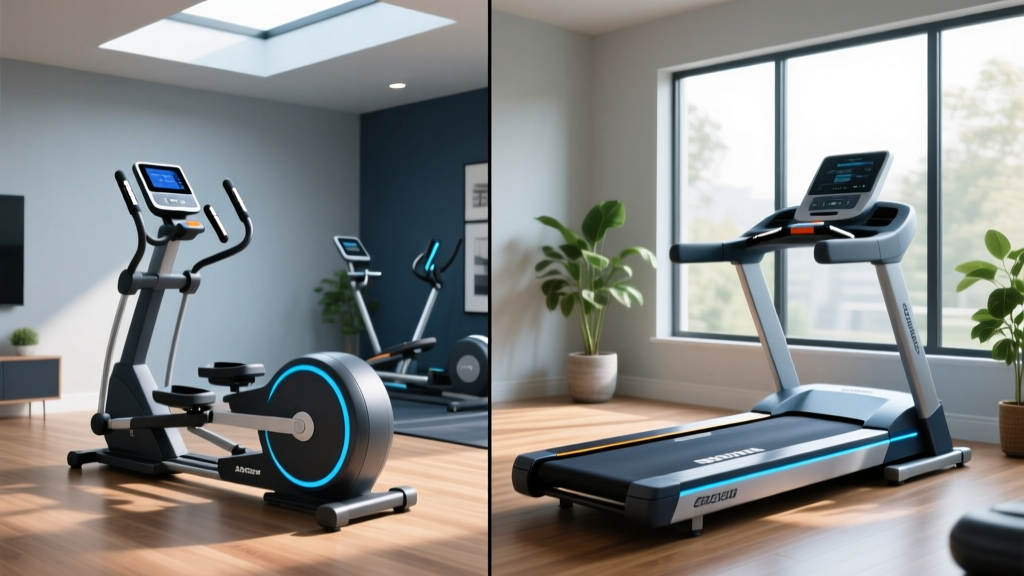
Layout Guide: Bikes vs Treadmill Running for Beginners
Discover how to optimize your home gym layout. We compare space-saving stationary bikes against treadmill running for beginners to maximize your floor plan.

The Spatial Footprint: Rethinking Home Cardio Layouts in 2026
Designing a home gym in 2026 is less about acquiring the most expensive equipment and more about mastering spatial geometry. When optimizing a spare bedroom, garage corner, or apartment living space, the physical footprint of your cardio machine dictates the entire room's flow. The most common dilemma we see at FitGearPulse involves choosing between stationary bike types (upright, recumbent, and spin) and traditional treadmills.
While treadmill running for beginners remains a popular entry point into cardiovascular fitness, the spatial demands of a treadmill often clash with compact floor plans. Conversely, stationary bikes offer distinct spatial profiles depending on their specific geometry. According to Harvard Health Publishing, consistency in aerobic exercise is the primary driver of cardiovascular health, meaning the best machine is the one that fits seamlessly into your daily environment without causing spatial friction.
Machine Dimensions: The Raw Data
Before mapping your layout, you must understand the baseline dimensions of modern cardio equipment. The table below contrasts the physical footprints and spatial requirements of leading 2026 models across different categories.
| Machine Type | Popular 2026 Model | Footprint (L x W) | Ceiling Clearance Needed | Avg. Price Range |
|---|---|---|---|---|
| Spin / Indoor Cycle | Schwinn IC4 / Bowflex C6 | 48' x 21' | User Height + 10' | $800 - $1,200 |
| Upright Bike | ProForm 235 CSX | 42' x 21' | User Height + 5' | |
| Recumbent Bike | Schwinn 270 Recumbent | 64' x 28' | User Height + 2' | $600 - $1,500 |
| Folding Treadmill | NordicTrack T Series 10 | 70' x 30' (Deployed) | User Height + 14' | $500 - $900 |
Stationary Bike Types: Space Profiles for Upright, Recumbent, and Spin
Not all bikes are created equal when it comes to room integration. The geometry of the frame drastically alters how you can utilize the surrounding square footage.
Spin Bikes: The Micro-Footprint Champions
Spin bikes (or indoor cycles) feature a compact, aggressive geometry that mimics outdoor road bikes. Because the flywheel is positioned directly beneath the user and the handlebars are narrow, the lateral footprint is minimal (usually around 21 inches wide). Layout Advantage: Spin bikes can easily be tucked into tight alcoves or placed facing a window. Spatial Catch: They generate significant downward sweat drip. You must allocate an additional 3-foot by 4-foot zone for a high-absorbency equipment mat to protect hardwood floors from corrosive salt damage.
Upright Bikes: The Console Overhang Factor
Upright bikes position the user in a more vertical, traditional seating posture. While the base footprint is similar to a spin bike, the spatial reality is different due to the console and handlebars. Upright bikes often feature wide, multi-grip handlebars and large articulating screens that extend 12 to 18 inches forward of the base. Layout Advantage: Excellent for corners where depth is limited but width is available. Spatial Catch: The wide handlebar swing radius means you cannot place an upright bike flush against a side wall; you need at least 8 inches of lateral clearance on both sides to avoid knuckle-strikes during high-cadence intervals.
Recumbent Bikes: The Space Hogs
Recumbent bikes feature a bucket seat positioned behind the pedals, distributing weight over a larger surface area. This ergonomic design is highly recommended by the Mayo Clinic for individuals with lower back issues or joint limitations, as it drastically reduces spinal compression. Layout Advantage: The low profile (usually under 45 inches in height) allows you to place them beneath standard windows or low-sloped attic ceilings. Spatial Catch: At over 64 inches long and 28 inches wide, recumbent bikes act as room dividers. They completely disrupt pedestrian traffic flow in rooms smaller than 12x12 feet. Never place a recumbent bike in a hallway thoroughfare or directly in front of an HVAC return vent, as the massive frame will block airflow.
Reconciling Space with Treadmill Running for Beginners
Many novices assume that buying a compact or folding treadmill solves their spatial issues. However, treadmill running for beginners introduces a hidden spatial variable: vertical bounce and safety egress.
The 'Bounce & Egress' Rule for Treadmills
When evaluating ceiling height, do not just measure the treadmill deck. A standard treadmill deck sits 8 to 10 inches off the floor. When a beginner runs, their vertical bounce can add 4 to 6 inches. Formula: Ceiling Height must be ≥ (Treadmill Deck Height + User Height + 6 inches of bounce clearance). If you have 8-foot ceilings and are 6 feet tall, a 10-inch deck leaves only 14 inches of clearance—resulting in head-strikes during sprint intervals.
Furthermore, treadmills require mandatory rear egress space. The Consumer Product Safety Commission (CPSC) historically recommends at least 24 to 30 inches of clear space behind any treadmill to prevent severe friction burns if a user falls and is ejected backward. In a small 10x10 room, a 70-inch treadmill plus a 30-inch safety zone consumes nearly the entire length of the room, leaving zero space for storage or movement.
Environmental Edge Cases & Layout Failure Modes
Space optimization is not just about measuring tape; it is about environmental integration. Ignoring these edge cases leads to equipment failure and neighbor disputes.
- Acoustic Transfer (The Multi-Story Problem): Treadmill running for beginners often involves heavy heel-striking, generating low-frequency structural vibrations (bass) that easily penetrate floor joists and disturb downstairs neighbors. Spin bikes and magnetic upright bikes generate high-frequency hums (treble) which are easily dampened by a standard rubber mat. If you live in an apartment, a spin bike is a spatial and acoustic necessity.
- Thermal Exhaust Zones: High-end smart bikes and treadmills feature internal cooling fans and processors that exhaust heat. Placing a Peloton or NordicTrack flush against a wall traps heat, triggering thermal throttling and voiding warranties. Always leave a minimum of 12 inches of rear clearance for active ventilation.
- Sunlight Degradation: Positioning an upright or recumbent bike directly in front of a south-facing window will cause UV degradation on the LCD console and brittle failure of the poly-V drive belt within 18 months. Orient your layout so the user faces the window, but the machine's console is shielded.
The Final Layout Framework
To finalize your home gym layout, apply the 20/30 Traffic Rule. Ensure every piece of equipment has 20 inches of lateral clearance on both sides for mounting/dismounting and emergency dismounts, and 30 inches of clearance at the rear for ventilation and safety egress.
If your room cannot accommodate the 70-inch length plus 30-inch rear zone required for safe treadmill running, pivot to a high-quality spin bike or an upright magnetic bike. You will sacrifice the weight-bearing bone density benefits of running, but you will gain a functional, uncluttered living space that encourages daily consistency over spatial frustration.
More gear to consider
All reviews
Stationary Bike Types vs NordicTrack T Series 5 Treadmill (2026)
What Does Watts Mean on a Treadmill? Motor Power Guide
Home Stair Climber Guide: Mistakes vs Treadmill for Fat People

Reebok i Treadmill Maintenance & Folding Deck Guide

Weslo Crosswalk 5.2t Treadmill vs Under Desk Units: Office Review