What Does Watts Mean on a Treadmill? Motor Power Guide
Wondering what does watts mean on a treadmill? Learn how motor watts compare to horsepower, impact your workouts, and find the right size for your home gym.

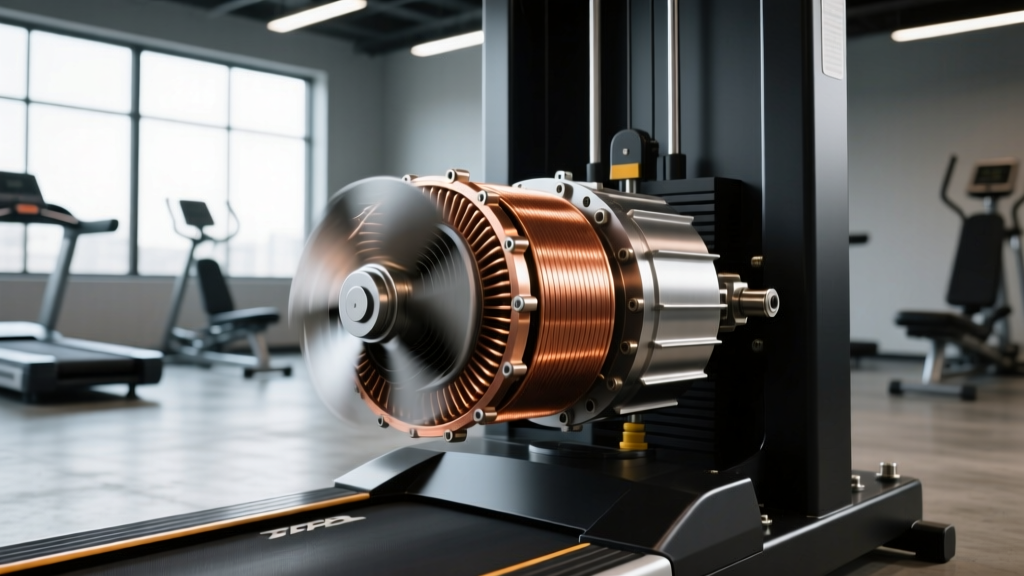
When shopping for home gym equipment, you might look at the spec sheet and ask, what does watts mean on a treadmill? In simple terms, watts measure the electrical power the treadmill's motor consumes and converts into mechanical energy to move the belt. Understanding this metric is crucial because it directly dictates the machine's longevity, top speed capabilities, and ability to handle heavier users without overheating.
While horsepower (HP) is the most commonly marketed metric in the fitness industry, wattage provides a more precise, standardized look at the actual electrical draw and mechanical output of the drive system. In this comprehensive 2026 guide, we break down the physics of treadmill motors, translate watts to horsepower, and show you exactly how to choose the right motor size for your body weight and training goals.
What Does Watts Mean on a Treadmill? (The Physics of Motor Power)
At its core, a watt is a unit of power defined as one joule of energy per second. When you ask what does watts mean on a treadmill, you are looking at the rate at which the machine's motor converts electrical current from your wall outlet into the kinetic energy required to spin the front roller and move the running belt.
The relationship between mechanical horsepower and watts is a fixed physical constant: 1 Mechanical Horsepower (HP) equals exactly 745.7 Watts. However, because no electric motor is 100% efficient, the wattage drawn from your wall (input watts) will always be higher than the mechanical wattage delivered to the belt (output watts). Modern treadmill motors typically operate at 75% to 85% efficiency. This means a motor producing 1,500 watts of mechanical force might actually draw 1,800 to 2,000 watts of electrical power from your home's grid.
Watts vs. Horsepower: Decoding the Spec Sheet
Fitness brands heavily market Continuous Duty Horsepower (CHP), but understanding the underlying wattage helps you see past marketing gimmicks. Continuous Duty measures the motor's ability to sustain a specific power output indefinitely without overheating, which is vastly different from "Peak Horsepower" (the maximum power the motor can hit for a few seconds before failing).
| Continuous Horsepower (CHP) | Mechanical Output (Watts) | Estimated Wall Draw (Input Watts) | Best Use Case |
|---|---|---|---|
| 2.0 CHP | 1,491 W | ~1,850 W | Walking, light jogging (Users under 150 lbs) |
| 2.75 CHP | 2,050 W | ~2,500 W | Regular jogging, interval training (Users up to 200 lbs) |
| 3.0 CHP | 2,237 W | ~2,750 W | Running, moderate inclines (Users up to 250 lbs) |
| 3.5 CHP | 2,610 W | ~3,200 W | Heavy running, steep inclines (Users up to 300 lbs) |
| 4.0+ CHP | 2,982+ W | ~3,600+ W | Commercial use, sprinting, max incline (Users 300+ lbs) |
Expert Insight: Never buy a treadmill based on "Peak HP." A 4.0 Peak HP motor might only have a 2.0 CHP continuous rating (approx. 1,491 output watts). Always verify the Continuous Duty rating to ensure the motor can handle your daily mileage.
Brushed vs. Brushless DC Motors: The 2026 Standard
The wattage efficiency of a treadmill depends heavily on the motor type. Historically, budget treadmills used brushed DC motors. These rely on physical carbon brushes to transfer electricity to the spinning armature, creating friction, heat, and significant wattage loss.
As of 2026, Brushless DC (BLDC) motors have become the standard for mid-range and premium home treadmills. By using electronic commutation instead of physical brushes, BLDC motors reduce internal friction drastically. A 3.0 CHP BLDC motor will draw significantly fewer input watts from your wall to achieve the same belt speed as an older brushed motor, resulting in a quieter operation, lower heat generation, and a longer lifespan.
Energy Consumption: What Are Watts on a Treadmill Doing to Your Electric Bill?
When evaluating energy consumption, you might wonder what are watts on a treadmill actually doing to your monthly utility bill. Treadmills are among the most power-hungry appliances in a home gym, but their actual cost depends on your usage patterns and local electricity rates.
According to the U.S. Energy Information Administration, the average residential electricity rate in the U.S. hovers around $0.16 to $0.18 per kilowatt-hour (kWh) in 2026. Let's break down the math for a standard 2.5 CHP treadmill (drawing roughly 2,200 input watts or 2.2 kW under a moderate running load):
- Per Hour Cost: 2.2 kW x $0.17/kWh = $0.37 per hour of continuous running.
- Monthly Cost (12 hours/week): ~$19.20 per month.
- Annual Cost: ~$230.00 per year.
Note: Wattage draw is not static. Walking at 3.0 mph on a flat incline might only draw 800 watts, while running at 10.0 mph on a 15% incline will push the motor to its maximum continuous wattage threshold. Furthermore, failing to lubricate your treadmill belt with 100% silicone oil increases friction, forcing the motor to draw up to 30% more watts just to maintain the same speed.
2026 Treadmill Motor Comparison: Real Models and Wattage
To give you a practical framework for your purchase, here is how the top-selling treadmills of 2026 stack up regarding motor size, wattage output, and real-world performance capabilities.
| 2026 Model | Motor Rating (CHP) | Output Watts | Max User Weight | Price (MSRP) |
|---|---|---|---|---|
| Horizon 7.4 | 2.75 CHP | 2,050 W | 300 lbs | $1,199 |
| Sole F80 | 3.5 CHP | 2,610 W | 375 lbs | $1,999 |
| NordicTrack Commercial 1750 | 3.5 CHP (BLDC) | 2,610 W | 300 lbs | $2,499 |
| Peloton Tread | 3.25 HP | 2,423 W | 300 lbs | $3,495 |
| ProForm Pro 9000 | 3.6 CHP | 2,684 W | 300 lbs | $2,199 |
When analyzing this data through the lens of the American Council on Exercise (ACE) guidelines on equipment durability, users who plan to run more than 20 miles per week should strictly look for models exceeding 2,237 output watts (3.0 CHP) to prevent premature degradation of the lower control board and motor windings.
Red Flags: How Manufacturers Manipulate Motor Specs
If you are still asking what does watts mean on a treadmill when looking at budget models under $600, beware of manipulated specifications. Many entry-level brands list "Peak Duty" horsepower or simply list "HP" without the "C" (Continuous). A treadmill advertising a "4.0 HP" motor for $499 is almost certainly using a 1.5 CHP motor (approx. 1,118 output watts) that peaks at 4.0 HP for exactly two seconds before the thermal breaker trips.
Additionally, some manufacturers inflate the physical size of the motor flywheel to create the illusion of a higher wattage capacity. A heavy flywheel helps maintain momentum, but it does not change the electrical wattage limits of the drive motor itself. Always demand the CHP and continuous wattage specifications before purchasing.

How to Choose the Right Motor Wattage for Your Body Weight
Your body weight is the single largest variable affecting how many watts your treadmill must draw. The motor must overcome the gravitational and frictional force of your mass striking the deck. Follow this 2026 sizing framework:
- Under 150 lbs: A 2.25 CHP motor (1,677 watts) is sufficient for walking and jogging.
- 150 to 200 lbs: Step up to a 3.0 CHP motor (2,237 watts) to ensure the belt doesn't stutter during foot strikes.
- 200 to 250 lbs: A minimum of 3.5 CHP (2,610 watts) is mandatory for running.
- Over 250 lbs: Look for 4.0 CHP (2,982 watts) or commercial-grade AC motors that can sustain high-wattage outputs without thermal throttling.
Frequently Asked Questions
What are watts on a treadmill?
When users ask what are watts on a treadmill, they are usually referring to the electrical power consumption of the drive motor or the energy output displayed on the console. On the spec sheet, watts indicate the motor's power capacity (with 745.7 watts equaling 1 horsepower). On the digital display, "watts" may refer to your personal power output—calculating how much kinetic energy you are generating based on your speed, incline, and body weight, similar to a stationary cycling ergometer.
Is a higher wattage treadmill motor always better?
Higher wattage (and higher CHP) means the motor doesn't have to work as hard to move heavier users or steeper inclines, which reduces heat and extends the machine's lifespan. However, a 4.0 CHP (2,982W) motor is overkill for a 130 lb user who only walks at 3.0 mph. A 2.5 CHP motor will operate well within its optimal efficiency curve for that user, saving money on the initial purchase price and reducing idle energy draw.
How many watts does a treadmill use per hour?
A treadmill typically uses between 600 and 2,500 watts per hour depending on the motor size, user weight, speed, and incline. A light walk might consume just 600 watts (0.6 kWh), while a heavy runner sprinting on a 15% incline on a 3.5 CHP machine could pull 2,800 watts (2.8 kWh) from the wall outlet.
Does incline increase treadmill wattage draw?
Yes, drastically. Raising the deck to a 15% incline forces the motor to fight gravity in addition to belt friction. This can increase the electrical wattage draw by 40% to 60% compared to running on a flat surface. If you frequently train on high inclines, you must purchase a treadmill with a higher continuous wattage rating to prevent the motor from overheating.
More gear to consider
All reviews
Folding Interval Training Treadmill: 2026 Budget & Space Review

Assault AirRunner Treadmill Setup & Motor Horsepower Guide

Home Stair Climbers: What Is the Best Speed to Walk on a Treadmill?

How Many Minutes on the Treadmill is 10 000 Steps? Portable Cardio Guide
OMA Treadmill 7200EB vs. Stair Climbers: Home Cardio Guide
