Power Rack vs Squat Rack vs Stand: Setup for Dumbbell Box Step Ups
Compare power racks, squat racks, and stands. Learn how to install your rig and optimize the footprint for heavy dumbbell box step ups.

The Home Gym Leg Day Dilemma: Cage, Half-Rack, or Stands?
Building a functional home gym in 2026 requires more than just buying a barbell and dropping it on the floor. When programming heavy unilateral movements like dumbbell box step ups, lateral stability and safety spotting are just as critical as vertical drive. Holding 80-pound dumbbells per hand while stepping onto a 24-inch plyo box creates a high center of gravity and significant lateral sway. If you lose your balance, where do the weights go? Will your equipment footprint accommodate the box and your natural arm swing?
Choosing between a full power rack, a half squat rack, and minimalist squat stands dictates not only your squat and bench safety but also how effectively you can execute accessory movements. This walkthrough breaks down the structural differences, provides a concrete installation guide, and explains how to optimize your rack footprint specifically for heavy step-up variations.
Equipment Breakdown: Footprints and Failure Modes
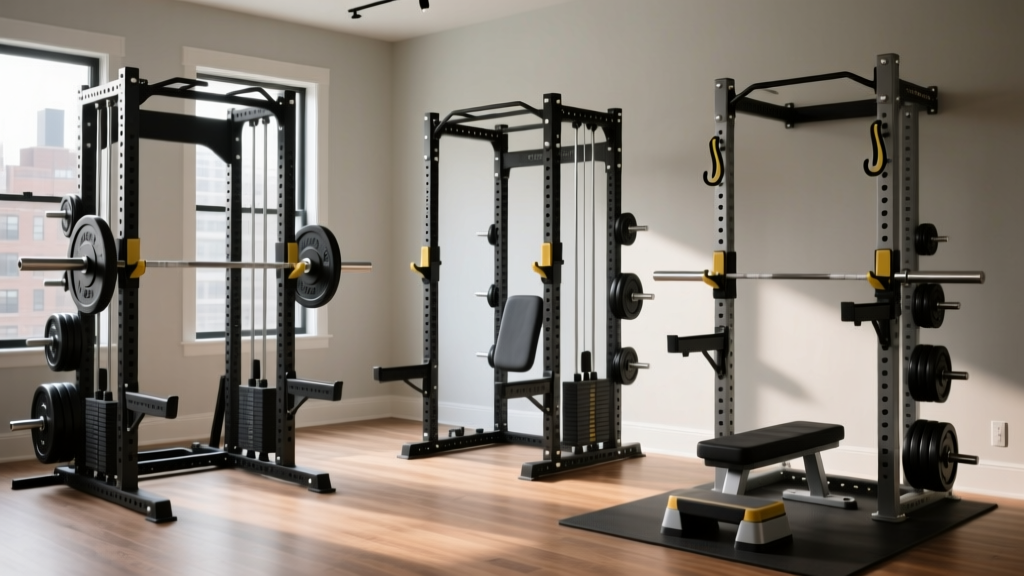
Before unboxing hardware, you must understand the spatial and mechanical limitations of each rig type. Below is a comparison of three industry-standard models widely used in advanced home gyms.
| Feature | Power Rack (e.g., REP PR-4000) | Half Rack (e.g., Titan T-3) | Squat Stand (e.g., Rogue SML-2C) |
|---|---|---|---|
| Average Price (2026) | $699 - $850 | $499 - $599 | $395 - $450 |
| Footprint | 49" x 49" (Enclosed) | 49" x 34" (Open Front) | 48" x 48" (Open Base) |
| Upright Spacing | 48" Interior | 48" Interior | 48" Interior |
| Spotter Safety | Internal Safety Straps/Pins | Extended Front Catcher Arms | None (or strap add-ons) |
| Step-Up Utility | Excellent (Tactile guides, internal spotting) | Good (Open front for box placement) | Poor (High tip risk, no lateral catch) |
1. The Power Rack (Full Cage)
A full power rack is the undisputed king of safety. With four uprights and internal safety straps, it creates a protected environment. For heavy dumbbell box step ups, a power rack allows you to place a 24-inch to 30-inch plyo box dead center inside the cage. If you stumble laterally while holding heavy dumbbells, the interior safety straps (set at roughly 18 inches high) will catch the dumbbells or your torso before you hit the floor. Furthermore, the 48-inch interior width provides just enough room for a natural arm swing without the dumbbells striking the uprights.
2. The Half Rack (Squat Rack)
Half racks, like the Titan T-3, feature a rear crossmember for stability and extended front spotter arms (usually 24 inches long). They offer an open-front design, making it easy to slide a large plyo box in and out. However, the failure mode here is lateral sway. If you step up and lean too far outside the 48-inch plane, you are entirely outside the protective envelope of the front spotter arms. They are best suited for moderate-weight step ups where balance is less compromised.
3. Squat Stands
Squat stands are minimalist, consisting of two independent uprights with a weighted base. While excellent for small garages and Olympic lifting variations, they are highly dangerous for heavy unilateral accessory work. The dynamic weight shift of a heavy dumbbell box step up can easily compromise your balance, and without connecting crossmembers or side safeties, a stumble results in a dropped weight and potential floor or ankle damage.
Concrete Anchoring & Installation Walkthrough
Regardless of whether you choose a cage or a half rack, bolting it to the floor is non-negotiable if you are performing dynamic movements. An unanchored rack can tip if you dump a dumbbell against an upright or catch a heavy barbell on extended spotter arms.
WARNING: Never anchor a rack to a subfloor, plywood platform, or concrete thinner than 4 inches. You require a minimum 4-inch thick, 3000 PSI concrete slab to achieve proper wedge anchor expansion without blowout.Tools Required
- Rotary Hammer Drill (Standard hammer drills will struggle and overheat)
- 1/2" SDS-Plus Masonry Bit
- Shop-Vac with a narrow nozzle
- 3/8" x 3" Zinc-Plated Wedge Anchors (e.g., Red Head or Simpson Strong-Tie)
- Torque Wrench (capable of 30-35 ft-lbs)
- Dead blow hammer
Step-by-Step Installation
- Position and Mark: Assemble the rack loosely. Position it on your rubber flooring (3/4" thick horse stall mats are standard). Mark the center of the anchor holes through the base plates directly onto the concrete.
- Drill the Holes: Move the rack aside. Using the rotary hammer and 1/2" SDS bit, drill straight down to a depth of 3.5 inches. Pro Tip: Wrap a piece of painter's tape around the drill bit at the 3.5-inch mark as a depth gauge.
- Evacuate Dust: This is the most common failure point in DIY installations. Concrete dust left in the hole acts as a lubricant, reducing the anchor's holding power by up to 40%. Use a Shop-Vac and a blow-out bulb to clean the hole until no dust remains.
- Drive the Anchors: Slide the 3/4" rubber mat and the rack base plate over the hole. Insert the wedge anchor and tap it with a dead blow hammer until the threads are about 1/2 inch above the nut.
- Torque to Spec: Using your torque wrench, tighten the nut to exactly 30 ft-lbs. The clip at the base of the anchor will expand into the concrete, locking the rig to the earth.
Optimizing the Footprint for Dumbbell Box Step Ups
According to biomechanics data cataloged by ExRx.net, the dumbbell step-up heavily targets the quadriceps and gluteus maximus, with the load distribution shifting dramatically based on box height and torso lean. To maximize this movement inside your rack, layout is everything.
Expert Layout Tip: Place your plyo box exactly 12 inches behind the front uprights of your power rack. This specific distance allows you to use the uprights as tactile balance guides with your elbows during the eccentric (lowering) phase of the step-up, without restricting the natural arm drive required to hoist 100+ lb dumbbells.
Managing the Dumbbell Drop Zone
When you finish a set of heavy step ups, dropping 80-pound dumbbells directly onto the rack's base plates or concrete floor will eventually crack the welds or the slab.
- Use Drop Blocks: Place two 6-inch high-density EVA foam or crumb-rubber drop blocks on either side of the plyo box.
- Strategic Safety Straps: If using a full cage, run a set of safety straps at the 20-inch height mark across the width of the rack. When your set is done, you can safely lower the dumbbells onto the straps rather than bending over and risking a lower back tweak while fatigued.
Frequently Asked Questions
Can I use squat stands for step-ups if I am careful?
While you can, it is not recommended for heavy loads. Squat stands lack lateral bracing. If your foot slips off a 24-inch box while holding heavy dumbbells, the lateral force of your fall can easily tip an unanchored stand, bringing the uprights down on top of you. Always opt for a cage or half-rack for unilateral leg work.
What is the ideal box height for step-ups inside a rack?
For most lifters, a box height that places the knee at 90 degrees or slightly above parallel when the foot is planted is ideal. This usually translates to a 20-inch to 24-inch box. If your rack has a pull-up bar at 82 inches, a 24-inch box leaves 58 inches of clearance, which is more than enough headroom for a 6-foot-tall athlete to stand fully upright with dumbbells at their sides.
Do I need to bolt my power rack down if it weighs 300 lbs?
Yes. A 300 lb rack is heavy, but the dynamic force of racking a heavy barbell or dropping a dumbbell against an upright creates a lever effect. The National Strength and Conditioning Association (NSCA) and major manufacturers like Rogue Fitness mandate bolting down any rig used for dynamic or heavy unilateral movements to prevent catastrophic tipping.
More gear to consider
All reviews
Pepins Dumbbell Upgrade: Olympic Barbell Weight & Knurling Mistakes
Budgeting for Dumbbell Lateral Raises Muscles: Loadable Guide

Barbell Clamps: Secure Your Triceps Workout with One Dumbbell or Bar

How to Build Muscle Using Dumbbells: Standard vs Olympic Plates Guide

Bumper vs Iron Plate Storage: Space For One Arm Dumbbell Roll
