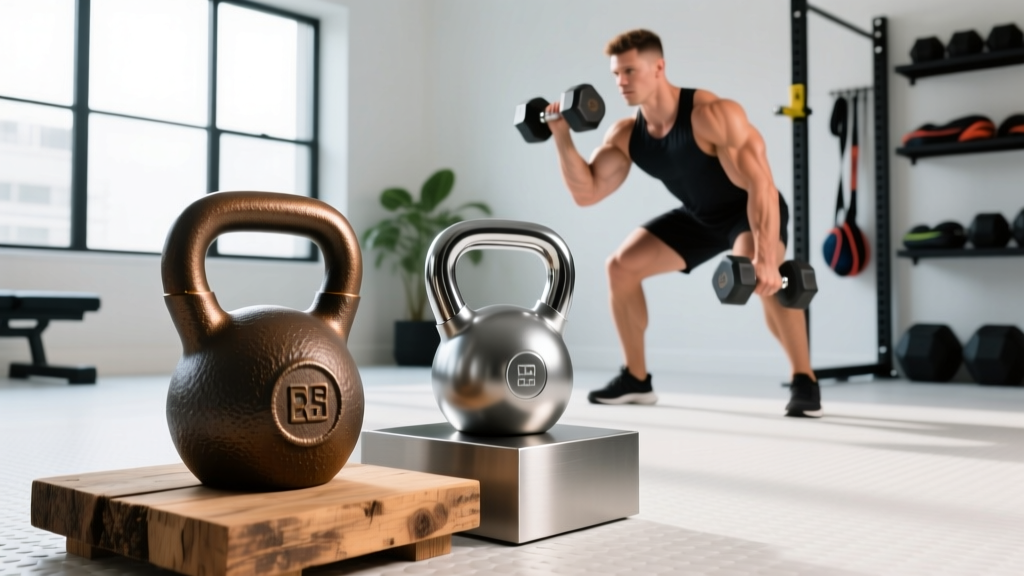
Cast Iron vs Competition Kettlebells: Dumbbell Curls Calories Burned
Discover the truth about dumbbell curls calories burned vs. kettlebell swings, plus our expert 2026 cast iron vs. competition kettlebell buying guide.

The Metabolic Myth: Isolation vs. Ballistic Reality
If you have been searching for data on dumbbell curls calories burned, you are likely looking to maximize arm development while shedding fat. As a domain expert in free weights and metabolic conditioning, I need to share a harsh physiological truth: isolation exercises are highly inefficient for caloric expenditure. A 150-pound individual performing strict dumbbell bicep curls at a moderate pace will burn approximately 3 to 5 calories per minute. This is because isolation lifts recruit a minimal amount of motor units and muscle mass.
Expert Insight: The Ballistic Advantage
Contrast this with kettlebell ballistics. According to foundational research sponsored by the American Council on Exercise (ACE), high-rep kettlebell snatches and swings can burn upwards of 20.2 calories per minute (aerobic) plus an additional 13.6 calories per minute (anaerobic). If your goal is metabolic output, you must transition from the dumbbell rack to the kettlebell corner. But which tool should you buy?
Choosing the right kettlebell is critical for high-rep ballistic work. In this 2026 hands-on buying guide, we break down the two dominant categories on the market: Cast Iron Kettlebells and Competition (Steel) Kettlebells, helping you decide which belongs in your home gym.
Cast Iron Kettlebells: The Powder-Coated Workhorses
Cast iron kettlebells are the traditional, gravity-cast tools found in most commercial gyms and garage setups. They are typically coated in enamel, e-coat, or powder coat to prevent rust. Because they are cast from a single piece of iron (or an iron alloy), their physical dimensions scale up as the weight increases.
Hands-On Review: Grip and Clearance
When testing the Rep Fitness Cast Iron Kettlebell (priced around $1.80 per pound in 2026), the aggressive powder-coat finish immediately stood out. It grips chalk exceptionally well, making it ideal for heavy, slow grinds like goblet squats, strict presses, and floor presses. However, for high-rep swings or snatches, the variable handle thickness—which can swell to over 38mm on heavier bells—can cause premature forearm fatigue and tear calluses if your grip technique is not dialed in.
- Pros: Highly durable, cost-effective, aggressive grip for heavy lifts, compact base for floor work.
- Pros: Horn spacing widens on heavier bells, allowing the bell to rest comfortably in the rack position without crushing the wrist.
- Cons: Dimensions change with weight, requiring you to constantly adjust your clean and snatch mechanics as you move up in load.
Competition Kettlebells: The Steel Precision Tools
Competition kettlebells are engineered for the sport of kettlebell lifting (Girevoy Sport). Whether you are holding a 8kg bell or a 48kg beast, the physical dimensions remain exactly identical: a 330mm handle circumference (roughly 35mm diameter), a 280mm height, and a 210mm width. They are constructed from steel, often featuring a hollow core filled with steel shot or a solid steel weld in premium models.
Hands-On Review: The Rack Position and Snatch Mechanics
Testing the Kettlebell Kings Competition Line (averaging $4.20 per pound), the difference in ballistic comfort is night and day. The uniform 35mm handle diameter is the gold standard for double-kettlebell work and high-rep snatches. Furthermore, the Kettlebell Kings Sizing Guide highlights that the 'horns' (the sides of the handle) are spaced precisely to allow the bell to sit cleanly on the outside of the forearm in the rack position, rather than resting on the bicep or crushing the wrist.
Research published in the National Center for Biotechnology Information (NCBI) emphasizes that metabolic cost during kettlebell swings is heavily influenced by grip fatigue and biomechanical efficiency. Because competition bells offer a consistent, smoother steel handle and uniform window size, you can perform 100+ reps with significantly less micro-trauma to your palms compared to rough cast iron.
Head-to-Head Comparison Matrix
| Feature | Cast Iron Kettlebell | Competition Kettlebell |
|---|---|---|
| Material | Cast Iron (Solid) | Steel (Hollow or Solid) |
| Dimensions | Scales with weight | Uniform across all weights |
| Handle Diameter | Variable (30mm - 40mm+) | Consistent 35mm |
| Best For | Grinds, Presses, Floor Work | Snatches, Jerks, High-Rep Swings |
| Avg. Cost (2026) | $1.50 - $2.20 / lb | $3.50 - $5.00+ / lb |
| Base Size | Grows larger, very stable | Uniform, can tip on uneven floors |
Programming for Maximum Caloric Expenditure
To truly eclipse the meager 4 calories-per-minute burn of standard dumbbell curls, you need to program your kettlebell work using high-density interval structures. Here is a 20-minute metabolic finisher designed for a 16kg or 20kg kettlebell that will spike your EPOC (Excess Post-exercise Oxygen Consumption).
The 20-Minute Ballistic Burner (EMOM Format)
Set a timer to beep every minute on the minute (EMOM) for 20 minutes. Alternate between the following two stations:
- Odd Minutes (1, 3, 5... 19): 15 Heavy Kettlebell Swings (Focus on explosive hip hinge and glute contraction. Rest the remainder of the minute).
- Even Minutes (2, 4, 6... 20): 10 Kettlebell Snatches (5 per arm). Pull the bell high and punch your hand through the handle to minimize forearm banging.
Expert Verdict: Which Should You Buy?
If your primary goal is maximizing calories burned through high-rep ballistic movements like snatches, cleans, and jerks, the Competition Kettlebell is the undisputed champion. The uniform 35mm handle and precise horn spacing will save your hands from tearing and allow you to sustain the high work rates required for massive caloric output. The investment of $4+ per pound is justified by the longevity and ergonomic superiority of the steel construction.
However, if you are building a budget-friendly garage gym focused on heavy strength grinds (front squats, strict presses, Turkish get-ups), a high-quality Powder-Coated Cast Iron Kettlebell is the better choice. The wider handles on heavier bells provide better leverage for pressing, and the larger, flat bases make them far more stable for floor-based movements like renegade rows or pull-throughs.
Stop worrying about the negligible calories burned during dumbbell curls. Pick up a 20kg competition bell, master the hip hinge, and embrace the metabolic reality of ballistic iron.
More gear to consider
All reviews
Beyond Flys with Dumbbells: Olympic Barbell Weight & Knurling Guide

Urethane vs Rubber Hex: Space & the Dumbbell Shoulder Press Exercise
Barbell Guide: Knurling, Weight & Leg Press at Home with Dumbbells
Power Rack vs Squat Rack vs Stand: Close-Grip Dumbbell Bench Press

Power Rack, Squat Rack or Stand for Back Lifts With Dumbbells
