
Isometric Dumbbell Row Hold: Loadable Dumbbell Budget Guide
Analyze the true cost of loadable dumbbells for the isometric dumbbell row hold. Compare Rogue, Titan, and Ironmaster handles for secure, heavy holds.

The Biomechanics of the Isometric Dumbbell Row Hold
The isometric dumbbell row hold is a staple in advanced back hypertrophy and rehabilitation programming. Unlike dynamic repetitions, this movement requires the lifter to pull the dumbbell to the hip crease and maintain a static contraction for 15 to 45 seconds. This sustained time-under-tension (TUT) forces the latissimus dorsi, rhomboids, and posterior deltoids into maximal motor unit recruitment without the momentum of a swinging repetition.
However, from an equipment perspective, the isometric dumbbell row hold introduces a unique mechanical stressor: sustained rotational torque. When you hold a heavy load statically at your hip, your forearm and wrist naturally pronate and supinate in micro-movements as muscle fatigue sets in. If you are using a loadable dumbbell with interchangeable plates, this vibration and torque are transferred directly into the sleeve collar. A subpar locking mechanism will slowly back out, causing plates to shift, rattle, and ultimately compromise your grip or drop onto your foot.
Why Loadable Dumbbells Beat Fixed Hex for Heavy Holds
For lifters targeting heavy isometric holds (60 lbs to 100+ lbs per hand), buying fixed hex or rubber-coated dumbbells is a financial black hole. A full commercial rack from 10 to 100 lbs in 5-lb increments can easily exceed $2,500 in 2026. Loadable dumbbell handles—where you slide standard Olympic or standard 1-inch plates onto a bar—offer a drastically superior cost-per-pound ratio, provided you select the right locking mechanism.
The Golden Rule of Loadables: For dynamic movements like curls, a cheap spin-lock collar is fine. For static, high-torque movements like the isometric dumbbell row hold, you must invest in flange-lock, snap-ring, or precision-machined screw-lock systems.
The Collar Security Problem: Spin-Lock vs. Lever-Lock
When budgeting for a loadable system, the handle's collar dictates the ceiling of your usable weight. During an isometric row hold, a 70 lb dumbbell exerts roughly 35 lbs of outward lateral force against the collar due to the angle of the arm and the natural tremor of fatiguing muscle fibers.
- Standard Spin-Locks (Star Nuts): Prone to vibration loosening. If you are holding a 45-second isometric row, the micro-tremors will literally rattle the nut loose by second 30.
- Snap-Ring / Flange Locks: Utilize a machined groove and a heavy-duty steel ring or threaded flange. Immune to vibration loosening. Ideal for heavy static holds.
- Quick-Lock Screw Systems: A proprietary threaded rod that screws into the handle. Extremely secure, but adds 10-15 seconds to weight changes.
2026 Budget Breakdown: Top Loadable Handle Systems
To determine the best value for a home gym focused on heavy unilateral back work, we analyzed the three dominant loadable dumbbell handles on the market. Pricing reflects early 2026 retail averages for the handle pairs only (plates sold separately).
| Model | Price (Pair) | Locking Mechanism | Sleeve Length | Max Capacity (Approx) | Knurl Profile |
|---|---|---|---|---|---|
| Rogue Loadable Handles | $165.00 | Snap-Ring / Flange | 6.5 inches | 65 lbs / side | Deep, Aggressive |
| Titan Fitness Loadable | $99.99 | Threaded Spin-Lock | 6.0 inches | 45 lbs / side | Moderate, Volcano |
| Ironmaster Quick-Lock V2 | $399.00 | Quick-Lock Screw | 4.5 inches | 45 lbs / side (base) | Mild, Comfort |
Warning: Sleeve Length Limits Your Plate Choices
The Rogue handle features a 6.5-inch sleeve, which is excellent for loading multiple 10-lb and 25-lb machined steel plates. However, if you plan to use standard 45-lb rubber bumper plates, you will only fit one per side, capping your dumbbell at roughly 55 lbs. For heavy isometric row holds, you must budget for machined steel or urethane fractional plates to maximize sleeve real estate.
Cost-Per-Pound Analysis: Building Your Plate Arsenal
The handle is only the entry fee. The true budget breakdown lies in the interchangeable plates. To perform progressive isometric dumbbell row holds, you need to be able to micro-load in 2.5 lb to 5 lb increments per hand.
The 120-lb Starter Kit Budget
Assuming you need a maximum of 60 lbs per hand (120 lbs total) to reach muscular failure on a 30-second isometric hold, here is the financial reality of outfitting your loadable handles in 2026:
- Handles (Rogue Pair): $165.00
- Olympic Steel Plates (120 lbs): At an average of $2.25/lb for high-quality machined steel, 120 lbs costs $270.00.
- Fractional Plates (Pair of 1.25s and 2.5s): $45.00
- Total System Cost: $480.00
Compare this $480 investment to buying four pairs of fixed urethane dumbbells (45s, 50s, 55s, 60s) which would cost upwards of $900 at commercial retail prices. The loadable route saves you over 45% while taking up a fraction of the floor space.
Hidden Costs: Storage and Rack Compatibility
When budgeting for loadable dumbbells, lifters frequently overlook the storage infrastructure. Unlike fixed hex dumbbells that sit neatly on a tiered A-frame rack, loadable dumbbells require a different approach.
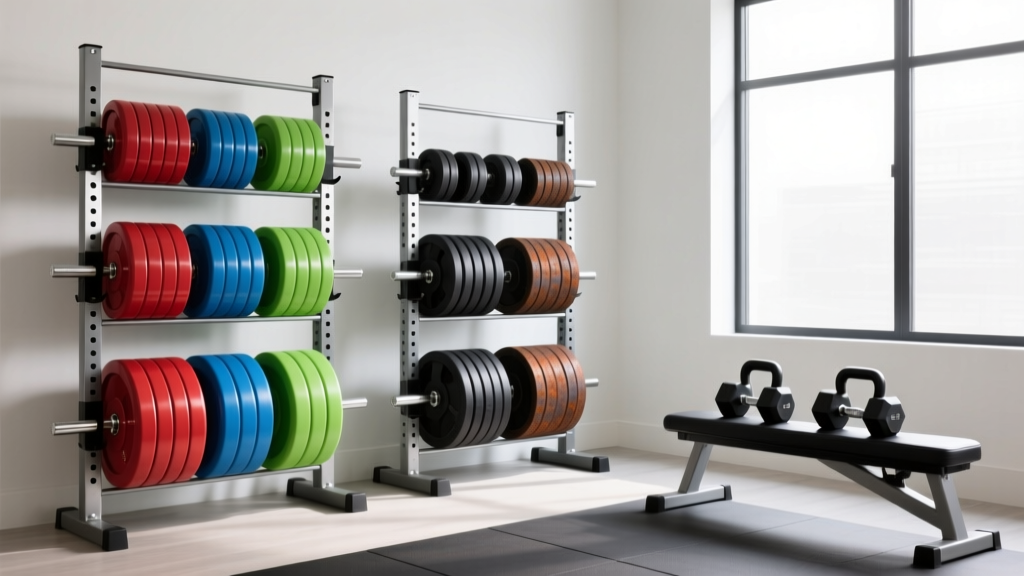
- Vertical Plate Trees: Required for storing your loose Olympic plates ($80 - $150).
- Saddle Racks: You cannot store loadable dumbbells on standard flat shelves once they are loaded; the sleeves will roll. You must budget for a saddle-style dumbbell rack or simply store them disassembled on a plate tree.
- Loading Time: While not a financial cost, the 'time tax' of swapping plates between sets of isometric holds is real. If you are supersetting row holds with push-ups, the 45 seconds it takes to unthread a Titan spin-lock and add 5 lbs can cool down your lats, reducing the efficacy of the next set.
Step-by-Step: Programming the Isometric Hold with Loadables
Once you have secured your loadable system and machined plates, executing the isometric dumbbell row hold requires specific technical cues to maximize the ROI on your equipment.
1. The Setup and Brace
Hinge at the hips to a 45-degree angle. Support your non-working hand on a bench. Because loadable dumbbells have a wider center of mass than fixed hex bells, grip the handle dead-center. If your hand drifts toward the inner collar, the bell will tilt forward, placing undue strain on your wrist extensors.
2. The Concentric Pull
Drive the elbow toward the ceiling, pulling the dumbbell to the hip crease. Do not use momentum. The loadable plates will clink if you jerk the weight; a smooth pull keeps the plates seated flush against the collar.
3. The Isometric Squeeze (15-45 Seconds)
Hold the contraction. Focus on driving the shoulder blade into the spine. As fatigue sets in around the 20-second mark, your grip will want to rotate the dumbbell. This is where the Rogue snap-ring or Ironmaster screw-lock proves its worth. A cheap spin-lock would begin to rattle and shift, distracting you from the lat contraction. A secure collar allows you to push to true muscular failure without equipment anxiety.
Final Verdict: Where Should Your Money Go?
If your primary goal is dynamic, high-rep accessory work, the $99 Titan Fitness spin-lock handles are a budget-friendly entry point. However, for the specific demands of the isometric dumbbell row hold—where heavy loads, sustained torque, and mental focus are paramount—the budget must shift toward security.
The Rogue Loadable Dumbbell Handles ($165) offer the best intersection of price, sleeve length, and snap-ring security for heavy static holds. Pair them with $250 worth of machined steel plates, and you have a commercial-grade, space-saving back-training station that will outlast your lifting career. Do not compromise on the collar; when you are shaking through the final 10 seconds of a heavy isometric row, the last thing you should be worried about is your weight plates sliding off the sleeve.
More gear to consider
All reviews
EZ vs Straight Bar: Budgeting a Good Chest Workout with Dumbbells

Bumper vs Iron Plate Costs: Budgeting for Dumbbell Wrist Rotations
Bumper vs Iron Plates: Space for Hamstring Exercises with Dumbbells
Cast Iron vs Competition Kettlebells & Strict Dumbbell Curls Care

Barbell Collar Types & Dumbbell Bench Rack Troubleshooting
