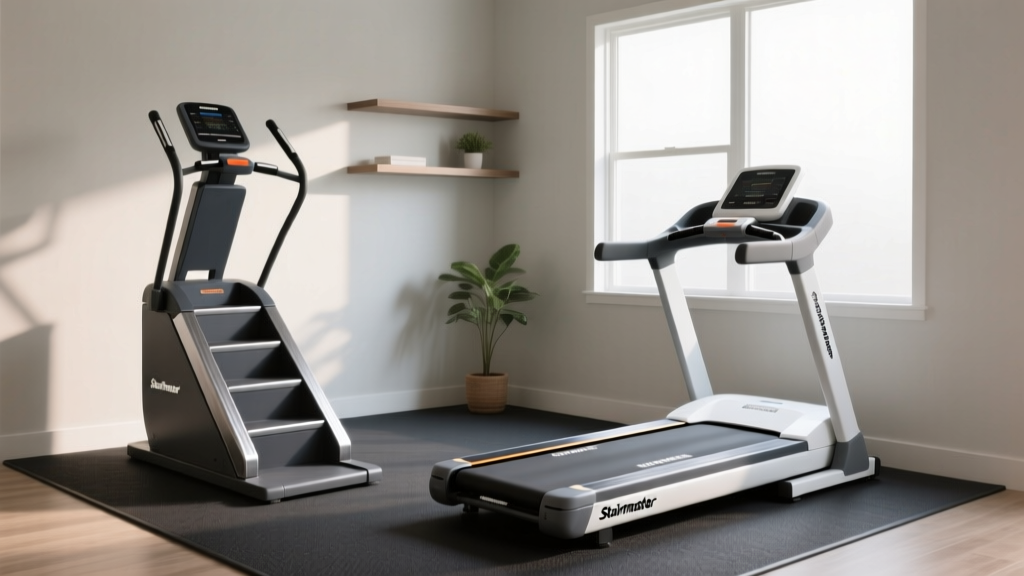
Is StairMaster Better Than Incline Treadmill for Small Spaces?
Wondering if a StairMaster is better than an incline treadmill? We compare footprints, layout design, and compact portable cardio options for small homes.

When designing a home gym or integrating fitness equipment into a multi-use living area, spatial constraints often dictate our choices just as much as our fitness goals. A frequent question we receive from home gym designers and space-conscious athletes is: is stairmaster better than incline treadmill for maximizing cardiovascular output in a limited footprint? Biomechanically, both modalities offer immense lower-body conditioning and caloric expenditure. However, from a strict space optimization and layout design perspective, the answer shifts dramatically.
Commercial stair climbers and heavy-duty incline treadmills are spatial behemoths. For the vast majority of modern homes, apartments, and multi-purpose rooms, neither is a viable option without significant structural and spatial compromises. This is where the 2026 market for compact portable cardio equipment options becomes the ultimate solution. Below, we break down the spatial math of the commercial giants, and then pivot to how you can replicate their exact physiological stimuli using space-saving, layout-friendly portable alternatives.
The Spatial Math: Commercial Giants vs. Home Layouts
Before dismissing the big machines, it is crucial to understand exactly what they demand from your floor plan. It is not just about the square footage they occupy while in use; it is about ceiling clearance, floor load distribution, and the 'visual weight' they bring to a room.
| Machine Type | Model Example (2026) | Floor Footprint | Min. Ceiling Req. | Weight / Floor Load | Avg. Price |
|---|---|---|---|---|---|
| Commercial Stair Climber | StairMaster StepMill SM5 | 16.8 sq ft (76" x 32") | 84" + User Height | 280 lbs (Concentrated) | $4,299 |
| Heavy-Duty Incline Treadmill | NordicTrack Commercial X22i | 21.2 sq ft (76.5" x 40") | 96" + User Height | 340 lbs (Distributed) | $2,999 |
| Portable Incline Walking Pad | UREVO 9% Incline Pad | 4.1 sq ft (49" x 20") | Standard 8' | 65 lbs (Easily moved) | $289 |
| Compact Vertical Stepper | MaxiClimber Classic | 4.5 sq ft (36" x 24") | Standard 8' | 33 lbs (Folds flat) | $199 |
When calculating ceiling height for an incline treadmill like the X22i, remember that the deck raises significantly at the front. At a 40% incline, the front deck elevates by over 15 inches. If you have standard 8-foot (96-inch) ceilings, a 6-foot tall user will have their head nearly brushing the drywall at max incline, creating a claustrophobic and unsafe environment. StairMasters require similar vertical clearance due to the continuous step-up motion.
Replicating the Incline Stimulus: Compact Portable Options
If your layout cannot accommodate a 340-pound treadmill with a 10-foot ceiling requirement, you must look toward compact portable cardio equipment options that mimic the posterior chain engagement of incline walking. The goal is to target the glutes, hamstrings, and calves without sacrificing your room's traffic flow.
1. High-Incline Folding Treadmills
The Sunny Health & Fitness SF-T723016 Incline Treadmill ($349 in 2026) offers a 15% manual incline. While it lacks the 40% extreme grade of commercial models, a 15% incline at a brisk 3.5 mph pace elevates the heart rate into the same VO2 max zone as flat running at 6.0 mph. Crucially, its folded footprint is just 2.5 square feet, allowing it to slide into a closet or stand flush against a wall. The visual weight is minimal, preserving the open-concept feel of a multi-use living room.
2. Motorized Incline Walking Pads
Walking pads have evolved past flat, low-speed limitations. The UREVO 9% Auto-Incline Walking Pad ($289) introduces a motorized lift mechanism into a chassis that weighs under 70 pounds. From a layout perspective, this is a game-changer. It stores entirely under a standard bed frame (requiring only 5.5 inches of vertical clearance) or stands vertically in a corner. It provides the low-impact, steady-state cardiovascular benefits recommended by the American Heart Association for daily aerobic health, without permanently dominating your floor plan.
Replicating the StairMaster Stimulus: Portable Climbers
The StairMaster is beloved for its continuous, high-resistance step-up motion, which heavily recruits the quadriceps and gluteus maximus. To replicate this in a 50-square-foot home gym or a bedroom corner, we turn to vertical and hydraulic compact portable cardio equipment options.
1. Hydraulic Auto-Steppers
The Sunny Health SF-S020026 Heavy-Duty Auto-Stepper ($149) utilizes dual hydraulic cylinders to simulate stair climbing. While it lacks the continuous rotating staircase of a StepMill, the resistance profile is remarkably similar.
- Spatial Footprint: A mere 1.5 square feet.
- Layout Integration: Can be left in the corner of a home office and used during standing desk breaks, aligning perfectly with the CDC's guidelines on integrating physical activity into daily routines to combat sedentary behavior.
- Edge Case Warning: Hydraulic steppers can overheat during sessions exceeding 45 minutes. For layout optimization, place this near a window or a fan to ensure adequate airflow for the machine's cooling vents.
2. Vertical Climbers
The MaxiClimber Classic ($199) combines the lower-body step-up of a StairMaster with the upper-body pull of a VersaClimber. Weighing just 33 pounds, its A-frame design folds completely flat (only 4 inches thick). From an interior design perspective, the MaxiClimber has a low 'visual footprint' when in use because its open-frame design allows light and sightlines to pass through it, preventing the room from feeling cramped or partitioned.
Layout Design: Integrating Portable Cardio into Multi-Use Rooms
When opting for compact portable cardio equipment options over commercial giants, your interior layout strategy must shift from dedicated zoning to dynamic flow. Here are three core principles for integrating portable cardio into shared spaces:
- The 3-Foot Clearance Rule: Even portable equipment requires a safety halo. Ensure a minimum 36-inch clearance behind and on both sides of any folding treadmill or stepper. This prevents wall scuffs and allows for safe dismounts when fatigued.
- Acoustic Dampening: Compact machines often lack the heavy sound-deadening mass of commercial treadmills. Place your walking pad or stepper over a high-density EVA foam mat (at least 3/4-inch thick). This not only protects hardwood floors from concentrated point-loads but also reduces impact noise transmission to lower floors by up to 40%.
- Visual Anchoring: Because portable equipment is small, it can look like 'clutter' if left in the middle of a room. Designate a specific 'docking station'—such as a recessed wall alcove, a dedicated corner with a contrasting paint color, or behind a decorative folding room divider—to give the equipment a deliberate, intentional place in your room's layout.
"Good home gym design isn't about fitting the biggest machine possible; it's about minimizing the friction between your daily life and your fitness habits. If a machine is too large to deploy easily, it becomes a $3,000 clothes hanger."
Biomechanical Trade-Offs: What You Lose When Downsizing
It is vital to approach compact portable cardio equipment options with realistic expectations. While they solve spatial and financial hurdles, they introduce specific biomechanical compromises compared to a StairMaster or an X22i Incline Treadmill.
Stride Length and Gait Alteration
Portable walking pads typically feature belts between 40 and 45 inches long. If you are taller than 5'10", you will be forced to shorten your natural stride, which can alter your gait cycle and reduce hamstring engagement. To counter this, focus on increasing your cadence (steps per minute) rather than stride length, keeping your posture upright to maximize glute activation.
Step Height Limitations
A commercial StairMaster features an 8-inch step height, requiring deep hip flexion and massive glute recruitment. Hydraulic mini-steppers typically offer a maximum vertical travel of only 4 to 5 inches. To compensate for this reduced range of motion, utilize the resistance bands often included with these steppers, or incorporate a pair of 3-pound ankle weights to increase the gravitational load on the upward phase of the step.
Final Verdict: Optimizing Your Cardio Layout
So, is stairmaster better than incline treadmill for your home? If you possess a dedicated 150-square-foot room with 10-foot ceilings and reinforced flooring, the StairMaster offers a slightly higher caloric burn per minute due to the constant vertical lifting of body weight. However, for 95% of home environments, both machines are spatial liabilities.
By pivoting to compact portable cardio equipment options—like the UREVO incline walking pad for posterior chain engagement or the MaxiClimber for full-body vertical conditioning—you preserve the architectural integrity and multi-use functionality of your home. You trade a fraction of biomechanical perfection for a massive gain in spatial efficiency, ensuring your equipment remains an integrated, accessible part of your daily routine rather than an imposing monument to good intentions.
More gear to consider
All reviews
2026 Trends: The Folding Interval Running Workout Treadmill Review
Dizzy After Treadmill? 2026 Compact Portable Cardio Market Trends

Curved vs Motorized: Lode Valiant 2 Rehab XXL Treadmill Specs, Speed & Incline
Funmily Treadmill Reviews vs Air Bike Assault Bike Comparison 2026

Elliptical vs Treadmill Cardio: Testing the Weslo G 4.0 Treadmill
