
Nike Run Club Treadmill vs Stationary Bike Types: Maintenance Guide
Master home gym longevity. Compare maintenance for your Nike Run Club treadmill and stationary bike types: upright, recumbent, and spin care.

Building a comprehensive home gym requires a significant financial investment, and protecting that investment means understanding the distinct mechanical needs of your cardio fleet. Whether you are logging high-mileage weeks using a smart deck as your dedicated Nike Run Club treadmill or cross-training to save your joints on a stationary bike, your equipment faces unique mechanical stresses. As of 2026, the integration of connected fitness apps has pushed home treadmills to run longer and hotter than ever before, while advanced magnetic resistance systems on modern bikes require specialized care. According to Consumer Reports, the average lifespan of a well-maintained home treadmill is 10 to 12 years, while neglected machines often suffer catastrophic motor or deck failure within 36 months.
This guide bridges the gap between motorized treadmill care and the specific mechanical nuances of stationary bike types—upright, recumbent, and spin. By mastering these maintenance protocols, you will eliminate squeaks, prevent electronic failures, and ensure your gear performs flawlessly for years.
The Nike Run Club Treadmill Maintenance Protocol
When you sync your smartwatch or tablet for a guided Nike Run Club treadmill workout, you are often committing to 45 to 90 minutes of continuous belt friction. This generates immense heat and particulate dust. The most common failure mode in home treadmills (such as the popular NordicTrack Commercial 1750 or Horizon 7.8) is not the motor itself, but the walking belt drying out, which causes the motor to overwork and trip the thermal breaker.
Step-by-Step Belt Lubrication and Alignment
- Test the Friction: Slide your hand under the walking belt in the center of the deck. If it feels dry or gritty, lubrication is required. (Perform this every 130 miles or 3 months).
- Apply 100% Silicone: Use only 100% silicone liquid lubricant (approx. $12 to $15 per bottle). Apply exactly 1 ounce in a zig-zag pattern across the deck width.
- Distribute the Lube: Turn the machine on to 3 MPH and walk on the belt for 3 minutes to spread the silicone evenly.
- Check Tension: Lift the belt from the center of the deck. It should raise exactly 2 to 3 inches. If it lifts higher, tighten the rear roller bolts a quarter-turn clockwise using an Allen wrench.
Stationary Bike Types: Upright, Recumbent, and Spin
While treadmills rely on high-voltage motors and friction decks, stationary bikes utilize drivetrains, flywheels, and bearings. The maintenance required varies wildly depending on the bike's geometry and resistance type. The American College of Sports Medicine (ACSM) frequently highlights cross-training on bikes to reduce impact forces, making these machines essential companions to your treadmill. However, a recumbent bike's seat rail requires entirely different care than a spin bike's bottom bracket.
Comparative Maintenance Matrix: Treadmill vs. Bike Types
Use the table below to schedule your monthly and annual maintenance tasks based on your specific equipment roster.
| Equipment Type | Primary Stress Point | Key Maintenance Task | Frequency & Est. Cost |
|---|---|---|---|
| Smart Treadmill (NRC Setup) | Belt / Deck Friction | 100% Silicone Lubrication | Every 3 mos / $15 |
| Spin Bike (e.g., Schwinn IC4) | Crank Arms & Sweat Corrosion | Torque Check & Enzymatic Wipe | Monthly / $10 |
| Recumbent (e.g., Sole R92) | Seat Slider Rails | PTFE Dry Lube Application | Bi-Annually / $8 |
| Upright Bike (e.g., ProForm) | Bottom Bracket Bearings | Listen for grinding / Replace | Annually / $35+ |
Deep Dive: Spin Bike Longevity (Friction vs. Magnetic)
Spin bikes, designed for high-cadence, out-of-the-saddle interval training, endure the highest physical abuse in the home gym. The number one killer of spin bikes is not mechanical wear, but galvanic corrosion from human sweat. Human sweat contains urea, lactic acid, and sodium chloride, creating a highly corrosive electrolyte that eats through steel frames and seizes adjustable pop-pins.
The Sweat Mitigation Protocol
- Ditch the Water Wipe: Wiping a bike down with a damp water towel merely spreads the salt. You must use an enzymatic cleaner or a 50/50 mix of water and white vinegar to break down the urea.
- Protect the Pop-Pins: The adjustment knobs for the seat and handlebars use spring-loaded steel pop-pins. Once a month, pull the pins out, wipe them with a dry microfiber cloth, and apply a microscopic drop of synthetic grease to prevent them from seizing inside the frame tube.
- Crank Arm Torque: Out-of-the-saddle climbing places up to 800 watts of lateral force on the pedals. Use a torque wrench to check the crank arm bolts monthly. For square-taper bottom brackets (common on budget spin bikes), torque to 35-40 Nm. For spline interfaces (like ISIS or Octalink found on premium Keiser M3i models), torque to 40-45 Nm. Failure to do this will result in the crank arm stripping the bottom bracket spindle, turning a $5 bolt into a $120 replacement job.
Recumbent and Upright Bike: Drivetrain and Console Care
Recumbent bikes (like the Sole R92 or NordicTrack Commercial V25) are favored for their ergonomic seating and low impact profile, but their elongated frames introduce unique maintenance hurdles.
Recumbent Seat Rail Lubrication
The seat on a recumbent bike slides along a metal or aluminum rail to accommodate different inseams. Over time, dust and pet hair bind to wet lubricants, creating a grinding paste that ruins the rail. Never use wet oils or silicone sprays here. Instead, use a PTFE (Teflon) dry lubricant. Spray it onto a rag and wipe the rail. The PTFE dries completely, leaving a frictionless film that repels dust and debris.
Upright Bike Pedal Threading
Upright bikes often suffer from 'clicking' pedals. This is rarely a pedal failure; it is usually a threading issue. The left pedal spindle is reverse-threaded. If you hear a rhythmic clicking on the downstroke, remove the left pedal, clean the threads with a wire brush, apply a thin layer of anti-seize compound, and reinstall it, tightening to 35 Nm. This simple 5-minute fix resolves 90% of upright bike noise complaints.
Environmental Control: The Hidden Variable
According to the Environmental Protection Agency (EPA), maintaining proper indoor humidity is vital for both human health and the preservation of indoor materials. For your cardio equipment, ambient humidity dictates the lifespan of electronic consoles and metal frames.
'Keeping indoor relative humidity between 30% and 50% is critical to prevent the growth of mold and the corrosion of sensitive indoor materials and electronics.'
If your home gym is in a basement or garage where humidity exceeds 60%, the internal PCB (Printed Circuit Board) of your Nike Run Club treadmill console is at risk of micro-corrosion on the solder joints. Invest in a dedicated dehumidifier for the gym space, and never place your treadmill or bike directly against an exterior concrete wall, which can transfer moisture and cause localized rust on the machine's base feet.
Troubleshooting Common Failure Modes
Even with rigorous maintenance, edge cases occur. Here is how to diagnose the most common cardio machine failures before calling a technician:
- Treadmill E1 / E2 Error Codes: These usually indicate a speed sensor or motor controller fault. Before panicking, unplug the machine, remove the motor hood, and use a can of compressed air to blow out carbon dust from the motor brushes. Carbon buildup can cause the optical sensor to misread the flywheel RPMs, triggering a false error code.
- Spin Bike 'Ghost' Resistance: If your magnetic spin bike randomly changes resistance or the console displays '--', the servo-motor cable connecting the console to the flywheel magnet array has likely vibrated loose. Trace the cable down the frame tube and ensure the RJ45 or barrel connector is fully seated.
- Recumbent Belt Slip: If the pedals spin freely without engaging the flywheel, the internal Poly-V drive belt has lost tension. Most modern recumbents feature an idler pulley with an adjustment bolt. Tighten the bolt clockwise until the belt has exactly half an inch of deflection when pressed with your thumb.
Conclusion: The ROI of Proactive Care
Treating your cardio equipment as an interconnected ecosystem rather than isolated machines is the key to long-term home gym success. By pairing the rigorous belt-care required for your Nike Run Club treadmill setup with the specialized corrosion-prevention and torque-checks demanded by upright, recumbent, and spin bikes, you effectively double the operational lifespan of your gear. Dedicate 30 minutes on the first Sunday of every month to run through these protocols, and your equipment will remain silent, smooth, and ready for every workout for the next decade.
More gear to consider
All reviews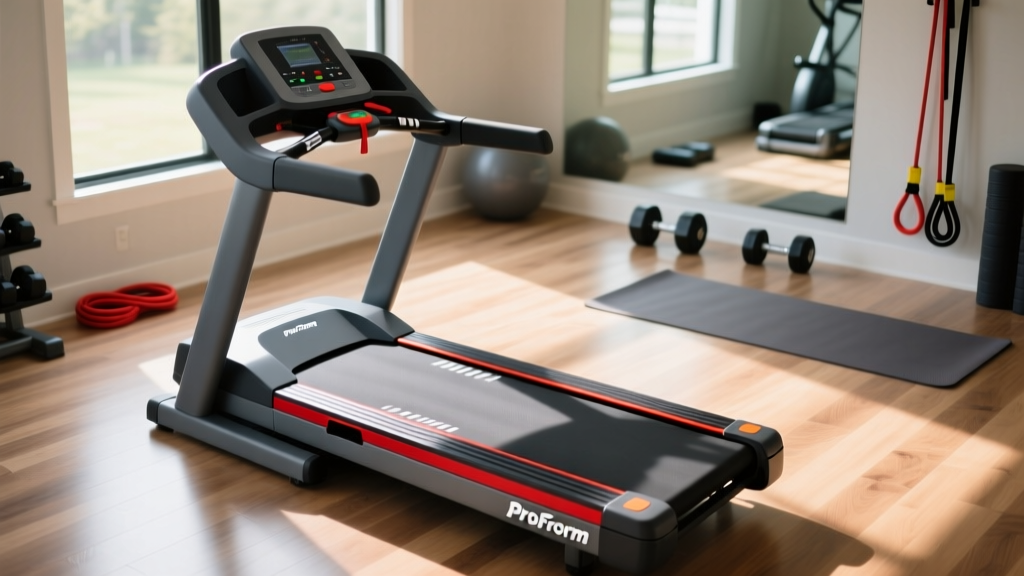
ProForm Treadmill Maintenance & Cardio Noise Level Comparison

Apartment-Friendly Cardio: Noise Level Comparison & Calories Burned Walking on a Treadmill
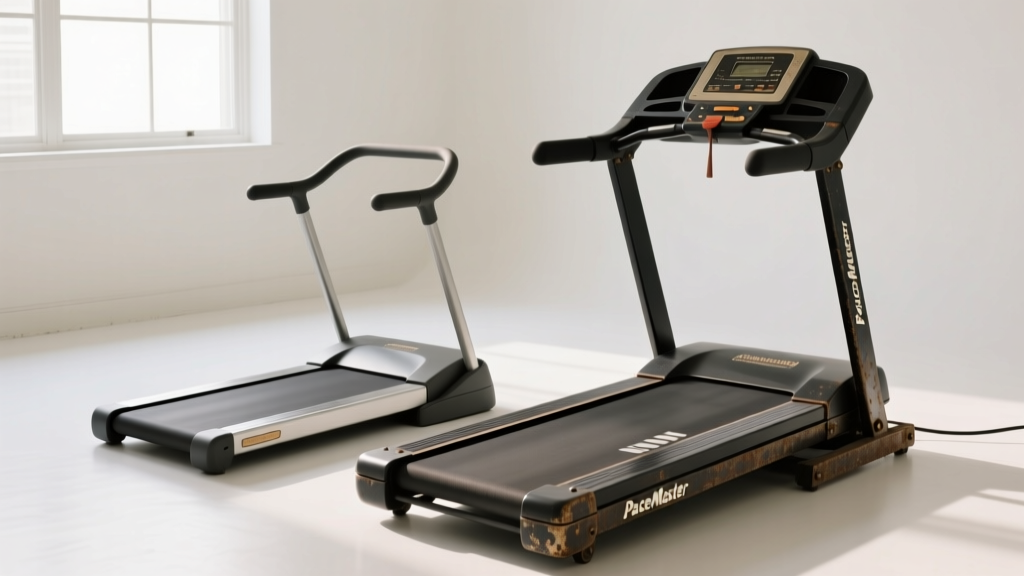
Walking Pad vs PaceMaster Bronze Basic: 2026 Treadmill Guide

How to Use a Manual Treadmill Properly: Layouts & Belt Maintenance

What NordicTrack X24 Treadmill Reviews Miss: Belt Maintenance
