Assault Bike vs Treadmill Gym Machine: 2026 Cardio Trends
Analyze the 2026 cardio market as air bikes challenge the traditional treadmill gym machine. Compare Assault, Rogue, and Schwinn models for ROI and biomechanics.

The Shift in Cardio: Air Bikes vs. The Traditional Treadmill Gym Machine
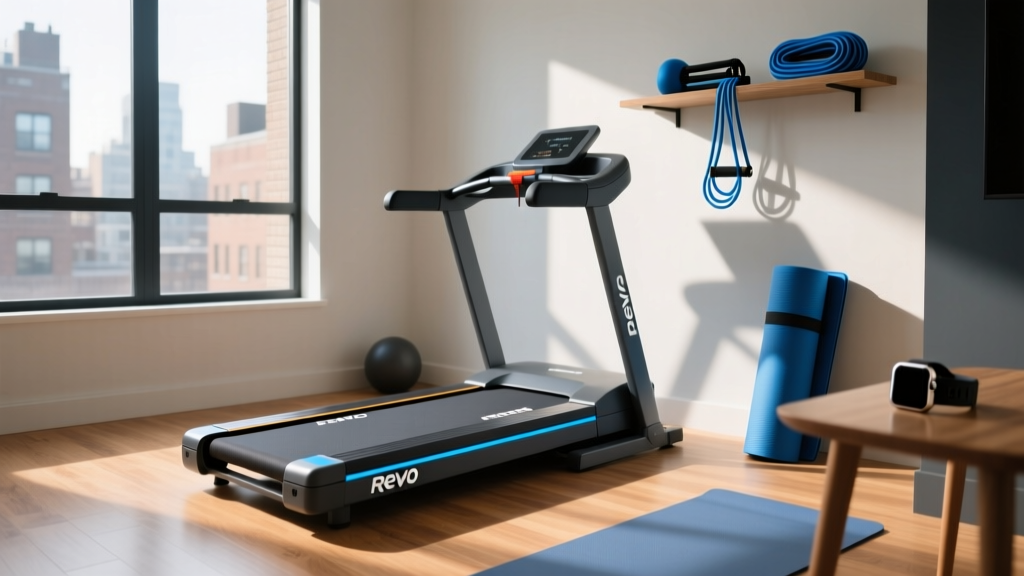
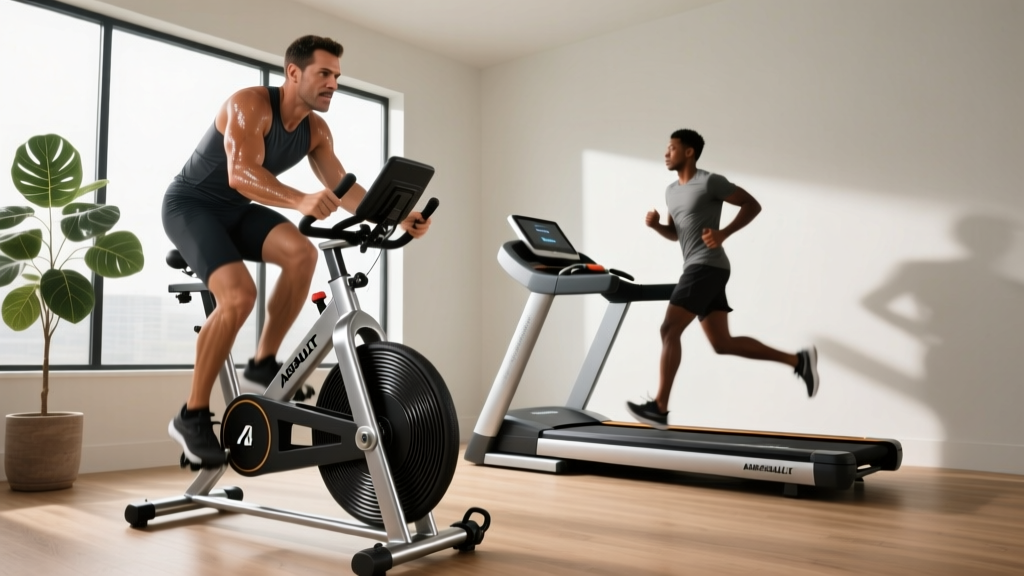
The commercial and home fitness landscape in 2026 is undergoing a massive reallocation of floor space. For decades, the standard treadmill gym machine has been the undisputed anchor of cardio zones. However, recent market analysis reveals a sharp pivot toward high-intensity, low-impact air bikes. Driven by the explosive growth of functional fitness, CrossFit methodologies, and HIIT (High-Intensity Interval Training) protocols, equipment buyers are increasingly weighing the ROI of an Assault Bike against traditional motorized treadmills.
While a premium commercial treadmill remains essential for steady-state endurance training and marathon prep, the modern air bike has carved out a dominant niche in metabolic conditioning. This trend report breaks down the biomechanics, total cost of ownership, and market positioning of the top air bikes disrupting the traditional cardio hierarchy.
2026 Market Snapshot: Floor Space & ROI
- Footprint: A standard commercial treadmill requires 22-25 square feet of floor space. An air bike requires just 12-14 square feet.
- Power Requirements: Treadmills require dedicated 20-amp circuits; air bikes are entirely self-powered and generator-based.
- Annual Maintenance: Motorized treadmills average $350-$500 per year in belt replacements, deck lubrication, and motor brush servicing. Air bikes average under $60 per year in basic tension adjustments and part replacements.
Deep Dive: Top Air Bike Models Disrupting the Market
To understand why facility owners and home gym enthusiasts are diversifying away from the traditional treadmill gym machine, we must look at the engineering leaps made by the top three air bike manufacturers. The industry standard has officially shifted from noisy, high-maintenance chain drives to ultra-smooth, high-tension poly-V belt drives.
| Specification | Assault AirBike Elite | Rogue Echo Bike V2 | Schwinn Airdyne AD7 |
|---|---|---|---|
| Drive System | Poly-V Belt | Poly-V Belt | Single-Stage Belt |
| Fan Blades | 25 Blades | Custom 8-Blade Propeller | 26 Blades |
| Frame Weight | 115 lbs | 123 lbs | 115 lbs |
| Max User Capacity | 350 lbs | 350 lbs | 350 lbs |
| 2026 MSRP | $1,299 | $1,250 | $1,199 |
Assault AirBike Elite: The Commercial Standard
The Assault AirBike Elite remains the most ubiquitous model in commercial boxes globally. The transition to a belt drive system eliminated the metallic clatter of the older chain-driven models, making it viable for shared living spaces and quiet home gyms. The 25-blade fan provides a linear resistance curve that scales perfectly with user output, though it can feel slightly less aggressive at peak RPMs compared to the Rogue.
Rogue Echo Bike V2: The Biomechanical Powerhouse
Rogue Engineering designed the Echo V2 with a focus on absolute rigidity. Weighing in at 123 lbs with a massive steel footprint, the Echo V2 exhibits zero frame flex during aggressive out-of-the-saddle sprints. The custom 8-blade propeller fan moves a massive volume of air, creating a steeper resistance curve at high speeds. This makes it the preferred choice for elite athletes targeting peak wattage output in under 20 seconds.
Schwinn Airdyne AD7: The Ergonomic Alternative
Schwinn, the pioneer of the air bike category, offers the AD7 with a focus on joint-friendly ergonomics. The pedal spacing (Q-factor) is slightly narrower, mimicking a natural road bike stance, which reduces lateral knee strain during long-duration intervals. The 26-blade fan delivers a smoother, more consistent drag, making it ideal for rehabilitation and steady-state aerobic work.
Biomechanics and ROI: Air Bike vs. Treadmill Gym Machine
When deciding between purchasing a high-end treadmill gym machine and an air bike, the biomechanical differences dictate the use case. According to experts at the Mayo Clinic, traditional running on a treadmill subjects the knee and ankle joints to impact forces equivalent to 2.5 times the user's body weight. Conversely, the air bike is a zero-impact, closed-chain kinetic exercise.
'The physics of wind resistance dictate that drag increases with the cube of the velocity. This means that to double your speed on an air bike, you must produce eight times the power. This infinite resistance ceiling is something no motorized treadmill can replicate without a specialized curved deck.'
Caloric Expenditure and EPOC
Research published via Harvard Health Publishing highlights the profound metabolic impact of anaerobic intervals. Because the air bike recruits both the upper body (push/pull mechanics) and the lower body simultaneously, it demands a higher cardiac output than treadmill walking or jogging. A 20-minute max-effort air bike session triggers significant EPOC (Excess Post-exercise Oxygen Consumption), allowing users to burn calories at an accelerated rate for hours post-workout—a highly sought-after adaptation in modern fitness programming.
Maintenance & Failure Modes: What Gym Owners Must Know
From a facility management perspective, the total cost of ownership heavily favors the air bike. Understanding the specific failure modes of both machines is critical for 2026 purchasing decisions.
Treadmill Failure Modes
- Deck Delamination: The MDF (Medium-Density Fiberboard) decks on commercial treadmills compress and warp over time due to repetitive impact and friction, requiring $400+ replacements every 2-3 years in high-traffic gyms.
- Motor Inverter Board Failure: Power surges and constant DC motor brush wear lead to inverter board burnouts, often costing upwards of $800 in parts and labor.
- Belt Stretching: Requires bi-monthly tensioning and silicone lubrication to prevent the motor from over-amping and tripping facility breakers.
Air Bike Failure Modes
- Bottom Bracket Bearing Wear: The lateral forces applied to the crank arms during high-wattage sprints can degrade the bottom bracket bearings. Replacement is a simple $30 fix requiring a standard crank puller.
- Poly-V Belt Slipping: Over 3-4 years, the belt drive may lose tension, resulting in a slipping sensation during peak acceleration. Most models feature an easy-to-use sliding tensioner bracket to resolve this in under 5 minutes.
- LCD Sweat Damage: The primary point of failure for the console is sweat corrosion on the membrane buttons. Using a protective silicone cover extends console life by years.
For commercial gym owners, swapping out three $10,000 treadmills for ten $1,250 air bikes not only saves $17,500 in upfront capital but reduces annual maintenance overhead by over 80%. The CDC recommends a mix of moderate and vigorous aerobic activity, and air bikes provide an incredibly efficient pathway to the vigorous category without the orthopedic wear-and-tear of running.
The Consumer Verdict: Which Machine Wins Your Floor Plan?
The debate between the air bike and the treadmill gym machine is no longer about which is inherently 'better,' but rather which aligns with your specific physiological goals and spatial constraints.
Decision Framework for 2026 Buyers
Choose the Air Bike (Assault/Rogue) if:
- Your primary goal is metabolic conditioning, HIIT, and CrossFit-style WODs.
- You have a limited footprint (e.g., a garage gym or apartment balcony) and lack dedicated 20-amp electrical circuits.
- You are managing joint pain, recovering from lower-body impact injuries, or require a zero-impact modality.
Choose the Treadmill Gym Machine if:
- You are training for specific endurance events like marathons or triathlons and require precise pacing and incline simulation.
- Your primary users prefer steady-state, low-RPE (Rate of Perceived Exertion) cardio while consuming media.
- You have the dedicated square footage and electrical infrastructure to support a commercial-grade running deck.
As we move through 2026, the market data is clear: the air bike is no longer just a niche accessory for hardcore athletes. With refined belt-drive engineering, reduced noise profiles, and unmatched caloric ROI, models like the Rogue Echo V2 and Assault AirBike Elite have firmly established themselves as mandatory staples in the modern cardio arsenal, challenging the long-held supremacy of the motorized treadmill.
More gear to consider
All reviews
Beyond the Treadmill Buying Guide: Rowing Machine Setup

2026 Trends: Elliptical vs Running Treadmill Curved Slat Designs

Folding Treadmill Review: Budget & Treadmill Oil Lubricant Costs

What Is a Good Rowing Machine for Home Use? 2026 Guide

Gold Gym 430i Treadmill Review: Small Space Layouts