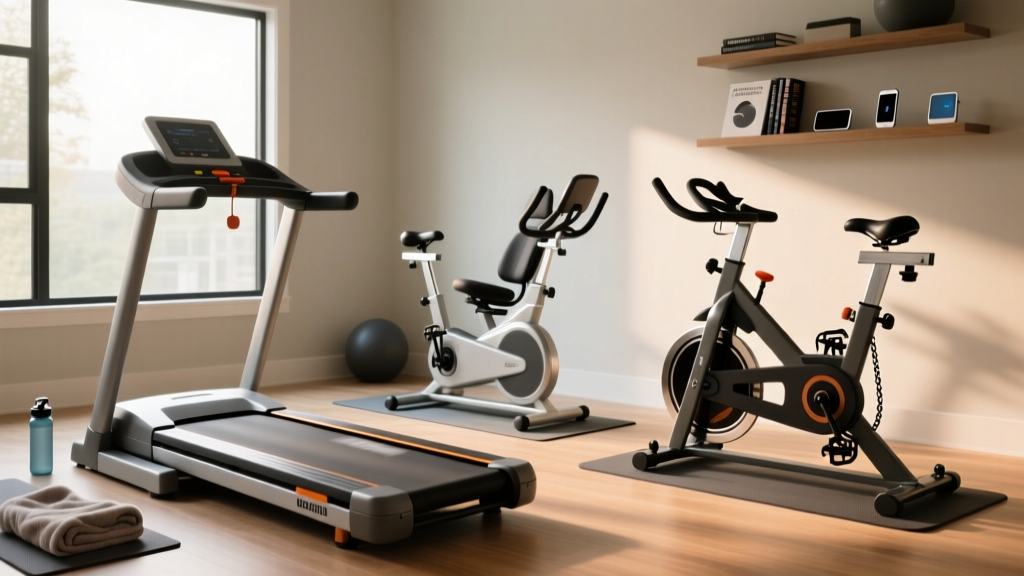
Indie Treadmill Classes & Stationary Bike Maintenance
Discover how to maintain upright, recumbent, and spin bikes to complement your indie treadmill classes with expert longevity tips and repair guides.

The Cross-Training Imperative: Indie Treadmill Classes and Bike Longevity
In 2026, the explosion of indie treadmill classes—ranging from boutique virtual running programs to independent coach VODs and local studio streaming—has revolutionized home cardio. However, the high-impact nature of daily treadmill running frequently leads to overuse injuries like plantar fasciitis and tibial stress syndrome. To mitigate this, sports physiologists and physical therapists strongly recommend cross-training on stationary bikes to maintain cardiovascular fitness while unloading the joints. According to the American Council on Exercise (ACE), integrating low-impact cycling into a runner's regimen can reduce lower-extremity injury rates by up to 34%.
Yet, a critical blind spot emerges in the home gym: because the stationary bike is often relegated to 'active recovery' status, its maintenance is routinely ignored until a component fails mid-ride. Whether you are using an indoor spin bike for high-cadence intervals, an upright bike for steady-state zones, or a recumbent bike for joint rehabilitation, each machine requires a distinct maintenance protocol. Below, we break down the exact mechanical care required for the three primary stationary bike types to ensure they survive the rigors of a heavy cross-training schedule.
Expert Insight: The transition from high-impact indie treadmill classes to low-impact cycling alters the biomechanical load but increases sweat accumulation on the bike frame. Treadmill runners often produce higher sweat volumes during recovery rides due to residual core temperature elevation, accelerating galvanic corrosion on bike components.Spin Bikes (Indoor Cycles): Battling Sweat Corrosion and Bearing Wear
Spin bikes, such as the Keiser M3i or Schwinn IC4, are the closest analogue to the outdoor cycling experience and are frequently used for high-intensity interval training (HIIT) to complement endurance treadmill work. The primary enemy of the spin bike is not mechanical friction, but human sweat.
The Chemistry of Sweat Corrosion
Human sweat has a pH ranging from 4.5 to 7.0 and contains high concentrations of urea, sodium chloride, and lactic acid. When this acidic moisture drips onto the carbon steel or bare aluminum flywheels of indoor cycles, it triggers rapid galvanic corrosion. Over a 6-month period of heavy use, this micro-pitting can degrade the smooth surface of the flywheel, leading to inconsistent magnetic resistance and a 'gritty' pedal feel.
- The Fix: Never use bleach-based or highly alkaline household cleaners on your spin bike. Instead, use a pH-neutral enzymatic cleaner (like GymWipes or a diluted solution of Simple Green) immediately after every ride.
- Sweat Guards: If your bike lacks a neoprene sweat guard over the bottom bracket, install an aftermarket cover ($15-$25). The bottom bracket houses the 6806-2RS sealed bearings; once sweat penetrates these seals, the bearings will grind and require a specialized $40 bearing puller tool to replace.
Pedal Thread and Crank Arm Maintenance
Unlike treadmills where your feet are relatively stable, spin classes involve aggressive out-of-the-saddle climbing and high-cadence sprints (110+ RPM). This places immense lateral torque on the crank arms. Every 90 days, remove the pedals using a 15mm pedal wrench, clean the threads with a wire brush, and apply a fresh layer of waterproof lithium grease. Never use WD-40 on pedal threads, as it is a solvent and penetrant, not a load-bearing lubricant.
Upright Stationary Bikes: Belt Tension and Console Diagnostics
Upright bikes, like the Sole B94 or NordicTrack S22i, position the rider similarly to a traditional road bike but with a heavier, more stable base. These machines typically rely on a Poly-V ribbed belt to transfer power from the crank to the internal flywheel. While quieter than chains, these belts are highly susceptible to stretching and environmental degradation.
The 1/2-Inch Deflection Test
A slipping belt on an upright bike manifests as a 'dead spot' in the pedal stroke or a sudden drop in resistance during heavy climbs. To check belt tension, unplug the machine and remove the side shroud. Locate the midpoint of the Poly-V belt between the crank pulley and the flywheel pulley. Press down firmly with your thumb. The belt should yield exactly 1/2 inch (12mm) of deflection. If it pushes down more than 3/4 inch, loosen the motor mount bolts and slide the tensioner bracket forward until the 1/2-inch specification is met.
⚠️ Warning: Do not apply belt dressing or silicone spray to a squeaking Poly-V belt. These chemicals attract dust and will cause the belt to slip permanently, requiring a full replacement (typically $45-$85 depending on the model).Console Wiring and Pivot Point Fraying
Upright bikes often feature articulating handlebars or adjustable console arms. The internal ribbon cables that connect the handlebar heart-rate sensors to the main console are prone to fraying at the pivot hinge. If your heart rate monitor becomes erratic, inspect the hinge housing. Applying a small dab of dielectric grease to the connector pins can prevent oxidation and restore accurate telemetry, ensuring your recovery metrics remain reliable after grueling indie treadmill classes.
Recumbent Bikes: Track Rollers and Mesh Seat Tensioning
Recumbent bikes, such as the Life Fitness RS1 or NuStep models, are the ultimate rehabilitation and active recovery tools. Because the rider is seated in a reclined position with a backrest, these machines eliminate the core and lower back strain associated with upright cycling, making them ideal for the day after a high-impact treadmill session. However, their complex seating mechanisms introduce unique failure modes.
Seat Track and Roller Maintenance
The adjustable seat on a recumbent bike glides along an aluminum or steel extruded track using polyurethane rollers. Over time, pet hair, dust, and clothing fibers wrap around the roller axles. This debris creates flat spots on the rollers, resulting in a bumpy, jerky seat adjustment that can eventually crack the plastic seat carriage.
- Vacuum the seat track weekly using a crevice tool.
- Wipe the aluminum rails with a microfiber cloth dampened with isopropyl alcohol to remove skin oils and dust.
- Apply a dry PTFE (Teflon) lubricant to the track. Avoid wet lubricants or silicone sprays, which act as magnets for airborne dust.
Mesh Seat and Bungee Cord Replacement
Many premium recumbent bikes utilize a suspended mesh backrest for ergonomic lumbar support. After 18 to 24 months of daily use, the elastic bungee cords or tension springs securing the mesh to the frame lose their elasticity, leading to lower back sag. Replacement bungee kits cost between $20 and $35 and can be installed in under 15 minutes using a standard flathead screwdriver and needle-nose pliers, instantly restoring the ergonomic integrity of the machine.
The 2026 Home Gym Maintenance Matrix
To keep your cross-training arsenal in peak condition, implement this structured maintenance calendar. Consistent care not only extends the lifespan of your equipment but ensures that your biomechanical data remains accurate, a crucial factor when tracking recovery from intense indie treadmill classes. The American College of Sports Medicine (ACSM) emphasizes that equipment calibration is just as vital as the workout itself for preventing compensatory movement patterns.
| Bike Type | Weekly Task | Quarterly Task | Estimated Annual Cost |
|---|---|---|---|
| Spin Bike | Wipe flywheel with pH-neutral cleaner; check sweat guard. | Grease pedal threads; inspect bottom bracket for lateral play. | $25 - $40 |
| Upright Bike | Dust console vents; wipe handlebar sensors. | Perform 1/2-inch Poly-V belt deflection test; check wedge bolts. | $15 - $30 |
| Recumbent Bike | Vacuum seat track; wipe down mesh backrest. | Apply dry PTFE to rails; inspect tension springs for micro-fractures. | $20 - $45 |
By treating your stationary bikes with the same respect and mechanical diligence you apply to your treadmill, you create a resilient, injury-proof home gym ecosystem. Whether you are crushing a virtual 5K or flushing lactic acid on the recumbent, properly maintained equipment ensures every watt of effort translates directly to your fitness goals.
More gear to consider
All reviews
Is Deer Run a Good Treadmill? Under-Desk Office Review & Care

Curved vs Motorized Treadmill: How Long to Walk 10000 Steps?
Curved vs Motorized Treadmill Speed Conversion & Troubleshooting

Stationary Bike Types vs NordicTrack T Series 5 Treadmill (2026)

Elliptical vs Treadmill: Trends for a Fat Person on a Treadmill
