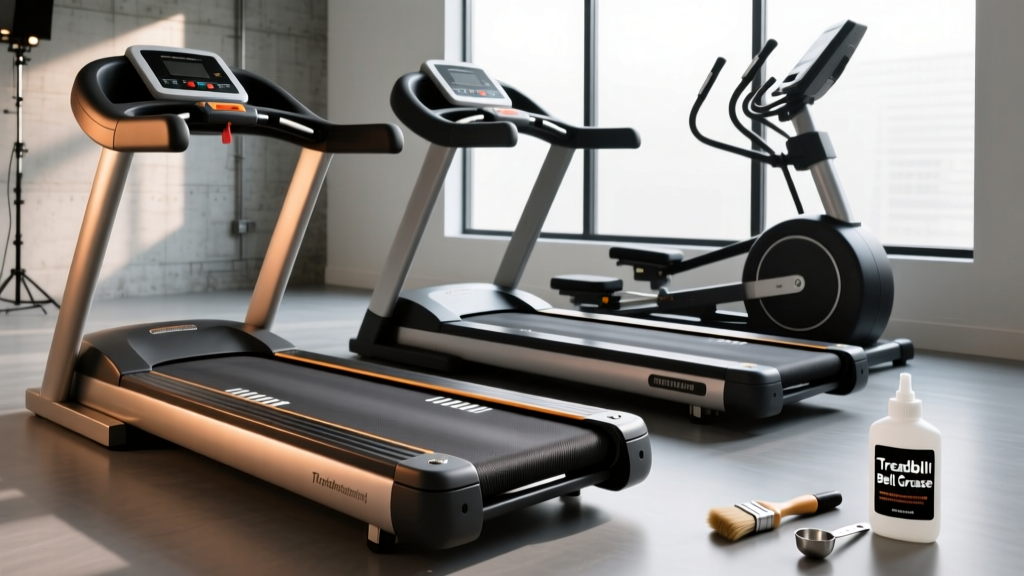
Curved vs Motorized Treadmill: How to Grease a Treadmill Belt
Compare curved manual and motorized treadmills. Learn key maintenance differences and exactly how to grease a treadmill belt for optimal performance.

The Home Gym Dilemma: Curved Manual vs. Motorized Treadmills
As we navigate the fitness equipment landscape in 2026, the debate between curved manual treadmills and traditional motorized models remains one of the most common dilemmas for home gym builders. On one side, you have the self-powered, biomechanically demanding curved runners like the AssaultRunner Elite ($3,299) or the premium Woodway Curve ($6,500). On the other, you have the tech-heavy, motor-driven staples like the Sole F80 ($999) or the NordicTrack Commercial 1750 ($1,999). While most buyers focus on screen size, incline capabilities, or footprint, the true differentiator that impacts your long-term ownership experience is hidden beneath the deck: maintenance.
Understanding the mechanical differences between these two machine types is crucial, especially when it comes to routine upkeep. If you own a motorized model, knowing how to grease a treadmill belt is a mandatory skill that will save you hundreds of dollars in replacement parts. If you own a curved manual treadmill, the maintenance protocol is entirely different. This guide breaks down the mechanical realities of both systems and provides a definitive, step-by-step lubrication masterclass for motorized users.
Core Mechanical Differences & Maintenance Profiles
The fundamental difference between a curved and a motorized treadmill lies in how the running surface interacts with the machine's frame. Motorized treadmills use a continuous loop of PVC or polyurethane that drags across a solid deck. This creates constant, high-friction heat. Curved treadmills, conversely, use individual vulcanized rubber slats attached to a dual-track belt system that rolls on sealed polyurethane bearings. There is no solid deck to drag against.
| Feature | Curved Manual (e.g., Woodway Curve) | Motorized (e.g., Sole F80) |
|---|---|---|
| Drive System | Self-powered (user's stride) | Electric motor (2.5 to 4.0 CHP) |
| Belt Type | Vulcanized rubber slats on TPE core | Continuous 2-ply PVC/Polyurethane |
| Deck Friction | None (rolls on sealed bearings) | High (slides on phenolic/MDF deck) |
| Lubrication Needed? | No (bearings are pre-sealed) | Yes (100% silicone every 3-6 months) |
| Primary Failure Mode | Bearing degradation / Slat tearing | Deck warping / Motor burnout |
Why Friction Dictates Your Maintenance Routine
According to equipment maintenance guidelines from Sole Fitness, the friction generated between a motorized belt and the deck is the number one cause of premature treadmill failure. When a belt runs dry, the coefficient of friction spikes. This forces the drive motor to draw excess amperage to keep the belt moving, which eventually fries the motor controller or burns out the windings. Furthermore, the excessive heat melts the phenolic resin coating on the wooden deck, causing the belt to stick, fray, and ultimately snap.
Curved treadmills bypass this issue entirely. Because the slat belt rides on precision steel bearings housed in the side rails, there is no surface-to-surface dragging. However, this does not mean curved treadmills are maintenance-free; they simply require a different type of mechanical attention, which we will cover later in this guide.
Step-by-Step: How to Grease a Treadmill Belt (Motorized Models)
If you own a motorized treadmill, proper lubrication is non-negotiable. Many beginners make catastrophic errors during this process, such as using the wrong chemicals or over-tightening the belt afterward. Here is the exact, manufacturer-approved methodology for applying lubricant safely and effectively.
⚠️ CRITICAL WARNING: The WD-40 MythNever use standard WD-40, 3-in-One oil, or any petroleum-based lubricant on a treadmill. Petroleum distillates will chemically react with the PVC belt, causing it to stretch, degrade, and melt. It will also strip the protective wax coating off your deck. You must use 100% pure silicone liquid (such as Horizon Fitness Silicone Lubricant or Impresa Products Treadmill Lube).
Step 1: Prep and Safety Protocol
Always unplug the treadmill from the wall outlet before beginning. You do not need to loosen the rear roller bolts to lubricate the belt. Instead, find the center of the treadmill deck. Reach under the edge of the belt with your dominant hand and gently lift it about 2 to 3 inches off the deck. If your belt is too tight to lift, you may need to use a 6mm Allen wrench to loosen the rear end caps by exactly one-quarter turn on each side.
Step 2: Measure and Apply the Silicone
More is not better. Over-lubricating will cause the silicone to squeeze out the sides, creating a slipping hazard on your floor and attracting dust that turns into an abrasive paste.
- Squeeze the bottle to release air before inserting the nozzle.
- Slide the nozzle under the belt, as close to the center of the deck as possible.
- Apply a zig-zag pattern of 100% silicone, using exactly 0.5 to 1.0 ounces of liquid per side.
- Repeat this process on the left and right halves of the deck.
Step 3: Distribute the Lubricant
Plug the machine back in. Turn the treadmill on and set the speed to 1.0 to 1.5 MPH. Do not stand on the belt yet. Let it run empty for 2 minutes. Then, step onto the side rails, start the machine, and carefully begin walking at a slow pace for 3 to 5 minutes. Your body weight will press the silicone evenly into the microscopic pores of the phenolic deck. Finally, use a clean microfiber cloth to wipe away any excess silicone that has seeped out onto the plastic side rails.
Curved Treadmill Maintenance: What to Do Instead
Because you cannot (and should not) grease a curved treadmill belt, owners of the AssaultRunner or Woodway Curve must focus on tension and bearing health. The vulcanized rubber slats on a curved treadmill are held together by a Kevlar-reinforced internal cord. Over time, this cord stretches.
Gear reviews and biomechanical analyses, such as those published by Consumer Reports, note that a loose slat belt on a curved runner will cause a 'sluggish' feeling at the top of the curve and can lead to the slats skipping on the drive sprockets. To fix this, you must tension the rear axle. Using a 19mm or 21mm socket wrench (depending on the brand), turn the rear tensioning nuts clockwise by exactly one-quarter turn per side. Always adjust both sides equally to prevent the belt from tracking off-center and grinding against the side panels.
Real-World Costs & Failure Modes: A Financial Breakdown
When deciding between these two machine types, or when budgeting for upkeep, it helps to look at the actual financial impact of maintenance failures in 2026.
💰 Maintenance & Replacement Cost Matrix
- Motorized Belt & Deck Replacement: $150 - $350 (Required every 3-5 years if poorly lubricated; up to 10 years if maintained).
- Motorized Drive Motor Burnout: $300 - $600 (Often caused by excessive friction from a dry belt).
- Curved Treadmill Slat Belt Replacement: $400 - $800 (Typically lasts 10+ years or 100,000 miles due to zero deck friction).
- Curved Bearing Replacement: $50 - $150 (Only required if seals fail and moisture enters the track).
Frequently Asked Questions
How often should I grease my motorized treadmill belt?
For the average user running 10 to 15 miles per week, you should lubricate the belt every 3 months or every 130 miles. If you live in a highly arid climate or a dusty environment, check the belt monthly. You can test the lubrication level by reaching under the belt; if your fingers come away completely dry, it is time to reapply.
Can I use household silicone spray instead of treadmill-specific lube?
No. Many household silicone sprays (like those used for squeaky door hinges) contain propellants, solvents, or Teflon additives that can degrade the treadmill belt's backing. Always purchase a liquid silicone specifically formulated for fitness equipment, which guarantees a 100% pure, non-aerosolized formula.
Why is my curved treadmill making a squeaking noise if it doesn't need grease?
Squeaking on a curved manual treadmill is rarely a lubrication issue. It is almost always caused by loose side-panel screws vibrating against the frame, or debris (like pet hair or dust) trapped in the polyurethane wheel tracks. Use a vacuum with a crevice tool to clean the tracks, and tighten all visible hex bolts along the side rails with a 4mm Allen key.
More gear to consider
All reviews
Air Bike vs Assault Bike: Treadmill Speeds to Mile Pace
NordicTrack X9i Incline Trainer Treadmill or Compact Portable Cardio?

Air Bike vs Assault Bike Value and Horizon 7 AT Treadmill Review

Treadmill Overheating? Rowing Machine Buying Guide & Technique
Advenor Treadmill vs Top Walking Pads: 2026 Review
