Incline Treadmill Disadvantages vs Benefits: 2026 Feature Comparison
Discover real incline treadmill disadvantages and benefits. Compare 2026 models, motor specs, and deck angles to find your perfect cardio fit.

The High-Incline Treadmill Reality Check
Driven by the massive popularity of steep-gradient fitness trends like the '12-3-30' workout and virtual hiking simulations, high-incline treadmills have dominated the 2026 home cardio market. Machines offering 15% to 40% elevation promise rapid caloric burn and lower-body conditioning without the joint-pounding impact of running. However, as with any specialized fitness equipment, the marketing often glosses over critical engineering and biomechanical limitations. Before investing $2,000 to $4,000 in a premium incline trainer, buyers must understand the genuine incline treadmill disadvantages that affect home integration, mechanical longevity, and physical comfort.
This comprehensive buying guide and feature comparison breaks down the exact specifications, spatial requirements, and physiological trade-offs of standard versus high-incline treadmills, ensuring you select a machine that aligns with your home environment and biomechanical needs.
⚠️ FitGearPulse Warning: Never confuse 'Peak Horsepower' with 'Continuous Horsepower' (CHP) when buying an incline treadmill. A 4.0 Peak HP motor may only deliver 2.2 CHP under a steep 15% load, leading to rapid overheating and belt slippage.The 4 Critical Incline Treadmill Disadvantages
1. The Ceiling Clearance Trap
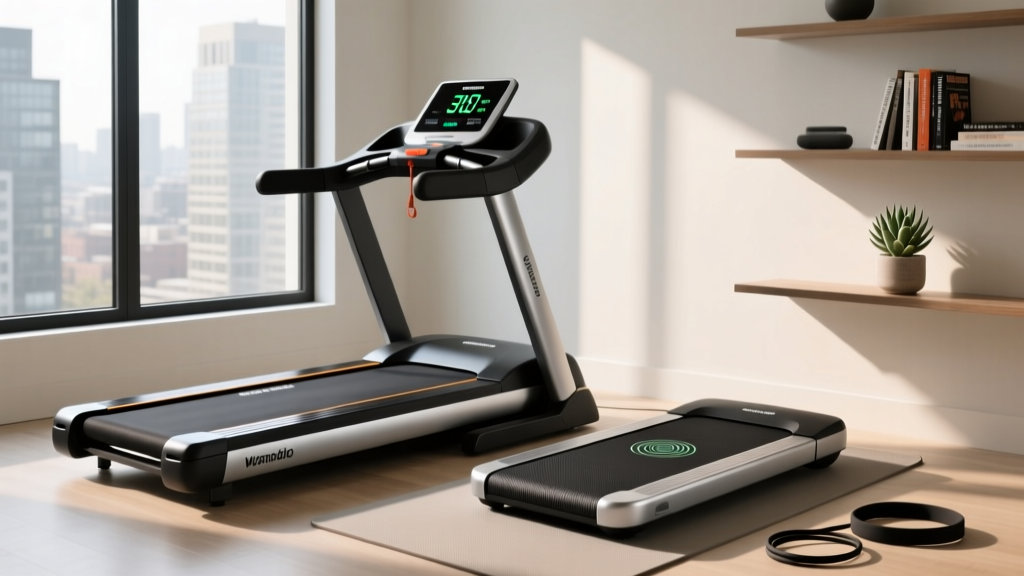
The most frequently overlooked incline treadmill disadvantage is spatial geometry. A standard flat treadmill deck sits approximately 8 to 10 inches off the floor. When a high-incline machine (like those with a 40% max grade) elevates, the front of the deck can rise an additional 18 to 24 inches. If you are 6 feet tall and your ceiling is a standard 8 feet (96 inches), a 24-inch deck rise plus your height leaves you with barely a foot of clearance, creating a severe head-strike hazard. For high-incline models, a minimum ceiling height of 9 feet is strongly recommended for users over 5'8".
2. Motor Torque Degradation and Error Codes
Gravity is unforgiving. Pushing a 200-pound user up a 15% to 40% incline requires immense continuous torque. Budget and mid-tier treadmills not specifically engineered for high-incline loads will experience rapid motor brush degradation, belt stretching, and frequent 'E05' (motor overcurrent) or 'E02' (sensor loss) error codes. To safely sustain steep grades, the motor must be a minimum of 4.0 Continuous Horsepower (CHP), which significantly increases the machine's weight, power draw, and price point.
3. Console Ergonomics and Postural Breakdown
As the deck tilts upward, the console tilts with it or remains fixed at an awkward angle relative to the user's new posture. At a 15% incline, users naturally lean forward to maintain their center of gravity. This makes reaching touchscreen interfaces, adjusting speed, or utilizing manual heart-rate grip sensors highly unnatural, often forcing users to break their walking posture and hunch over the console, negating the core-engagement benefits of the incline.
4. Achilles and Patellofemoral Shear Force
While incline walking drastically reduces the vertical impact forces associated with running, it exponentially increases shear forces on the lower extremities. According to research highlighted by the Harvard Health Publishing team regarding walking mechanics, steep gradients place sustained, heavy tension on the Achilles tendon and the patellofemoral joint (kneecap). Users with a history of plantar fasciitis, Achilles tendinopathy, or patellar tracking issues may find that prolonged 15%+ incline walking exacerbates their conditions.
Feature Comparison Matrix: Standard vs. High-Incline Treadmills
To make an informed 2026 purchasing decision, it is vital to compare the engineering baselines of standard incline models (0-15%) against dedicated incline trainers (0-40%).
| Feature / Specification | Standard Treadmill (0-15%) | High-Incline Trainer (0-40%) |
|---|---|---|
| Motor Requirement | 3.0 to 3.5 CHP | 4.0 to 4.5 CHP minimum |
| Deck Length | 55" to 60" (Running friendly) | 50" to 55" (Walking optimized) |
| Ceiling Clearance Needed | Standard 8-foot ceilings | 9-foot to 10-foot ceilings |
| Average Machine Weight | 180 lbs - 250 lbs | 300 lbs - 450+ lbs |
| 2026 Price Range | $1,299 - $2,499 | $2,999 - $4,500+ |
| Primary Biomechanical Load | Cardiovascular & Impact | Glute/Calf Isolation & Shear |
2026 Model Breakdown: Where the Disadvantages Show Up
Let us apply these disadvantages to two of the most prominent treadmills on the market to illustrate how engineering choices impact the user experience.
The Heavyweight: NordicTrack Commercial X32i (0-40% Incline)
Price: ~$3,999 | Motor: 4.25 CHP | Deck: 22" x 60"
The Pros: The X32i is the undisputed king of gradient simulation. Its massive 4.25 CHP motor handles the 40% incline without thermal throttling, and the 22-inch HD touchscreen pivots for off-treadmill floor workouts. The -6% decline feature is excellent for eccentric quad loading and hiking preparation.
The Disadvantages in Practice: Weighing in at over 400 pounds, this machine is essentially a permanent fixture. The 40% incline raises the front deck to nearly 30 inches off the ground. If you place this in a room with an 8-foot ceiling, anyone over 5'6" will hit their head at maximum elevation. Furthermore, the steep angle makes the handrails sit awkwardly high, forcing shorter users to shrug their shoulders to maintain balance, which introduces upper trapezius tension during long walks.
The Workhorse: Sole Fitness TT8 (0-15% Incline)
Price: ~$2,299 | Motor: 4.0 CHP | Deck: 20" x 60"
The Pros: Sole focuses on mechanical durability over flashy screens. The TT8 features a 4.0 CHP motor and heavy-duty steel rollers that eliminate the belt slippage common in cheaper incline models. The 15% max incline provides an excellent cardiovascular challenge without requiring vaulted ceilings.
The Disadvantages in Practice: The console ergonomics on the TT8 are strictly utilitarian. At a 15% incline, the fixed-angle screen creates glare from overhead lighting, and the heart-rate sensors are positioned slightly too low for users over 6 feet tall when the deck is elevated. Additionally, Sole's lack of an integrated subscription ecosystem means you are relying on your own tablet or phone for virtual trail routing.
Biomechanical Realities: Programming for Joint Health
Understanding the incline treadmill disadvantages requires a basic grasp of exercise physiology. The National Institute on Aging emphasizes the importance of varied, joint-safe cardiovascular routines for long-term mobility. While a 12% to 15% incline is phenomenal for activating the gluteus maximus and hamstrings without the ground-reaction forces of jogging, maintaining a steep incline for 60+ minutes daily can lead to overuse injuries in the calf complex.
💡 Expert Tip: To mitigate Achilles strain, utilize the 'undulation' feature on premium 2026 treadmills. Programs that automatically fluctuate the incline between 3% and 12% every 2 minutes alter the dorsiflexion angle of the ankle, preventing localized tendon fatigue while maintaining high overall caloric expenditure.The FitGearPulse Decision Framework
Use this checklist to determine if a high-incline trainer's disadvantages outweigh its benefits for your specific household:
- Choose a High-Incline Trainer (15-40%) IF: You have 10-foot ceilings, you are training for alpine hiking/mountaineering, you strictly prefer walking over running, and you have a dedicated ground-floor room to support a 400 lb machine.
- Choose a Standard Incline Treadmill (0-15%) IF: You have standard 8-foot ceilings, you plan to mix jogging with walking, you need to fold or move the machine occasionally, and you want to keep your budget under $2,500.
Frequently Asked Questions
Does walking on a high incline burn significantly more fat than flat walking?
Yes, but with diminishing returns. Walking at 3.0 MPH on a 15% incline burns roughly 2.5 times the calories of walking at the same speed on a flat surface. However, the extreme muscular fatigue in the calves and glutes often forces users to drastically reduce their speed or duration, which can result in a lower total caloric burn for the session compared to a faster, moderate-incline walk.
Will a 15% incline damage my treadmill motor over time?
Only if the motor is undersized. If your treadmill has a 2.5 CHP or 3.0 CHP motor and you frequently use the 15% incline while weighing over 180 lbs, the motor will run hot, degrading the internal windings and control board over 12 to 18 months. Always verify the Continuous Horsepower (CHP) is 3.5 or higher for sustained incline work.
Are manual (non-motorized) curved treadmills better for incline training?
Curved treadmills do not offer mechanical incline adjustments; instead, they simulate resistance based on your foot strike placement. While they are excellent for sprint mechanics and self-paced interval training, they cannot replicate the sustained, specific-grade elevation (like a steady 12% hike) that a motorized incline treadmill provides.
More gear to consider
All reviews
Treadmill Motor Size Guide for a Treadmill Workout with Weights

DeerRun A5 Pro Smart 2 in 1 Folding Treadmill: Setup & Noise Guide

Compact Gym Layouts: Bike Types vs Sprint Interval Training Treadmill

X24 Treadmill Review: Best Under Desk Setup for 2026

Hands-On Review: Best Treadmill Belt Lubrication Kits