Starting Treadmill Running vs Stair Climber: Home Guide & Mistakes
Discover the ultimate stair climber home guide. We compare common mistakes when starting treadmill running vs stepping, plus hardware troubleshooting.

The Biomechanical Divide: Vertical Stepping vs. Horizontal Striding
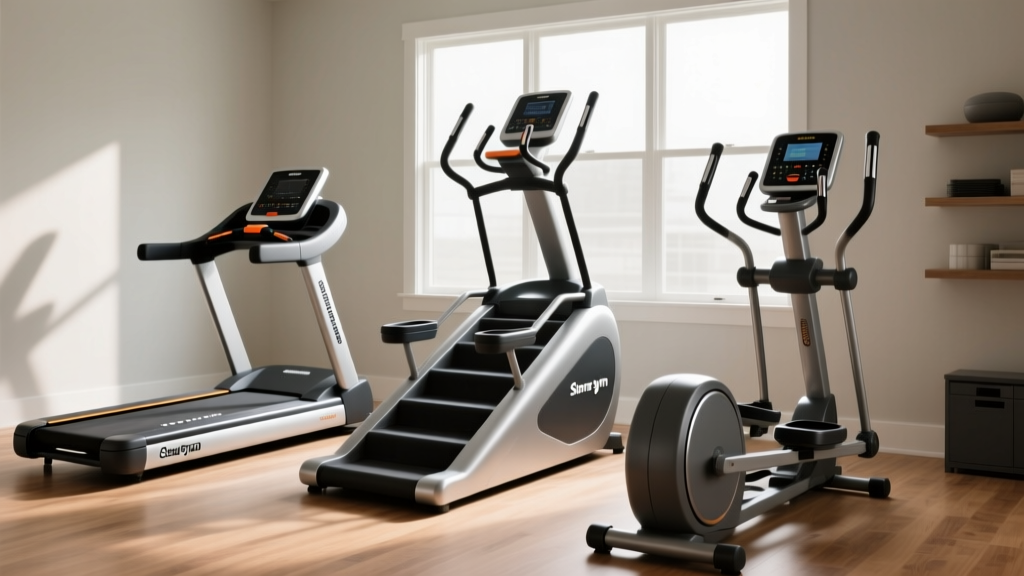
When outfitting a home gym in 2026, the debate often narrows down to two cardio titans: the traditional treadmill and the stair climber. While the American Heart Association recommends at least 150 minutes of moderate-intensity aerobic activity per week, the machine you choose dictates your joint loading, muscle recruitment, and long-term adherence. This stair climber machine for home use guide will dissect the biomechanics of vertical stepping, contrast it with the mechanics of starting treadmill running, and provide expert-level troubleshooting for the most common hardware and form failures.
Expert Insight: The treadmill assists with the eccentric (lowering) phase of your stride because the belt pulls your foot backward. Conversely, a stair climber demands pure concentric force to lift your entire body weight against gravity with every single step, resulting in significantly higher gluteus maximus and quadriceps activation.Top Form Mistakes: Stepping vs. Starting Treadmill Running
Whether you are stepping or striding, poor form is the fastest route to injury and stalled progress. Here is a breakdown of the most frequent errors we see in home gym users.
1. The 'Handrail Hang' (Stair Climber)
Leaning heavily on the handrails of a stair climber is the cardinal sin of vertical cardio. According to biomechanical analyses cited by the American Council on Exercise (ACE), supporting your upper body weight on the rails can reduce your caloric expenditure by up to 30% and completely alter your spinal alignment. You shift the load away from your lower body and place undue shear stress on your lumbar spine. The Fix: Use the rails strictly for balance. Keep your torso upright, engage your core, and let your legs do 100% of the lifting.
2. Overstriding and Heel Striking (Treadmill)
When starting treadmill running, beginners often attempt to mimic the elongated strides of elite marathoners. This leads to overstriding—where the foot lands far ahead of the body's center of mass. This acts as a braking mechanism, sending shockwaves directly up the tibia and into the patellofemoral joint. The Fix: Focus on cadence. Aim for 160-170 steps per minute with a midfoot strike directly beneath your hips.
3. Shallow Steps and 'Hovering' (Stair Climber)
Many users take rapid, two-inch steps on the pedals, never allowing full hip extension. This 'hovering' technique limits the range of motion, severely underutilizing the glutes and hamstrings while overloading the calves and Achilles tendon. The Fix: Press the pedal down until it is within two inches of the floor guard, ensuring a full stretch and contraction cycle.
Impact and Muscle Activation Matrix
| Metric | Stair Climber (e.g., Bowflex M9) | Treadmill (e.g., Sole F80) |
|---|---|---|
| Primary Joint Impact | Low impact (no ground strike), high patellofemoral compression | Moderate to high impact (2.5x body weight on heel strike) |
| Muscle Focus | Glutes, Quads, Calves (Concentric heavy) | Hamstrings, Hip Flexors, Calves (Eccentric heavy) |
| Caloric Burn (150lb user, 30m) | ~320 - 380 kcal | ~280 - 340 kcal (at 6.0 mph, 0% incline) |
| Ceiling Clearance Needed | User Height + 15 inches | User Height + 2 inches |
Hardware Troubleshooting: Fixing Squeaks, Slips, and Sensor Errors
Home cardio machines endure repetitive, high-torque stress. When your equipment starts acting up, do not immediately call for an expensive repair. Use this troubleshooting framework to diagnose and fix the most common stair climber and treadmill issues.
Issue 1: Squeaky Pedal Arms or Belt Drift
- Stair Climber Squeaks: If your chain-driven or gear-driven stair climber (like the NordicTrack FS14i) develops a rhythmic squeak, it is usually the pedal arm pivot bearings. Never use WD-40, as it attracts dust and strips existing lubrication. Instead, use a 14mm socket wrench to slightly loosen the pivot bolt, apply a drop of white lithium grease or PTFE-based silicone lubricant to the bearing sleeve, and retorque to 25 ft-lbs.
- Treadmill Belt Drift: If your treadmill belt pulls to the left, locate the rear roller adjustment bolt on the left side. Using a 3/16-inch Allen key, turn the bolt one-quarter turn clockwise. Walk on the belt at 2.0 mph to test. Never adjust more than a half-turn at a time, or you risk over-tensioning and destroying the front roller bearings.
Issue 2: Console Error E1 (Speed/Pedal Sensor Failure)
When the console on your stair climber or treadmill flashes an 'E1' or 'E2' error and abruptly stops, it is almost always a magnetic reed switch misalignment. The sensor on the frame must read the magnet passing on the flywheel to calculate speed.
- Unplug the machine and remove the main shroud (usually 4 to 6 Phillips-head screws).
- Locate the small black sensor near the main drive wheel.
- Check the gap between the sensor tip and the passing magnet. The optimal gap is exactly 2mm to 4mm.
- If the gap is too wide, the sensor cannot read the magnetic field. Loosen the mounting screw, slide the sensor closer, and retighten.
2026 Home Buyer's Framework: Choosing Your Machine
Selecting the right machine requires matching your physical profile and spatial constraints to the hardware. Here is how the top contenders stack up this year.
The Heavy-Duty Strider: Sole F80 Treadmill
Priced around $1,199, the Sole F80 remains the gold standard for home runners. With a 3.5 CHP motor and a 22-inch by 60-inch running surface, it accommodates tall users and heavy heel-strikers without bogging down. The Cushion Flex Whisper Deck reduces joint impact by up to 40% compared to outdoor asphalt, making it an excellent choice for those rehabbing from minor stress reactions.
The Vertical Powerhouse: Bowflex Max Trainer M9
Retailing at $1,999, the Max Trainer M9 is a hybrid stair climber/elliptical. It solves the biggest complaint of traditional stair climbers—the sheer ceiling height required. Because the step height is capped at 15 inches and the motion is elliptical rather than purely vertical, it fits comfortably in basements with standard 8-foot ceilings. The magnetic resistance system is virtually silent, making it perfect for early-morning workouts while the house sleeps.
Joint Preservation: Hospital for Special Surgery Guidelines
According to sports medicine specialists at the Hospital for Special Surgery (HSS), individuals with existing patellar tendinopathy or severe osteoarthritis should approach deep-flexion stair climbing with caution. If you experience anterior knee pain during vertical stepping, transition to a zero-impact air bike or a recumbent cross-trainer until the inflammation subsides.
Frequently Asked Questions
How much ceiling clearance do I need for a stair climber?
Take your exact height and add 15 inches (the maximum step height of most commercial and high-end residential climbers). If you are 6'0" (72 inches), you need 87 inches (7'3") of clear ceiling height. Account for any ceiling fans or recessed lighting in the path.
Is a stair climber better for fat loss than starting treadmill running?
Neither machine possesses a magical fat-burning property; fat loss is dictated by a caloric deficit. However, because the stair climber forces you to lift your body weight vertically with every repetition, it generally elicits a higher heart rate and greater localized muscle fatigue in the lower body, leading to a slightly higher per-minute caloric expenditure compared to flat treadmill jogging.
How often should I lubricate my treadmill belt?
Most modern home treadmills require 100% silicone liquid lubricant applied under the belt every 150 miles or every 3 months, whichever comes first. Lift the edge of the belt, apply a single zigzag line of about 10ml down the center of the deck, and run the machine at 2.0 mph for two minutes to distribute the fluid.
More gear to consider
All reviews
Rowing Machine Setup & Technique to Supplement Free Treadmill Workouts

Walking Pad vs Treadmill: Setup & Treadmill Pace Conversions Guide

Stair Climber Home Guide vs Life Fitness Treadmill Models by Year
ProForm Cardio Strong Treadmill Showdown: Walking Pad Review
NordicTrack A2105 Treadmill vs Walking Pads: 2026 Guide