Barbell Collar Clamps Compared: Squats to Rotating Dumbbell Curls
Compare top barbell collar and clamp types for 2026. We analyze grip strength, failure modes, and safety for lifts like rotating dumbbell curls.

The Critical Link: Why Your Collar Choice Dictates Lift Safety
A $1,200 Olympic barbell and $800 in calibrated bumper plates are only as secure as the $20 pair of collars holding them in place. In the free weights and racks category, barbell collars are often treated as an afterthought, yet they are the primary defense against catastrophic plate migration. Whether you are bracing for a 500-pound back squat or performing high-rep isolation work, the locking mechanism you choose directly impacts your barbell's moment of inertia and your personal safety.
In this comprehensive 2026 head-to-head comparison, we break down the four dominant barbell collar and clamp types on the market. Furthermore, we will examine how external collar mechanics translate to smaller implements, specifically analyzing the biomechanical demands of rotating dumbbell curls and why traditional plate-loaded handles often fail during supination.
The Big Four: Barbell Collar Types Head-to-Head
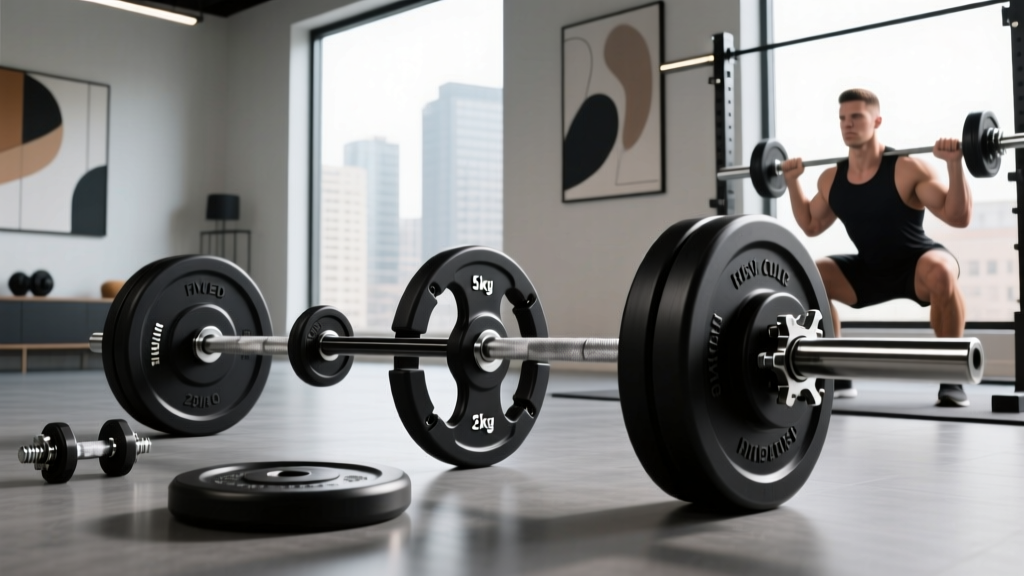
The fitness equipment industry has largely standardized around four distinct collar architectures. Each utilizes a different method of friction and mechanical interference to secure plates to a 50mm Olympic sleeve.
1. Spring Collars (The Budget Standard)
Top Model: Rogue OS-2 Olympic Spring Collars
Average Price: $18 - $25 per pair
Weight: 0.5 lbs per pair
Spring collars rely on the tensile strength of zinc-plated steel coils to exert inward radial force. They are lightweight, incredibly fast to apply, and cheap to replace. However, their grip force is entirely dependent on the user's hand strength to compress the springs during application. According to extensive testing by Garage Gym Reviews, spring collars consistently fail drop tests from heights above 12 inches, as the kinetic energy overcomes the static friction of the spring tension.
2. Clamp-Style Collars (The Powerlifter's Choice)
Top Model: Lock-Jaw Pro 2
Average Price: $35 - $42 per pair
Weight: 0.55 lbs per pair
Clamp collars utilize a glass-reinforced nylon body with a dual-latch system and internal polyurethane teeth. When clamped down, the teeth bite into the steel sleeve, creating a mechanical lock that resists both lateral sliding and rotational spinning. They are the gold standard for CrossFit and high-impact Olympic lifting. The primary failure mode is long-term wear: after 2 to 3 years of heavy use, the nylon teeth can strip, reducing grip force on chrome sleeves by up to 40%.
3. Lever-Action Collars (The Premium Grip)
Top Model: Rogue AB-2 Barbell Collars
Average Price: $55 - $65 per pair
Weight: 1.1 lbs per pair
Lever collars feature an aircraft-grade aluminum body with a steel cam-lever mechanism. Flipping the lever engages a high-durometer rubber pad against the sleeve. This provides the highest static grip force of any non-threaded collar, completely eliminating plate rattle during heavy eccentric loads. The trade-off is weight and bulk; at over half a pound each, they add noticeable mass to the barbell, and the lever can pinch fingers if deployed carelessly.
4. Spinlock / Threaded Collars (The Legacy System)
Top Model: Traditional Star-Lock Nuts
Average Price: $12 - $20 per pair
Weight: 1.5 to 2.5 lbs per pair
Threaded collars screw directly onto the grooved ends of specialized dumbbell or barbell handles. While they offer absolute security against lateral migration, they are notoriously slow to load and unload. Furthermore, dropped weights can easily cross-thread or strip the metal grooves, rendering the handle useless.
Comparison Matrix: Grip Force, Weight, and Pricing
| Collar Type | Weight (Pair) | Avg Price (2026) | Best Application | Primary Failure Mode |
|---|---|---|---|---|
| Spring | 0.50 lbs | $22 | Light accessories, quick changes | Tension loss; slips on drops |
| Clamp (Nylon) | 0.55 lbs | $38 | Olympic lifts, CrossFit WODs | Teeth wear down over time |
| Lever (Aluminum) | 1.10 lbs | $60 | Heavy powerlifting, static holds | Lever mechanism pinching/bending |
| Spinlock | 2.00+ lbs | $15 | Home dumbbells, fixed stations | Thread stripping; slow loading |
The Isolation Factor: Securing Weights for Rotating Dumbbell Curls
While barbell collars are designed for 7-foot Olympic bars, the principles of weight security are equally vital for dumbbell training—specifically during dynamic isolation movements. Consider the biomechanics of rotating dumbbell curls (also known as supinating curls). This movement requires the lifter to begin with a neutral grip and actively supinate the wrist (turning the palm upward) during the concentric phase, engaging the biceps brachii's secondary function as a supinator.
Biomechanical Insight: During a rotating dumbbell curl, the radial and ulnar deviation combined with supination generates significant lateral torque. If you are using a 14-inch plate-loaded dumbbell handle secured by a standard spring collar, this rotational torque causes the plates to rattle and micro-shift outward by 1/16th to 1/8th of an inch per repetition.This micro-migration alters the dumbbell's center of mass, forcing the stabilizer muscles in the forearm and the distal biceps tendon to compensate for the shifting load. Over a set of 15 reps, this not only degrades the mind-muscle connection but increases the risk of tendon strain.
The Modern Solution: This inherent flaw in external plate-loaded dumbbell collars is exactly why the fitness industry has pivoted toward premium adjustable dumbbells (like the Nuobell or PowerBlock Elite) for isolation work. These systems utilize internal interlocking collars and magnetic or dial-based retention systems that eliminate lateral play entirely. When performing rotating dumbbell curls with a modern adjustable dumbbell, the weight acts as a single solid unit, allowing for pure, unadulterated biceps contraction without the distracting rattle of loose plates.
Edge Cases and Real-World Failure Modes
Even the best clamp or lever collar can fail if you ignore the manufacturing tolerances of your equipment. Here are the non-obvious edge cases that catch lifters off guard:
- Sleeve Diameter Variances: An 'Olympic' sleeve is nominally 50mm. However, manufacturing tolerances mean a Rogue Ohio Bar might measure 50.1mm, while an Eleiko competition bar measures 50.4mm. A clamp collar with worn teeth may grip the 50.1mm sleeve perfectly but slip dangerously on the 50.4mm sleeve under heavy eccentric loads.
- Chrome Dust Buildup: Over time, the friction between steel plates and chrome sleeves creates a fine metallic dust. If this dust accumulates on the internal rubber pads of a lever collar, it acts as a dry lubricant, reducing the coefficient of friction by up to 30%. Wiping your sleeves and collar pads with a microfiber cloth and isopropyl alcohol monthly is mandatory for maintaining peak grip.
- Temperature Fluctuations: In unheated garage gyms during winter, the polyurethane teeth on clamp-style collars become brittle. Dropping a barbell from overhead in 35°F (1.6°C) temperatures increases the risk of the nylon housing cracking upon impact.
'Never trust a spring collar on a barbell that is leaving the ground. If the bar is in the air, the plates must be mechanically locked. Spring collars are for loading, not for lifting.' — Industry consensus among Olympic weightlifting coaches.
Expert Verdict: Which Collar Should You Buy?
Your collar purchase should be dictated by your primary training modality. If your programming involves heavy, low-rep powerlifting (squats, bench press, deadlifts), the Rogue AB-2 Lever Collars are unmatched in static grip and rattle reduction. For high-impact, dynamic movements like snatches, cleans, or CrossFit metcons, the Lock-Jaw Pro 2 Clamps offer the best balance of drop-resistance and lightweight design.
Finally, if your training heavily features isolation work like rotating dumbbell curls, lateral raises, or triceps extensions, abandon plate-loaded handles with external collars altogether. Invest in a high-quality set of adjustable dumbbells with internal retention systems to ensure the weight moves as a single, cohesive unit, protecting your joints and maximizing muscle fiber recruitment.
More gear to consider
All reviews
Arm Workout Dumbbells Women Prefer: Rubber Hex vs Urethane Care

Olympic vs Standard Plates: Gear for a 1 Dumbbell Chest Workout

Past the Heaviest Dumbbell Curl: Bumper vs Iron Plate Value Guide

Power Rack vs Squat Rack vs Stand: How to Use Dumbbells for Exercise

Power Rack vs Squat Rack Setup: Incline Dumbbell Clearance