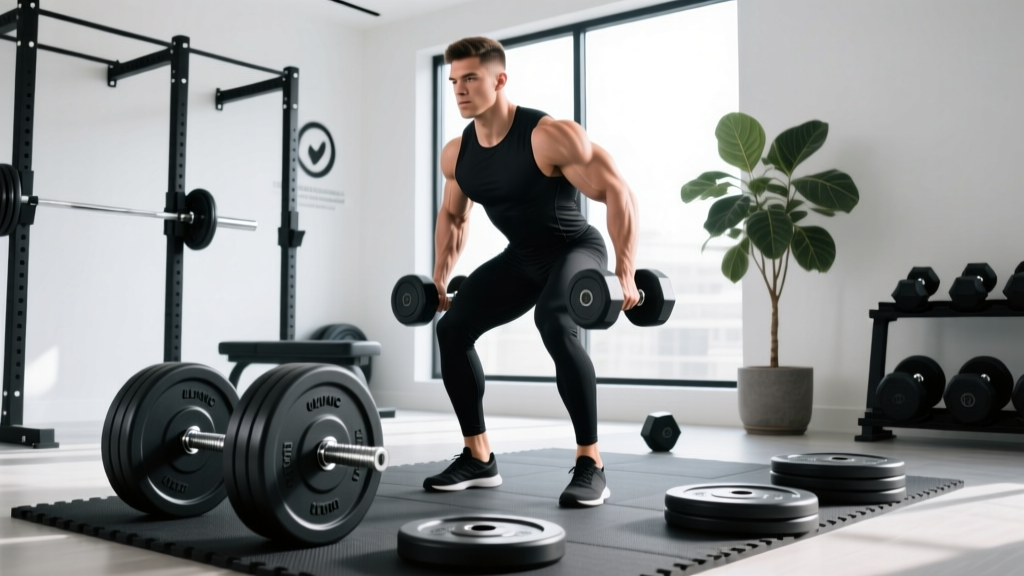
Full Body Dumbbell Workout Men: Olympic vs Standard Plate Mistakes
Transitioning from a full body dumbbell workout for men to barbell training? Avoid costly home gym mistakes with our Olympic vs standard weight plate guide.

Most lifters begin their fitness journey relying on adjustable dumbbells like the Bowflex SelectTech 552 or PowerBlock Elite, executing the standard full body dumbbell workout men typically use during their first year of lifting. However, as progressive overload demands heavier loads, transitioning to barbell compounds becomes inevitable. This is where a massive, costly home gym mistake occurs: buying the wrong weight plates. The debate of Olympic vs standard weight plates is not just about size; it is about structural integrity, biomechanical safety, and long-term equipment compatibility.
In this troubleshooting guide, we break down the exact failure modes, dimensional traps, and material mistakes lifters make when outfitting their home gyms in 2026, ensuring you do not waste hundreds of dollars on incompatible or dangerous gear.
⚠️ CRITICAL WARNING: Never attempt to modify a 1-inch standard plate by drilling out the center hole to fit a 2-inch Olympic bar. This compromises the structural integrity of the cast iron, creating a severe shattering hazard under heavy loads.The Dimensional Trap: 1-Inch vs 2-Inch Tolerances
The most fundamental difference between standard and Olympic plates is the center hole diameter. Standard plates feature a 1-inch (25.4mm) hole, designed for lightweight, entry-level barbells. Olympic plates feature a 2-inch (50.8mm) hole, built to accommodate the thick sleeves of Olympic barbells. However, the mistake lies in assuming all '2-inch' plates are created equal.
The 'Slop' Factor in Cheap Olympic Plates
According to the International Weightlifting Federation (IWF), an Olympic barbell sleeve must be exactly 50mm in diameter, and the plate hole must be 50mm with a tolerance of +0.2mm / -0.0mm. When you purchase budget-friendly, uncalibrated Olympic plates from big-box stores, the center holes are often cast at 51mm or even 51.5mm.
The Failure Mode: When you load these oversized plates onto a 50mm barbell sleeve and perform dynamic movements like power cleans or snatches, the 1.5mm gap creates severe 'plate slop.' This lateral shifting alters the barbell's center of gravity mid-lift, leading to wrist strain and missed lifts. As detailed in BarBend's comprehensive guide on weight plate standards, investing in machined or calibrated Olympic plates eliminates this dangerous tolerance gap.
The Yield Strength Failure: Why Standard Bars Bend
Lifters often buy standard plates because they are cheaper per pound, planning to use them on a standard 1-inch barbell. This is a catastrophic mistake for anyone lifting over 200 pounds. Standard barbells are typically constructed from low-grade steel with a yield strength of under 50,000 PSI.
- Standard Bar Failure Point: Once you exceed 200–250 lbs on a standard 1-inch bar, the steel passes its yield point. The bar will permanently bend, rendering it useless and dangerous for squats or bench presses.
- Olympic Bar Superiority: A quality Olympic barbell, such as the Rogue Ohio Bar, boasts a tensile strength of 190,000 PSI and a yield strength that easily supports 1,000+ lbs without permanent deformation.
By purchasing standard plates, you are artificially capping your strength potential. Once you outgrow the 200 lb limit of your standard bar, you will be forced to sell your entire standard plate collection at a massive loss to upgrade to Olympic gear.
Equipment Matrix: Olympic vs Standard Plates (2026 Market Data)
The home gym market has stabilized significantly by 2026, with cast iron and urethane prices returning to predictable baselines. Below is a comparative matrix to help you troubleshoot your purchasing decisions.
| Feature | Standard Plates (1-Inch) | Olympic Plates (2-Inch) |
|---|---|---|
| Hole Diameter | 1 inch (25.4mm) | 2 inches (50.8mm) |
| Max Safe Barbell Load | ~200 - 250 lbs | 800 - 1,500+ lbs |
| Avg. Cost Per Pound (2026) | $1.20 - $1.60 / lb | $1.80 (Iron) to $4.50 (Urethane) / lb |
| Weight Accuracy | +/- 5% to 10% | +/- 1% (Calibrated: +/- 0.25%) |
| Storage Compatibility | 1-inch peg trees only | Standard 2-inch Olympic trees |
Material Mistakes: Cast Iron vs. Urethane vs. Rubber
When upgrading to Olympic plates, lifters face a secondary troubleshooting hurdle: choosing the wrong coating for their specific environment. According to Garage Gym Reviews' equipment analysis, the material you choose dictates the lifespan and usability of your weights.
The Virgin Rubber Smell Trap
Many lifters buy cheap recycled rubber Olympic plates (often sold as 'bumper plates') to save money. The Mistake: Recycled rubber off-gasses volatile organic compounds (VOCs) for months. If your home gym is in a poorly ventilated basement or attached garage, the toxic, burning-tire smell will make your workspace unusable. Always opt for virgin rubber or, ideally, polyurethane.
Urethane: The 2026 Gold Standard
Urethane plates, such as the Rogue Fitness Echo Bumpers or Titan Fitness Elite Urethane series, are the premier choice for commercial and high-end home gyms. Urethane is virtually odorless, highly resistant to UV degradation, and does not become brittle in cold garages. While they cost roughly $3.50 to $4.50 per pound, their lifespan is measured in decades, not years.
Troubleshooting Common Home Gym Plate Issues
If you have already purchased plates and are experiencing issues, use this diagnostic flow to troubleshoot your setup.
- Issue: Plates are rattling loudly during lifts.
- Diagnosis: You are using spring collars on plates with oversized center holes.
- Fix: Upgrade to lock-jaw collars or competition-style aluminum clamps that apply lateral pressure, forcing the plates flush against the sleeve collar.
- Issue: The weight feels 'off' or asymmetrical.
- Diagnosis: You bought uncalibrated cast iron standard plates. A '45 lb' plate from a budget brand may actually weigh 41 lbs, while the other weighs 44 lbs, creating a dangerous imbalance on the bar.
- Fix: Invest in a digital luggage scale to weigh your plates. If the variance exceeds 2%, replace them with calibrated steel or machined iron plates.
- Issue: Plates won't fit on my weight tree.
- Diagnosis: You bought 'Olympic' plates with a 2-inch hole, but your weight storage tree features 1-inch standard pegs (a common packaging error by budget fitness brands).
- Fix: Purchase 1-inch to 2-inch sleeve adapters for your storage tree pegs, or replace the tree with a true Olympic-spec storage rack with 10-inch long, 2-inch diameter pegs.
Final Verdict: Future-Proofing Your Home Gym
While a full body dumbbell workout men use to build their foundation is an excellent starting point, your eventual transition to barbell training requires equipment that scales with your strength. Standard 1-inch plates are a dead-end investment, capped by the structural limitations of standard barbells and incompatible with modern gym accessories like landmine attachments, T-bar rows, and plate-loaded cable machines.
By investing in 2-inch Olympic plates from day one, you ensure compatibility with high-PSI barbells, precise weight calibrations, and standard commercial storage solutions. Avoid the dimensional traps, respect the yield strength of your steel, and choose materials that suit your gym's climate to build a safe, lifelong training environment.
More gear to consider
All reviews
Best Neoprene Dumbbells for the Single Leg Dumbbell Squat (2026)

Olympic vs Standard: Which Muscle Must Contract to Lift the Dumbbell?

Dumbbells vs Bench Press: Olympic Barbell Buying Guide
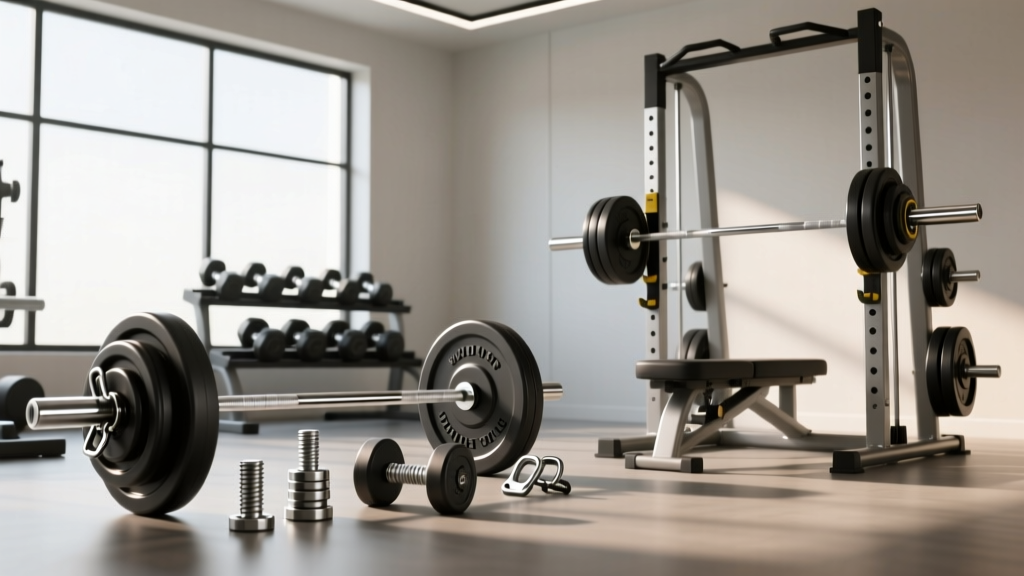
Barbell Collar Setup & The Dumbbell Squat Front Raise Station

Neoprene Dumbbell Setup & Dumbbell Shape Water Bottle Guide
