How to Use Dumbbells Effectively: Loadable Dumbbell Maintenance
Master how to use dumbbells effectively by maintaining your loadable plate sets. Expert care tips for collars, knurling, and rust prevention.

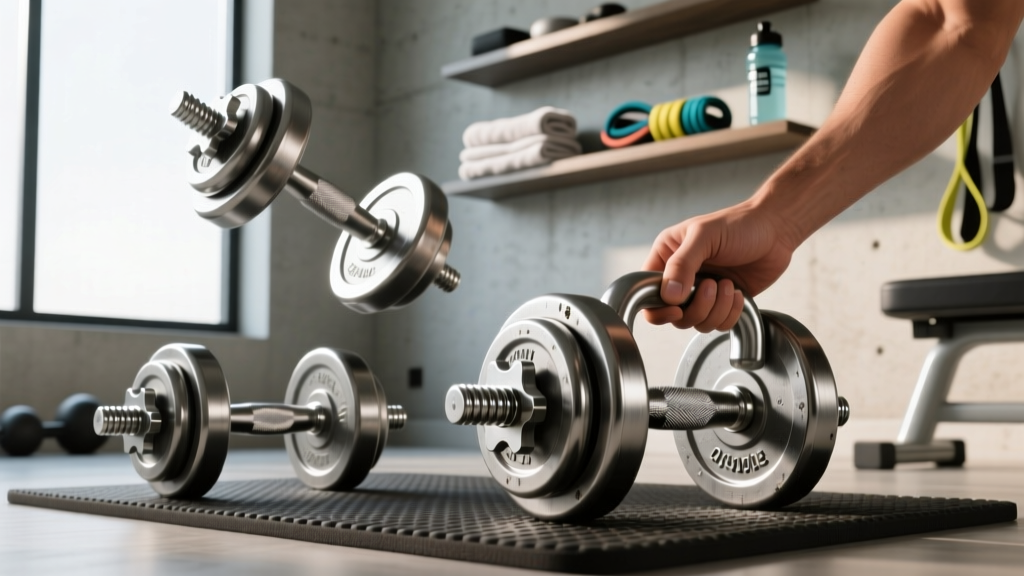
When most lifters research how to use dumbbells effectively, they are looking for exercise variations, rep schemes, and hypertrophy protocols. However, from an equipment longevity and safety perspective, learning how to use dumbbells effectively means understanding load distribution, drop mechanics, and rigorous hardware maintenance. This is especially critical for loadable dumbbells with interchangeable plates. Unlike fixed rubber hex dumbbells that you simply pick up and put down, loadable dumbbells—such as the Ironmaster Quick-Lock V2, Rogue Fitness Loadable Handles, and traditional spin-lock sets—are complex pieces of engineering with multiple moving parts, friction points, and failure modes.
As of 2026, the market for loadable dumbbells has expanded, with premium sets costing anywhere from $300 to over $800. Protecting this investment requires a proactive maintenance routine. Below, we break down the exact maintenance protocols, failure points, and operational best practices to ensure your interchangeable plate dumbbells last a lifetime.
The Anatomy of Loadable Dumbbells and Common Failure Points
Before diving into maintenance, it is vital to understand where loadable dumbbells typically fail. A standard loadable dumbbell consists of three main components: the knurled handle shaft, the sleeve (where plates are loaded), and the locking collar.
- Thread Stripping: Common in budget spin-lock dumbbells (like the Yes4All cast iron sets) where the threaded sleeve end can strip if the collar is cross-threaded or overtightened.
- Bushing Seizure: Premium Olympic loadable handles, such as the Rogue Fitness Loadable Dumbbell Handles, utilize bronze bushings for smooth sleeve rotation. If chalk and sweat infiltrate the sleeve gap, the bushing can seize, preventing the sleeve from spinning during heavy curls or presses.
- Locking Pin Shearing: Quick-lock mechanisms rely on drop-in pins and retaining screws. If the screw is not fully seated before a heavy lift, the shear force can snap the retaining bolt.
Routine Maintenance: Knurling and Handle Care
The knurling on a dumbbell handle is designed to bite into your skin for a secure grip. However, those same aggressive diamond patterns act as a magnet for dead skin, chalk, and sweat. Over time, this buildup creates a paste that holds moisture against the steel, leading to deep-set oxidation (rust) that permanently ruins the knurl's bite.
The 3-Step Knurling Restoration Protocol
- Dry Brushing (Weekly): Use a stiff nylon brush to aggressively scrub the knurling valleys after every heavy chalk session. Never use a steel wire brush on zinc or chrome-plated handles, as it will strip the protective coating and expose raw steel to humidity.
- Deep Cleaning (Monthly): For stubborn chalk buildup, apply a few drops of mild dish soap to a damp nylon brush and scrub. Wipe completely dry with a microfiber towel immediately after. Leaving moisture on the handle defeats the purpose of cleaning.
- Oiling and Protection (Bi-Annually): According to BarBend's comprehensive guide on knurling maintenance, applying a light coat of 3-IN-ONE oil or a specialized barbell oil is crucial. Apply the oil, let it sit for 10 minutes to displace any microscopic moisture, and then wipe it entirely off. The handle should feel dry to the touch, not greasy.
Collar and Locking Mechanism Upkeep
The locking mechanism is the single most critical safety component of a loadable dumbbell. A failing collar during an incline dumbbell press is a severe injury hazard. Maintenance requirements vary drastically depending on the engineering of the collar.
| Locking Mechanism | Common Failure Mode | Maintenance Fix | Frequency |
|---|---|---|---|
| Spin-Lock (Threaded) | Collar loosening mid-set; star washer compression | Replace steel star washers; clean threads with a brass brush | Inspect Monthly / Replace Annually |
| Quick-Lock (Screw/Pin) | Cross-threading; chalk jamming the screw housing | Use compressed air to clear threads; always spin backwards before tightening to align threads | Before Every Session |
| Olympic Sleeve (Snap Ring) | Bronze bushing seizure; snap ring corrosion | Apply PTFE-based dry lubricant to the sleeve gap; avoid WD-40 | Every 3-6 Months |
| Lever-Lock (Clamp) | Lever cam wear; loss of clamping tension | Adjust the tension bolt on the lever cam; lubricate the hinge pin | Bi-Annually |
Interchangeable Plate Care and Rust Prevention
The plates themselves require attention, particularly if you are using raw cast iron or machined steel plates. While urethane-coated plates (common in commercial gyms) are virtually maintenance-free, bare iron plates are highly susceptible to environmental humidity.
Managing Cast Iron and Steel Plates
If you own traditional cast iron plates, you must monitor the center hub. The friction of sliding the plate onto and off the steel sleeve slowly sands away the paint or zinc coating inside the hub. Once bare iron is exposed inside the hub, it will rust, and that rust will transfer directly to your dumbbell handle sleeve every time you load the weight.
- The Fix: Once a year, take a wire brush to the inside of the plate hubs to remove any surface rust, then wipe the inside of the hub with a lightly oiled rag.
- Storage: Store your loadable plates on a dedicated tree or rack. Leaving them scattered on a concrete garage floor invites moisture wicking, which causes the bottom edges of the plates to flake and rust.
Operational Best Practices: Loading and Dropping
Finally, understanding how to use dumbbells effectively means adopting operational habits that minimize mechanical shock. Loadable dumbbells are inherently more fragile than fixed hex dumbbells because the connection point between the handle and the plate is a stress riser.
The Mechanics of Dropping
When you finish a heavy set of dumbbell Romanian deadlifts or walking lunges, your instinct may be to drop the weights. With fixed rubber dumbbells, this is generally acceptable. With loadable dumbbells, dropping them—even on rubber horse-stall mats—can be catastrophic.
"The sheer kinetic energy of a 100lb loadable dumbbell hitting the floor transfers directly through the plates and into the locking collar. This shockwave can bend the handle shaft, shatter cast iron plates, or instantly snap a quick-lock retaining pin."
Best Practice: Always lower loadable dumbbells under control to the floor or a padded bench. If you are performing drop sets or high-fatigue conditioning where controlled lowering is impossible, you should switch to fixed rubber hex dumbbells or kettlebells. Furthermore, when loading plates onto the sleeve, do not slam the plates against the collar. Slide them smoothly to prevent micro-fractures in the cast iron and to protect the zinc plating on the sleeve.
Conclusion
Learning how to use dumbbells effectively is a dual discipline: mastering the biomechanics of the lift, and mastering the physical care of the tool. By implementing a strict regimen of knurling brushing, proper collar lubrication, and mindful loading mechanics, your loadable dumbbell set will remain safe, precise, and structurally sound for decades. Treat your equipment with the same respect you apply to your training program, and it will never fail you when you are under the load.
More gear to consider
All reviews
EZ Bar vs Straight Bar Care & Decline Dumbbell Chest Press Tips
Budget Breakdown: Loadable Dumbbells for Dumbbell Stationary Lunges
Lower Back Dumbbell Guide: Top Neoprene Weights Compared
Best Neoprene Dumbbell for Arms Workout: 2026 Home Guide

Best Adjustable Dumbbells for the Single Arm Incline Dumbbell Press
