Bumper vs Iron Plates & the Dumbbell Bench Press Women Swear By
Expert comparison of bumper vs iron plates, plus top adjustable picks for the dumbbell bench press women prefer for safe, effective upper-body strength gains.

The Great Plate Debate: Outfitting Your 2026 Home Gym
Building a versatile home gym in 2026 requires navigating a maze of equipment specifications, shipping surcharges, and material science. When it comes to loading your Olympic barbell, the choice between bumper plates and traditional cast iron plates is one of the most consequential decisions you will make. It dictates not only the types of lifts you can safely perform but also the longevity of your flooring and the acoustic footprint of your garage gym. But a complete strength setup isn't just about barbell pulls; it requires meticulous attention to upper-body hypertrophy, which is where the right dumbbell setup becomes non-negotiable.
In this hands-on review, we break down the exact material differences, pricing metrics, and failure modes of bumper versus iron plates. Then, we pivot to the upper-body essential that complements your heavy pulls: the specific dumbbell bench press variations and adjustable models that female lifters and biomechanics experts consistently rank highest for joint longevity and pectoral isolation.
Bumper Plates: Drop-Rated, Floor-Friendly, and Complex
Bumper plates are engineered from rubber to be dropped from overhead without shattering your concrete slab or bending your barbell. However, not all rubber is created equal. The market is split into two primary categories: virgin rubber and crumb (recycled) rubber.
Virgin Rubber vs. Crumb Rubber
Virgin rubber bumpers are manufactured from pure, unrecycled rubber compounds. They boast a high durometer rating (typically 88 to 90 on the Shore A scale), which translates to a dense, stiff plate with minimal 'bounce' or 'dead-bounce' when dropped. This low-bounce factor is a critical safety feature, preventing the barbell from rebounding unpredictably. Conversely, crumb rubber bumpers are made from compressed, recycled tire rubber. They have a lower durometer (around 70 to 75 Shore A), making them softer, thicker, and significantly more prone to bouncing off the floor upon impact.
Expert Insight: The Hub Failure ModeThe most common point of failure in budget crumb bumper plates is the steel insert hub. Because crumb rubber is less cohesive than virgin rubber, repeated overhead drops can cause the steel hub to slowly tear through the rubber matrix, eventually rendering the plate useless. If you are performing high-volume Olympic lifts, virgin rubber is a mandatory investment.
According to the International Weightlifting Federation (IWF), competition-grade bumper plates must adhere to strict dimensional standards, including a diameter of exactly 450mm (±1mm). When shopping for 2026 home gym gear, ensure your bumpers meet this diameter threshold; undersized 'technique' bumpers will transfer the shock of a drop directly into your barbell bearings and your floor.
Iron Plates: The Dense, Traditional Workhorse
If you aren't dropping weights from overhead, machined cast iron plates remain the gold standard for density and cost-efficiency. Iron plates are cast from molten iron and then machined to ensure precise weight tolerances (often within ±1% of the stated weight, compared to the ±3% variance common in cheap bumpers).
The Sleeve Capacity Advantage
The most significant advantage of iron plates is their thin profile. A standard 45lb machined iron plate is roughly 1.3 inches thick, whereas a 45lb crumb bumper can be up to 3.5 inches thick. This thickness directly impacts your barbell's sleeve capacity. On a standard Olympic barbell with a 16.4-inch loadable sleeve, you can comfortably load over 500lbs of iron plates. With thick crumb bumpers, you will physically run out of sleeve space around the 350lb mark. For powerlifters or strongmen tracking progressive overload in the squat and deadlift, iron is the only logical choice.
The primary failure mode for iron plates is environmental. If the baked enamel coating chips during transit or heavy use, the exposed iron will rapidly oxidize in humid garage environments, leading to rust. Regular maintenance with a wire brush and a light coat of 3-in-One oil is required to preserve their lifespan.
Head-to-Head Comparison Matrix
| Feature | Virgin Rubber Bumper | Crumb Rubber Bumper | Machined Cast Iron |
|---|---|---|---|
| Primary Use | Olympic lifts, CrossFit, drops | General deadlifts, light drops | Powerlifting, squats, bench |
| Avg. Cost (2026) | $3.50 - $4.50 / lb | $1.80 - $2.50 / lb | $1.50 - $2.20 / lb |
| Bounce Factor | Low (Safe) | High (Hazardous) | None (Will crack floor) |
| Thickness (45lb) | 2.1 inches | 3.5 inches | 1.3 inches |
| Noise Level | Quiet | Moderate | Loud (Clanging) |
Hands-On Review: 2026 Top Plate Picks
- Best Overall Bumper: Rogue Black Bumper Plates. Priced around $3.75/lb, these virgin rubber plates feature a 90 Shore A durometer and a stainless steel insert that resists rust. The dead-bounce is virtually non-existent, making them our top pick for garage gyms with standard concrete slabs.
- Best Iron Plate: Rep Fitness Deep Dish Iron Plates. Coming in at roughly $1.90/lb, these feature a classic deep-dish design with a thick, chip-resistant matte enamel coating. The machined edges ensure they sit flush against each other, minimizing barbell rattle during heavy deadlifts.
Upper-Body Hypertrophy: The Dumbbell Bench Press Women Swear By
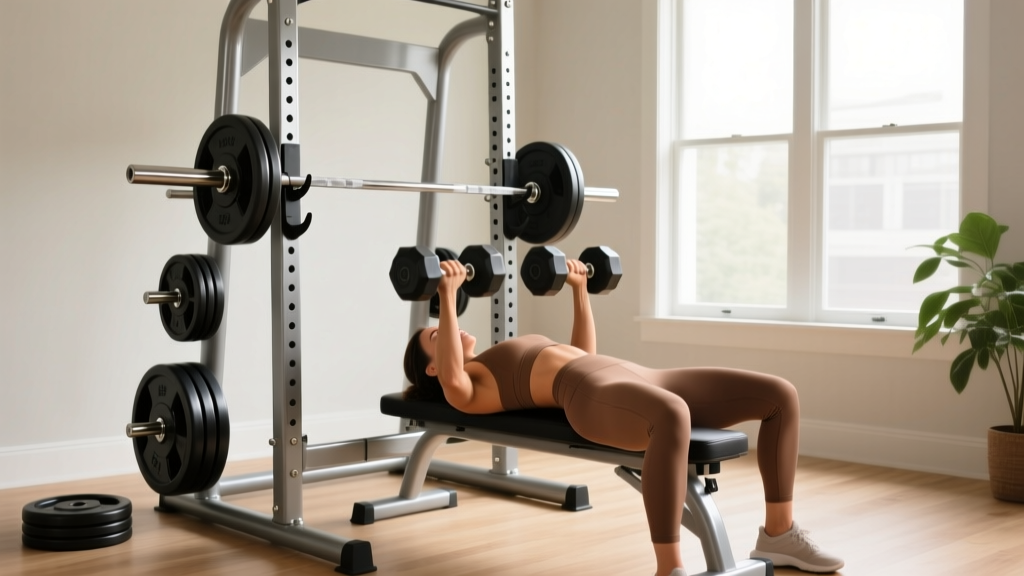
While outfitting your home gym with the right barbell plates is crucial for heavy lower-body pulls, a complete training ecosystem requires equal attention to upper-body mechanics. When it comes to chest development and shoulder preservation, the specific dumbbell bench press women consistently prefer over the traditional barbell bench press is the neutral-grip, slightly inclined variation using adjustable dumbbells.
Biomechanical Advantages for Female Lifters
Why do so many female strength coaches and athletes gravitate toward the dumbbell bench press? The answer lies in shoulder biomechanics and the convergent arc of the movement. The American Council on Exercise (ACE) notes that dumbbells allow the lifter to adjust their wrist and elbow path in real-time, accommodating individual anatomical differences that a fixed barbell cannot.
By utilizing a neutral grip (palms facing each other) and tucking the elbows to a 45-degree angle, lifters drastically reduce the sheer force placed on the anterior deltoid and the acromioclavicular (AC) joint. This variation of the dumbbell bench press women find highly effective not only isolates the sternal head of the pectoralis major but also mitigates the rotator cuff impingement risks often associated with heavy, flared-elbow barbell benching.
Equipment Pick: Nuobell 80lb Adjustable Dumbbells
To execute this movement effectively at home, you need equipment that allows for micro-loading. The Nuobell 80lb adjustable dumbbells remain our top 2026 recommendation. Unlike dial-based systems that create bulky, elongated handles, Nuobells utilize a twist-grip mechanism that maintains the exact physical footprint of a traditional fixed dumbbell. This compact profile is vital for the dumbbell bench press, as it allows the weights to touch at the top of the concentric phase without the handles colliding prematurely, ensuring a full range of motion and peak pectoral contraction.
Programming Tip: The 15-Degree InclineSet your adjustable bench to a slight 15-degree incline rather than a flat or 30-degree position. A 15-degree angle shifts the focus to the upper clavicular fibers of the chest while keeping the anterior deltoids from taking over the movement, a common issue with steeper inclines.
Expert Verdict: Building Your Arsenal
Your equipment choices should reflect your actual training modalities. If your programming involves Olympic weightlifting, high-rep CrossFit metcons, or you lack dedicated lifting platforms, invest your budget in high-durometer virgin rubber bumper plates. If you are strictly focused on powerlifting, progressive overload in the squat and deadlift, and maximizing sleeve capacity, machined cast iron is the superior, cost-effective workhorse.
Finally, do not neglect your upper-body accessories. Pairing your barbell setup with a premium adjustable dumbbell system ensures you can perform the joint-friendly dumbbell bench press variations necessary for balanced, injury-free hypertrophy. By understanding the material science of your plates and the biomechanics of your presses, you can build a 2026 home gym that is as intelligent as it is resilient.
For more data on tracking your progressive overload, refer to the strength standard charts provided by eXrx.net to ensure your plate purchases align with your long-term strength goals.
More gear to consider
All reviews
Power Rack vs Squat Rack: All Body Exercises with Dumbbells & More
Cast Iron vs Competition Kettlebells: Best Dumbbell Workouts for Women
Best Neoprene Dumbbells for Arm Exercises at Home (2026)
EZ Curl vs Straight Bar Care & Dumbbell Upright Storage

Best Neoprene Dumbbells for Side Lunges: 2026 Home Guide
