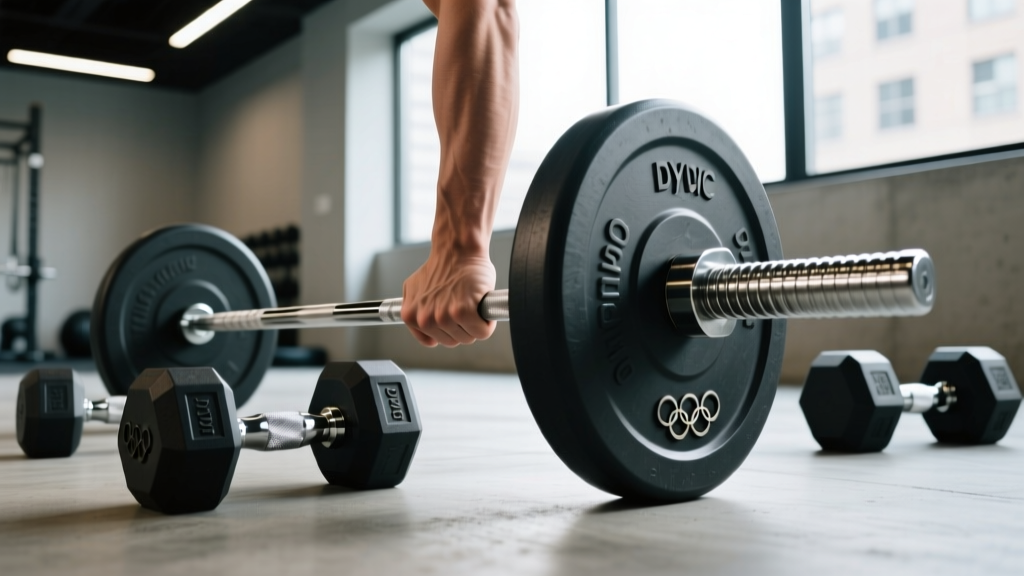
How to Grip Dumbbells vs Barbells: Olympic Barbell Knurling Guide
Master how to grip dumbbells and transition to barbells with our 2026 Olympic barbell buying guide covering weight specs, knurling types, and shaft diameters.

The Grip Transition: From Dumbbells to the Olympic Barbell
Every lifter starts somewhere. For many, the journey begins by learning how to grip dumbbells properly to stabilize the wrist during presses and rows. Dumbbells require independent stabilization, forcing your forearms and grip to work overtime. However, as you progress and seek to overload your central nervous system with heavier compound movements, the Olympic barbell becomes your primary tool. Transitioning from dumbbells to a barbell isn't just about adding weight; it is about understanding the tactile interface between your hands and the steel.
While searching for tutorials on how to grip dumbbells for maximum hypertrophy, many beginners overlook the most critical component of their future barbell: the knurling. In this 2026 beginner-friendly step-by-step guide, we will bridge the gap between dumbbell mechanics and Olympic barbell specifications, focusing heavily on weight tolerances, shaft diameters, and knurling profiles so you can make an informed purchase.
Decoding Barbell Knurling: The Tactile Interface
Knurling is the cross-hatched pattern machined into the steel shaft of a barbell. It exists to increase friction and prevent the bar from rolling out of your hands during heavy deadlifts or squats. According to equipment testing by BarBend's comprehensive barbell guides, the depth and geometry of this knurling dictate how 'aggressive' the bar feels. As a beginner, choosing the wrong knurl can tear your calluses and deter you from training.
1. Volcano Knurling (The Beginner's Best Friend)
Volcano knurling features a conical shape with a small crater in the center of each 'peak.' This design provides hundreds of micro-edges for your skin to grip into without creating a single sharp point that will tear your hands. It is the gold standard for dual-purpose bars and is highly recommended for lifters transitioning from the smooth, neoprene-coated handles of beginner dumbbells.
2. Mountain Knurling (Aggressive & Sharp)
Mountain knurling leaves the peaks sharp and pointed. It feels like gripping coarse sandpaper. While elite powerlifters prefer this for maximal deadlifts without straps, it is a poor choice for beginners. If you are still refining your grip endurance, mountain knurling will cause micro-lacerations on your palms.
3. Hill Knurling (Passive & Smooth)
Hill knurling occurs when the peaks are machined down or worn flat, resulting in a smooth, passive feel. You will often find this on cheap, big-box-store barbells. Avoid these at all costs; the bar will slip during heavy Romanian deadlifts, forcing you to over-squeeze and prematurely fatigue your forearms.
💡 Pro-Tip for Dumbbell Lifters: When learning how to grip dumbbells for high-rep lateral raises, you likely use a 'false' or thumbless grip to reduce forearm strain. Never use a thumbless grip on a barbell bench press. Always wrap your thumbs around the knurled section to create a closed loop, preventing the bar from rolling onto your sternum.Weight, Shaft Diameter, and Tensile Strength
Understanding knurling is only half the battle. The physical dimensions and metallurgical strength of the barbell dictate how it performs under load. A standard Olympic barbell weighs 20kg (44 lbs), but the shaft diameter changes how it feels in your hands, especially if you are used to standard 28mm hex dumbbell handles.
| Specification | Olympic Weightlifting Bar | Dual-Purpose / Powerbuilding Bar | Powerlifting Bar |
|---|---|---|---|
| Shaft Diameter | 28.0mm (Whippy, easy to hook grip) | 28.5mm (Ideal balance for most hands) | 29.0mm (Stiff, aggressive grip) |
| Tensile Strength | 190k - 215k PSI | 165k - 190k PSI | 190k - 205k PSI |
| Knurling Type | Volcano (Moderate) | Volcano (Moderate to Aggressive) | Mountain (Very Aggressive) |
| Center Knurl | None | Mild / Passive | Aggressive (for squat grip) |
| Bushing/Bearing | Needle Bearings (Fast spin) | Bronze Bushings (Controlled spin) | Bronze Bushings (Zero spin) |
Step-by-Step: Choosing Your First Barbell in 2026
The fitness equipment market has evolved significantly. In 2026, you no longer need to spend $400+ to get a reliable, well-knurled barbell. Follow this step-by-step framework to select the right bar for your home or commercial gym.
- Step 1: Define Your Primary Lifts. If your routine consists mostly of squats, bench presses, and deadlifts, you need a powerbuilding bar with a 28.5mm shaft and bronze bushings. If you are practicing cleans and snatches, opt for a 28mm weightlifting bar with needle bearings.
- Step 2: Check the Tensile Strength (PSI). Never buy a barbell with a tensile strength below 165,000 PSI. Bars rated lower (often 50k-100k PSI) will permanently bend if you drop them during a heavy squat or deadlift. Look for manufacturers that explicitly publish their PSI ratings.
- Step 3: Evaluate the Finish. Bare steel offers the best grip but requires daily maintenance to prevent rust. In 2026, Rogue Fitness and other top brands heavily utilize Cerakote (a ceramic polymer coating) or Hard Chrome. Cerakote is highly recommended for beginners in humid environments, as it resists corrosion while preserving the feel of the knurling.
- Step 4: Verify the Warranty. A reputable barbell brand will offer a lifetime warranty against bending. If the warranty only covers 'manufacturing defects' and explicitly excludes dropping the bar, walk away.
2026 Beginner Barbell Market Snapshot
To give you actionable data, here is a comparison of three entry-to-mid-level barbells that dominate the 2026 market, offering exceptional knurling and weight tolerances for beginners.
- Rep Fitness AB-1000 (~$159): Features a 28.5mm shaft, 190k PSI tensile strength, and a moderate volcano knurl. It is widely considered the best budget barbell on the market for general fitness.
- Rogue Ohio Bar - Cerakote (~$245): The industry benchmark. It features Rogue's signature volcano knurling, dual knurl marks (for both powerlifting and weightlifting), and an indestructible Cerakote finish.
- Titan Fitness Elite Powerlifting Bar (~$199): Offers a slightly more aggressive knurl and a 29mm shaft. Better suited for beginners who are strictly focused on the 'big three' lifts and have larger hands.
Edge Cases and Common Beginner Mistakes
Even with the right knowledge, beginners often fall into predictable traps when buying their first free weight setup. The National Strength and Conditioning Association (NSCA) frequently highlights the importance of equipment ergonomics in injury prevention. Avoid these common failure modes:
⚠️ Warning: The 'Center Knurl' MistakeMany beginners buy a dedicated Powerlifting Bar for general home gym use. Power bars feature an aggressive center knurl designed to grip the back of your shirt during heavy squats. If you use this bar for bench presses or hip thrusts, that same aggressive center knurl will scrape and bruise your shins and chest. Stick to a 'Dual Purpose' bar with a mild or absent center knurl for your first purchase.
- Ignoring Shaft Diameter: If you have small hands and are used to the ergonomic handles of women's hex dumbbells, a 29mm power bar will cause severe grip fatigue. Opt for a 25kg women's Olympic bar (which features a 25mm shaft) or a standard 28mm weightlifting bar.
- Overlooking Sleeve Spin: If you buy a bar with cheap, un-lubricated bushings, the sleeves will not spin when you drop the bar from a clean. This rotational inertia will violently twist your wrists. Ensure your bar has high-quality bronze bushings or needle bearings.
- Using Wire Brushes on Coated Bars: When cleaning chalk out of your volcano knurling, never use a stiff wire brush on Cerakote or Zinc finishes. Use a nylon-bristle brush and a light application of 3-in-One oil to preserve the coating and prevent rust.
"The transition from dumbbells to the barbell is a milestone in a lifter's career. The barbell demands respect, proper technique, and an understanding of the equipment. A well-knurled, properly spec'd bar doesn't just improve your lifts; it keeps you safe and engaged in the sport for decades."
Final Thoughts on Your Free Weights Journey
Mastering how to grip dumbbells teaches you the foundational mind-muscle connection and wrist stability required for all free weight training. When you are ready to step up to the Olympic barbell, let the data guide your purchase. Prioritize a 28.5mm shaft, a minimum of 165,000 PSI tensile strength, and a beginner-friendly volcano knurl. By investing in a high-quality barbell today, you are building the literal backbone of your home gym for the next twenty years.
More gear to consider
All reviews
Power Rack vs Squat Stand: Space for Dumbbell Box Step Overs?

Best Dumbbell Racks for Seated Dumbbell Setups (2026)
Bumper Plate vs Iron Plate Comparison: Upgrading Beyond 75 lb Dumbbells

Hexagon Shaped Dumbbells: 2026 Rubber vs Urethane Market Trends

Best Neoprene Coated & Neutral Grip Dumbbell Guide 2026
