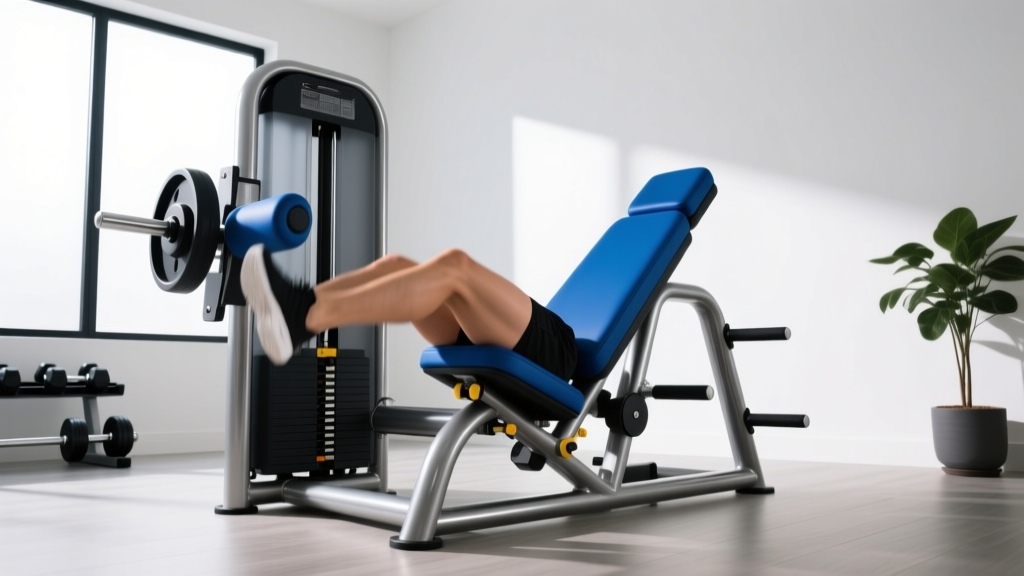
Horizontal vs 45° Press: The Compact Leg Press Hack Squat Machine
Compare horizontal vs 45-degree leg presses and discover if a compact leg press hack squat machine is the ultimate space-saving solution for your 2026 home gym.

The Biomechanical Divide: Horizontal vs. 45-Degree Sleds
When outfitting a home gym or boutique studio in 2026, lower body equipment often presents the greatest spatial challenge. While free-weight squat racks are non-negotiable for most, dedicated leg machines are where floor plan compromises usually occur. The debate typically centers on two traditional sleds: the horizontal leg press and the 45-degree incline leg press. However, as real estate costs rise and garage gyms shrink, a third contender has emerged to dominate the space-efficiency conversation: the compact leg press hack squat machine.
Before evaluating the hybrid solution, we must establish the biomechanical and spatial baselines of the traditional options. Understanding joint angles, lumbar shear forces, and physical footprints is critical to making an informed capital investment.
Horizontal Leg Press: The Lumbar-Safe Option
The horizontal leg press (often seated at a 180-degree angle relative to the push plate) is frequently prescribed for individuals with lower back pathologies. Because the torso is fully supported in an upright or slightly reclined seated position, the pelvis remains relatively neutral, minimizing lumbar flexion under load.
However, this biomechanical safety comes with a trade-off in range of motion (ROM). As the knees approach the chest, the femurs can impinge against the hip flexors and lower abdomen. To achieve deep knee flexion (past 90 degrees), the user must often allow their pelvis to tilt posteriorly, which reintroduces the very lumbar rounding the machine was designed to prevent. Furthermore, horizontal sleds require a massive longitudinal footprint. A standard commercial horizontal press, such as the Body-Solid GCLP115 or similar plate-loaded models, typically demands a footprint of 80 inches long by 38 inches wide, eating up over 21 square feet of dedicated floor space.
45-Degree Leg Press: The Hypertrophy Standard
The 45-degree leg press is the undisputed king of commercial gyms. By aligning the sled track at a 45-degree incline, the machine allows for a deeper, more natural hip flexion without the severe abdominal impingement seen in horizontal models. According to ExRx's biomechanical breakdown of the 45-degree leg press, this angle optimally targets the quadriceps while allowing significant gluteal and hamstring recruitment when foot placement is elevated on the platform.
The primary drawback is the spatial requirement. A standard 45-degree sled requires an 85-inch length and a 60-inch width to accommodate the wide carriage and loading horns, consuming roughly 35 square feet. Additionally, the 45-degree angle increases the sheer force on the knee joint at the bottom of the movement if the user allows their knees to cave inward (valgus collapse) under heavy loads.
The Space-Saving Paradigm: The Compact Leg Press Hack Squat Machine
For the lifter who wants the deep ROM of a 45-degree sled, the axial loading of a hack squat, and the footprint of a single power rack, the compact leg press hack squat machine is the ultimate 2026 solution. These hybrid machines utilize a single 45-degree linear bearing track but feature a reversible or adjustable carriage.
Expert Insight: "The brilliance of the modern compact leg press hack squat machine lies in its dual-axis carriage. By simply rotating the back pad and shoulder yokes, the user shifts from a seated pressing movement to an upright hack squat, effectively halving the equipment footprint while doubling the exercise library." — FitGearPulse Biomechanics Lab
Unlike traditional hack squats that require a separate 60x60 inch footprint, these combo units are engineered to fit within a 50-inch by 50-inch envelope (roughly 17.5 square feet). Models like the Titan Fitness Hack Squat/Leg Press combo or the Force USA integrated sleds achieve this by utilizing a vertical tower design with a 45-degree angled guide rod system, rather than a sprawling horizontal track.
How the Conversion Works
- Hack Squat Mode: The user steps under the padded shoulder yokes, facing the machine. The carriage rests on the upper back/traps, mimicking the traditional hack squat biomechanics for immense quad isolation and deep stretch.
- Leg Press Mode: The user flips the backrest down or rotates the shoulder pads outward, sits in the integrated seat, and pushes the platform away, replicating the 45-degree incline press.
Head-to-Head Comparison Matrix
When evaluating your purchase, use this matrix to weigh the spatial and mechanical differences between the three primary lower-body sled configurations.
| Feature | Horizontal Leg Press | 45-Degree Leg Press | Compact Leg Press Hack Squat Machine |
|---|---|---|---|
| Average Footprint | 80" L x 38" W (21 sq ft) | 85" L x 60" W (35 sq ft) | 50" L x 50" W (17.5 sq ft) |
| Max Load Capacity | 400 - 600 lbs | 800 - 1,200 lbs | 600 - 1,000 lbs |
| Lumbar Shear Stress | Low (if ROM is restricted) | Moderate (at deep flexion) | Moderate to High (axial loading in hack mode) |
| Exercise Versatility | Low (Press only) | Low (Press only) | High (Press, Hack Squat, Shrugs, Calf Raises) |
| 2026 Price Range | $1,200 - $2,500 | $1,800 - $4,500 | $1,400 - $3,200 |
Critical Buying Factors and Engineering Edge Cases
When shopping for a compact leg press hack squat machine, do not base your decision solely on the price tag or the footprint. The mechanical engineering of the carriage system dictates the machine's lifespan and safety profile. According to equipment safety guidelines emphasized by the National Strength and Conditioning Association (NSCA), structural integrity and fail-safes are paramount when dealing with heavy axial and sled loads.
1. Linear Bearings vs. Nylon Bushings
The most common failure mode in budget compact combo machines is carriage binding. When performing unilateral (single-leg) hack squats, the off-center load creates immense rotational torque on the guide rods. Machines utilizing cheap nylon bushings will quickly warp, causing the sled to stick mid-rep. Always insist on dual 1-inch or 2-inch hardened steel linear bearings with bronze or high-density UHMWPE (Ultra-High-Molecular-Weight Polyethylene) bushings. This ensures smooth travel even when 400 lbs of force is applied unevenly.
2. Safety Catch Mechanisms
Traditional 45-degree leg presses use a simple pin-and-pipe safety system, which requires the user to manually flip a lever at the bottom of a rep—a dangerous proposition if you reach muscular failure. Premium compact leg press hack squat machines in 2026 feature auto-locking ratcheting hooks. These engage automatically every 4 to 6 inches along the track. Ensure the release lever is ergonomically positioned within easy reach of the user's hands in both the seated press and standing hack squat configurations.
3. Carriage Weight and Starting Resistance
Be aware of the empty carriage weight. A heavy steel carriage on a 45-degree angle can provide 70 to 110 lbs of starting resistance before you even load a plate. For physical therapy, rehabilitation, or elderly users, this starting weight may be too high. If this is a concern, look for selectorized (pin-loaded) compact models, though be prepared for a price jump into the $3,500+ tier and a slightly larger footprint to accommodate the weight stack tower.
Final Verdict: Matching Equipment to Your Floorplan
If you have a sprawling 1,000-square-foot dedicated gym space and prioritize absolute maximum load capacity for elite powerlifting accessory work, a dedicated commercial 45-degree leg press remains the gold standard. However, for 90% of home gym owners, garage lifters, and boutique studio operators in 2026, the spatial math simply does not justify a single-use sled.
The compact leg press hack squat machine represents the pinnacle of modern fitness engineering. By sacrificing a negligible amount of maximum load capacity (dropping from 1,200 lbs to 1,000 lbs), you gain a versatile, bi-functional powerhouse that fits in the corner of a standard two-car garage. When selecting your model, prioritize linear bearing quality and auto-locking safety hooks over aesthetic powder coating, and you will secure a lower-body training staple that will outlast your lifting career.
More gear to consider
All reviews
Cable Leg Attachments & Leg Press Machine Physical Therapy Care

How Much Does a Leg Press Machine Weigh Without Weights? Home Compare

Leg Press Plate Loaded Machine & Cable Leg Attachment Maintenance

Beyond Leg Press Machine Reviews: 2026 Extension & Curl Guide

Leg Press Machine vs Squat: Home Gym Setup Showdown
