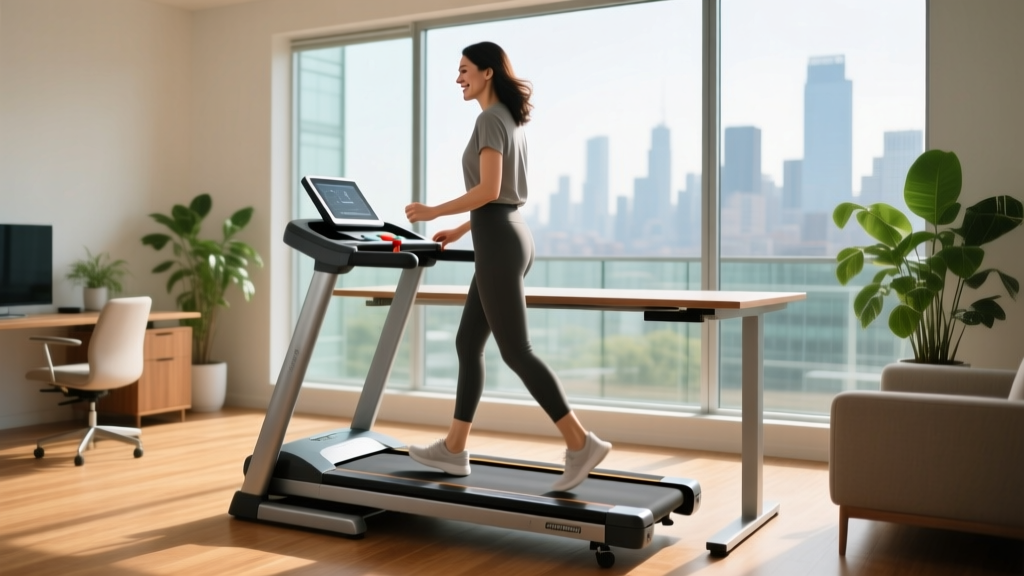
Horizon Treadmill T500 vs Ellipticals: Space-Saving Home Cardio
Optimize your home gym layout. We compare the spatial footprint, ceiling clearance, and floor load of the Horizon Treadmill T500 against top ellipticals.

The Spatial Dilemma: Treadmill vs. Elliptical Footprints
When designing a home gym in 2026, the debate between an elliptical and a treadmill extends far beyond calorie burn and joint impact. The true bottleneck for most home fitness enthusiasts is spatial geometry. How does a machine interact with your room's dimensions, ceiling height, and structural flow? To answer this, we are benchmarking the heavy-duty Horizon Treadmill T500 against leading elliptical machines to provide a definitive, space-optimization framework for your home cardio layout.
According to guidelines from the American Heart Association, consistent cardiovascular exercise is non-negotiable for long-term health, but adherence plummets when home equipment feels cramped or obstructs daily living spaces. Let us break down the exact measurements, clearance requirements, and architectural considerations you need before making your purchase.
Quick Spatial Matrix: The Core Differences
- Treadmills (e.g., Horizon T500): Require a longer linear footprint and a mandatory rear 'fall zone' clearance, but offer a lower vertical step-up height.
- Ellipticals (e.g., Sole E35): Feature a shorter, more compact base and no rear fall zone requirement, but demand significant overhead clearance and lateral swing radius.
Benchmarking the Horizon Treadmill T500 in Compact Spaces
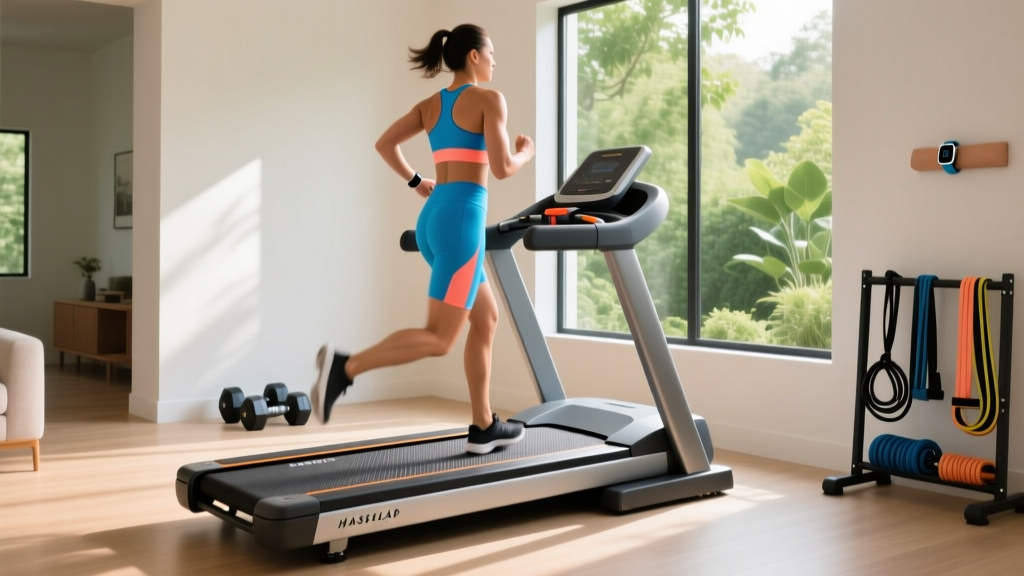
The Horizon Treadmill T500 is a staple in the commercial-light category, favored for its 4.0 HP motor and robust 350-pound user capacity. But how does this powerhouse translate to a spare bedroom or basement gym?
Deployed vs. Folded Dimensions
The deployed footprint of the Horizon T500 measures approximately 83 inches long by 35 inches wide by 63 inches high. However, the critical metric for space optimization is the 'safety envelope.' The American Council on Exercise (ACE) recommends a minimum of 24 to 36 inches of clearance behind any treadmill to prevent injury in the event of a slip. This means your true linear spatial requirement for the T500 is closer to 115 inches (9.5 feet) of unobstructed length.
What about folding? The T500 utilizes a hydraulic folding mechanism. When folded, the length drops to roughly 43 inches, but the height increases to 73 inches, and the 35-inch width remains unchanged. Expert Insight: Many buyers mistakenly calculate their room size based on folded dimensions. In reality, a folded treadmill still dictates room flow, often blocking walkways or doors due to its sheer bulk and 315-pound weight, which makes daily folding a cumbersome chore.
Ceiling Clearance: The Overlooked Vertical Metric
The most common layout failure in home gyms is ignoring the Z-axis (vertical space). This is where the elliptical vs. treadmill debate gets highly technical.
The Step-Up Calculation
To avoid head-strikes against ceiling fans or low joists, use this formula: User Height + Machine Step-Up Height + 6-Inch Buffer = Minimum Ceiling Height.
- Horizon T500 Deck Height: The T500 has a step-up height of roughly 8 inches. For a 6-foot (72-inch) user, the math is 72 + 8 + 6 = 86 inches. A standard 8-foot (96-inch) ceiling provides plenty of room, even at maximum incline.
- Elliptical Pedal Apex: Ellipticals like the Sole E35 have a pedal apex (highest point in the stride) of 12 to 15 inches. For that same 6-foot user, the math is 72 + 15 + 6 = 93 inches. If you have a basement gym with dropped ceilings or ductwork hanging at 88 inches, an elliptical will result in a dangerous head-strike at the peak of your stride.
"Always measure ceiling height at the exact spot where the machine will sit, not just at the doorway. HVAC ducts and recessed lighting fixtures frequently reduce usable vertical space by 6 to 10 inches in basement conversions."
Elliptical Swing Radius and Room Flow Dynamics
While ellipticals save space at the rear (no fall zone required), they consume space laterally. The moving arm bars on models like the NordicTrack SpaceSaver SE7i or Horizon EX-59 require a lateral swing radius. If you plan to place your elliptical flush against a wall, you will experience knuckle-scraping and restricted biomechanics. You must leave at least 12 inches of lateral clearance on both sides of an elliptical, effectively adding 24 inches to its stated width.
Comparative Spatial & Structural Matrix
| Metric | Horizon T500 (Treadmill) | Sole E35 (Elliptical) | NordicTrack SE7i (Elliptical) |
|---|---|---|---|
| Deployed Footprint (LxW) | 83' x 35' | 70' x 28' | 76' x 30' |
| Total Safety Envelope | 115' x 35' | 70' x 52' (w/ arm swing) | 80' x 54' (w/ arm swing) |
| Machine Weight | ~315 lbs | ~230 lbs | ~215 lbs |
| 2026 Avg. Price | $1,399 | $1,199 | $999 |
Structural Load and Floor Joist Considerations
Space optimization is not just about the space you can see; it is about the space beneath your floorboards. Cardio machines generate immense dynamic loads. When a 200-pound user runs on the Horizon T500, the impact force can momentarily spike to 2.5 times their body weight. This means the floor joists must support a concentrated dynamic load exceeding 800 pounds in a 4-square-foot area.
Ellipticals, by contrast, offer a zero-impact, fluid motion. The dynamic load on the floor joists remains relatively constant, closely mirroring the static weight of the machine plus the user. If you are installing a gym on a second-floor bedroom or over a suspended crawlspace, an elliptical is structurally safer and significantly reduces low-frequency vibration transfer to the rooms below.
Pro-Tip for Treadmill Layouts: If you must place the Horizon T500 on a suspended floor, position it so the front roller (where the motor and heaviest impact occur) sits directly over a load-bearing wall or perpendicular across multiple floor joists. Use a 3/4-inch high-density rubber mat to distribute the point load.Designing the 2026 Cardio Zone: A Layout Framework
To finalize your decision, follow this spatial layout framework to ensure your chosen machine integrates seamlessly into your home.
- Map the HVAC and Ventilation: Treadmills generate significantly more ambient heat and require higher CFM (cubic feet per minute) airflow than ellipticals due to the higher metabolic output of running. Position the Horizon T500 near a window or an adjustable HVAC vent. Ellipticals can be tucked into tighter, less ventilated corners.
- Account for Power Drops: The T500 requires a dedicated 15-amp circuit to prevent tripping breakers during high-speed incline sprints. Ensure your spatial layout places the machine within 4 feet of a grounded outlet without stretching a cord across a walkway.
- Test the 'Dismount Zone': Stand in the exact spot where the machine will go. Simulate stepping off an elliptical laterally, and stepping backward off a treadmill. Ensure you are not hitting a door frame, a glass mirror, or a thermostat.
Frequently Asked Questions: Space Optimization
Can I place the Horizon T500 on thick carpet?
Yes, but it affects spatial stability and motor heat. Thick pile carpet compresses under the T500's 315-pound frame, causing the deck to sit slightly unlevel. This forces the motor to work harder, generating more heat in a confined space. Always use a rigid PVC or high-density rubber equipment mat to create a flat, stable sub-floor, which adds roughly 1/4 inch to your overall ceiling clearance calculation.
Do folding ellipticals save more space than folding treadmills?
Generally, no. While some ellipticals feature a folding center mast, their base rails remain fixed to the floor. The footprint reduction is purely vertical, which rarely helps in standard rooms. The Horizon T500's folding deck actually reclaims valuable linear walking space, making it superior for multi-purpose rooms (like a home office/gym hybrid) where floor space is needed for a desk chair to roll backward.
What is the absolute minimum room size for the Horizon T500?
To safely operate the Horizon T500 with proper clearances, your room should be at least 10 feet long by 6 feet wide. This accounts for the 83-inch machine, the 36-inch rear safety zone, and the lateral clearance required for the handrails and user arm swing. Anything smaller will result in a claustrophobic environment that severely impacts workout adherence.
More gear to consider
All reviews
High Speed Treadmill Belt Maintenance: Lubrication & Care Guide
Beyond NordicTrack Treadmill Disassembly: Compact Cardio Swaps
Treadmill Buying Guide: Features Comparison & What Incline Should I Use?
Air Bike vs Assault Bike: Value vs Fat Burning Interval Treadmill Workout
Knee Pain After Treadmill Running? Feature Buying Guide