
Elliptical vs Treadmill: Is the 95ti Treadmill Worth the Cost?
We break down the 5-year cost, maintenance, and ROI of the 95ti treadmill versus premium ellipticals to find the best home cardio value.

The 2026 Home Cardio Economy: Sticker Price vs. Total Cost of Ownership
When outfitting a home gym, the debate between an elliptical and a treadmill rarely stays confined to fitness goals; it quickly becomes a complex financial calculation. In the 2026 fitness equipment market, inflation and supply chain shifts have pushed the prices of commercial-grade cardio machines higher than ever. For buyers eyeing premium equipment, the question is no longer just 'which burns more calories?' but rather, 'which offers the superior long-term return on investment?'
To answer this, we must look beyond the initial purchase price. A high-end machine like the 95ti treadmill represents a significant capital expenditure, often hovering around the $3,299 to $3,499 mark. Conversely, a top-tier elliptical cross-trainer, such as the Sole E95 or NordicTrack Commercial 14.9, typically ranges from $1,699 to $2,499. But does the 95ti treadmill's premium price tag translate to proportional value over a 5-to-10-year lifespan, or does the elliptical win the war on long-term home cardio economics?
Budget Callout: The 5-Year Hidden Costs
Treadmill (95ti Model): Upfront $3,499 + $120 (silicone lubricants) + $250 (potential belt/deck replacement) + $85 (electrical surges) = $3,954 Total 5-Year Cost
Premium Elliptical: Upfront $1,899 + $40 (rail grease) + $60 (pivot bearing replacements) + $15 (electrical) = $2,014 Total 5-Year Cost
Head-to-Head Value Matrix: 95ti Treadmill vs. Premium Ellipticals
To understand where your money is actually going, we need to compare the structural and operational realities of these two machine categories. Below is a data-driven breakdown of the 95ti treadmill against a comparable premium elliptical.
| Metric | 95ti Treadmill (Premium) | High-End Elliptical (e.g., Sole E95) |
|---|---|---|
| Upfront Cost (2026) | $3,299 - $3,499 | $1,699 - $2,199 |
| Motor / Drive System | 4.0 CHP Continuous Duty DC Motor | Heavy-Duty Flywheel & Eddy Current Magnetic Resistance |
| Peak Power Draw | 1,500W - 1,800W (Requires 20A Circuit) | Under 100W (Standard 15A Outlet) |
| Footprint (L x W) | 82' x 35' (Approx. 20 sq. ft.) | 76' x 31' (Approx. 16 sq. ft.) |
| Primary Maintenance | Belt tensioning, silicone deck lubrication | Rail cleaning, pivot point bearing greasing |
| Ground Reaction Force | 2.0x to 2.5x Body Weight (Running) | Near 0x Body Weight (Low Impact) |
Maintenance Realities and Failure Modes
The true budget breakdown of any cardio machine lies in its failure modes. According to the Consumer Reports Fitness Buying Guide, treadmills consistently rank as the most repaired home fitness equipment category, largely due to the immense friction and electrical load they endure.
95ti Treadmill Wear-and-Tear
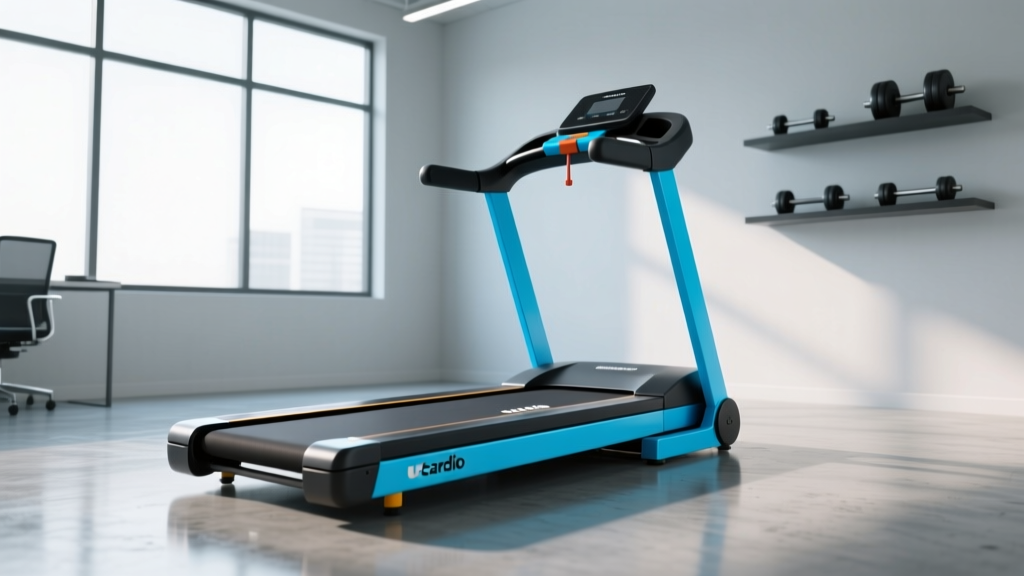
The 95ti treadmill is engineered with a commercial-grade 4.0 CHP motor and a 22-inch by 60-inch running surface. While this provides an exceptional, spacious run for tall athletes, it creates massive surface friction. If the user neglects to apply 100% silicone lubricant to the deck every 150 miles, the friction coefficient spikes. This forces the motor to draw excess amperage, which can prematurely fry the lower control board (a $250 to $400 replacement part). Furthermore, the running deck itself is a wear item. Phenolic resin decks typically last 5 to 7 years under heavy use before delaminating, requiring a $200+ belt and deck combo replacement.
Elliptical Joint and Bearing Degradation
Ellipticals bypass the high-friction belt system entirely, relying on magnetic resistance and a heavy flywheel. The financial risk here shifts from electrical components to mechanical joints. A premium elliptical features multiple pivot points (pedal arms, crank bearings, and track rollers). Over a 5-year period, the track wheels may develop flat spots or the sealed bearings may dry out, resulting in a 'clunking' noise. Fortunately, replacing a set of polyurethane track wheels or greasing the crank bearings is a low-cost DIY repair, usually totaling less than $75 in parts. From a pure maintenance budget perspective, the elliptical is vastly superior.
Biomechanical ROI: Joint Impact and Caloric Yield
Value is not just about money saved; it is about the physiological return on your investment. If an injury sidelines you, the machine's cost-per-use plummets to zero, making it a poor financial asset. The American Heart Association recommends at least 150 minutes of moderate-intensity aerobic activity per week, but joint preservation is critical for maintaining this consistency over decades.
'Running on a treadmill generates ground reaction forces equivalent to 2.5 times your body weight with every footstrike. Conversely, elliptical training maintains continuous contact with the pedals, reducing joint loading to near zero while still eliciting comparable cardiovascular and caloric expenditures.' — Biomechanics consensus via the American College of Sports Medicine
If you are a dedicated runner training for marathons, the 95ti treadmill's advanced elastomer shock absorption system is a non-negotiable investment to mimic road conditions safely. However, for general cardiovascular health, weight management, and aging joints, the elliptical delivers 90% of the caloric yield with a fraction of the orthopedic wear-and-tear, offering a higher 'longevity ROI' for the average homeowner.
Spatial and Electrical Economics
Home gym real estate is expensive. The 95ti treadmill requires a minimum footprint of 20 square feet, plus an additional 2 feet of clearance behind the machine for safety fall-offs. More importantly, its 4.0 CHP motor demands a dedicated 20-amp electrical circuit. If you plug a premium treadmill into a shared 15-amp household circuit alongside a space heater or air conditioner, you risk tripping the breaker or damaging the machine's power supply. Retrofitting a room with a dedicated 20-amp line can cost a homeowner between $250 and $500 in electrician fees.
Ellipticals, drawing negligible wattage (often under 100W just to power the LED console and magnetic brake), can be plugged into any standard 15-amp outlet. Furthermore, many modern ellipticals feature a much narrower pedal stance (Q-factor) and a smaller overall footprint, making them ideal for multi-use spaces, spare bedrooms, or apartment living where spatial economics are a primary budget constraint.
The Final Decision Framework
So, is the 95ti treadmill worth the premium over a high-end elliptical? The answer depends entirely on your specific use case and financial flexibility. Use this framework to make your final purchasing decision:
- Buy the 95ti Treadmill if: You are a dedicated runner requiring a 22' x 60' deck for long strides, you are training for outdoor road races and need to simulate exact pacing and inclines (up to 15%), and you have the budget for a dedicated 20-amp electrical circuit and periodic $200+ maintenance intervals.
- Buy a Premium Elliptical if: Your primary goal is general cardiovascular health, HIIT interval training, or active recovery. If you have a history of knee, hip, or lower back issues, or if your home gym space is limited to a standard 15-amp bedroom outlet, the elliptical provides a vastly superior 5-year cost-to-benefit ratio.
- The Compromise (Mid-Tier Treadmill): If you prefer walking or light jogging but cannot justify the $3,499 price tag of the 95ti, consider a mid-tier folding treadmill with a 3.0 CHP motor and a 20' x 55' deck (typically $1,299 - $1,599). This bridges the gap, offering treadmill biomechanics without the commercial-grade electrical and spatial tax.
Ultimately, the best cardio machine is the one you will use consistently. By weighing the upfront sticker price against electrical requirements, long-term maintenance, and your personal joint health, you can ensure your 2026 home gym investment pays dividends for years to come.
More gear to consider
All reviews
How to Use a Manual Treadmill Properly: Layouts & Belt Maintenance

AoraPulse Treadmill Reviews: Motor Size & Setup Walkthrough
Maintaining Your U-Shape Treadmill: Office Longevity Guide

Can an Under Desk Treadmill Improve Your Treadmill Test for Heart?

Rowing Guide: Outpace Your Fat Burning Walking Workout on Treadmill
