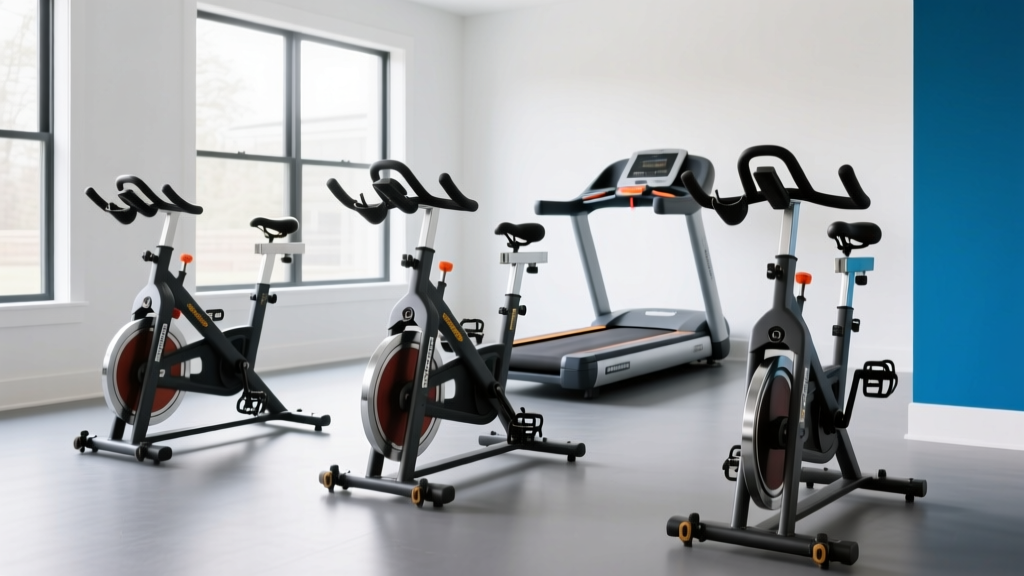
Head-to-Head Treadmill Motors: Matching HP to Workout Plan PDFs
Compare treadmill motor sizes (CHP vs Peak) and discover which HP rating supports your specific treadmill workout plan PDF without hardware failure.

The Hidden Bottleneck: Why Motor HP Dictates Your Routine
Every January, millions of fitness enthusiasts download a rigorous treadmill workout plan pdf, pin it to their wall, and step onto their home cardio machine with the best of intentions. Yet, by March, a significant percentage of these plans are abandoned—not due to a lack of human willpower, but because of hardware failure. The culprit is almost always the treadmill motor. When you pair a high-intensity interval training (HIIT) protocol with an underpowered motor, the machine simply cannot keep up with the biomechanical demands of the user, leading to belt lag, thermal shutdowns, and eventual controller burnout.
As a senior equipment analyst for FitGearPulse, I have tested dozens of residential and commercial treadmills. The most common mistake consumers make in 2026 is ignoring the motor's Continuous Duty Horsepower (CHP) rating. In this head-to-head comparison guide, we will dissect treadmill motor specifications and match them directly to the most popular types of workout plan PDFs available online, ensuring your hardware can actually handle your digital programming.
Expert Insight: Never confuse 'Peak HP' with 'Continuous HP' (CHP). Peak HP measures the maximum output the motor can achieve for a fraction of a second under zero load. CHP measures the power the motor can sustain continuously under a real human load. Always base your purchasing decisions on CHP.Decoding the Specs: CHP, Duty Cycles, and User Weight Multipliers
Before we compare specific models, we must establish the physics of treadmill motors. According to testing methodologies outlined by Runner's World, a treadmill motor must overcome 'stiction'—the static friction of the belt and deck—every single time your foot strikes the deck. This requires massive torque, not just top-end speed.
- 2.0 to 2.5 CHP: Suitable for walking and light jogging. Best for users under 180 lbs.
- 3.0 to 3.5 CHP: The gold standard for home running. Can sustain 7–10 mph for extended durations without overheating.
- 4.0+ CHP: Commercial-grade territory. Required for heavy sprinting, steep inclines, and users over 250 lbs.
If your chosen treadmill workout plan pdf features rapid speed fluctuations or sustained high-incline climbs, the motor's Pulse Width Modulation (PWM) controller will be pushed to its thermal limits. If the CHP is too low, the internal thermal cutoff switch will trip, halting your workout mid-stride to prevent a fire hazard.
Head-to-Head Matrix: 3 Treadmills vs. 3 Workout Plan PDFs
To illustrate how motor size impacts real-world performance, we have selected three highly rated 2026 treadmills and matched them against three distinct, widely downloaded workout plan PDFs.
| Treadmill Model (2026) | Motor Spec (CHP) | Target Workout Plan PDF | Performance Verdict | Est. Price |
|---|---|---|---|---|
| Sunny Health & Fitness SF-T723016 | 1.5 CHP (2.5 Peak) | Couch to 5K (Beginner Walk/Jog) | Adequate. Handles 3.5 mph walking and brief 5.0 mph jogging intervals. Will overheat if user exceeds 180 lbs during jog phases. | $450 |
| Sole F80 | 3.5 CHP | Hal Higdon Intermediate Marathon | Excellent. The 3.5 CHP motor easily sustains 8.5 mph for 10+ miles. The heavy flywheel maintains momentum, reducing motor strain during long runs. | $1,199 |
| Bowflex Treadmill 22 | 4.0 CHP | Tabata Sprint Protocol (Advanced HIIT) | Superior. Rapid acceleration from 3 mph to 12 mph requires immense torque. The 4.0 CHP motor prevents belt lag during aggressive foot strikes. | $2,699 |
Analysis: The Couch to 5K vs. Budget Motors
The 'Couch to 5K' is the most downloaded beginner treadmill workout plan pdf on the internet. It relies on alternating walking and light jogging. A budget motor like the 1.5 CHP found in the Sunny Health SF-T723016 can technically survive this plan, provided the user is lightweight. However, as the user's cardiovascular fitness improves and they naturally begin pushing the speed to 6.0 mph, the motor's PWM controller will run hot. We recommend a minimum of 2.5 CHP for any plan that includes running.
Analysis: Marathon Training vs. Mid-Tier Workhorses
Marathon training plans require sustained, steady-state cardio. The Sole F80's 3.5 CHP motor is specifically engineered for this. During a 90-minute long run, a weaker motor's internal copper windings will accumulate heat, eventually degrading the insulation and shortening the motor's lifespan. The Sole F80 utilizes a high-mass flywheel that stores kinetic energy, meaning the motor doesn't have to work as hard to maintain belt speed between footfalls.
Analysis: HIIT Sprints vs. Commercial Power
HIIT protocols, such as those endorsed by the Mayo Clinic, demand rapid acceleration. When a 200 lb runner jumps onto a belt moving at 12 mph, the sudden deceleration force is transferred directly to the motor. A 3.0 CHP motor will experience 'belt lag'—a momentary hesitation where the belt slows down underfoot before the controller can demand more amperage from the wall. This lag alters your biomechanics and can cause Achilles or hamstring strains. The Bowflex Treadmill 22's 4.0 CHP motor delivers instant torque, eliminating this dangerous micro-stutter.
Real-World Failure Modes: What Happens When HP is Too Low?
When fitness enthusiasts ignore motor specifications and attempt to force a budget machine through an advanced treadmill workout plan pdf, three specific failure modes occur:
- Thermal Cutoff Tripping: Most residential treadmills feature a thermal switch set to trip at roughly 105°C (221°F). If you are running at 8 mph on a 10% incline with a 2.5 CHP motor, the motor will draw excessive amperage to fight gravity. Within 25 minutes, the heat buildup will trigger the switch, abruptly stopping the belt.
- Drive Belt Slippage: To protect the motor from burning out, the manufacturer will install a slightly loose ribbed drive belt. Under high-torque demands (like sprinting), the motor pulley will spin, but the drive belt will slip, resulting in a sudden loss of belt speed and a loud squealing noise.
- Controller Board Fry: The motor controller converts AC wall power to DC power for the motor. When a motor is starved for horsepower, it pulls more amps. This excess current generates massive heat in the controller's MOSFETs (transistors), eventually melting the solder joints and requiring a $250+ replacement board.
"The number one reason we see treadmill warranties voided is users running high-incline interval programs on 2.0 CHP machines. The motor isn't defective; it's simply being asked to pull a load far beyond its engineered duty cycle." — FitGearPulse Repair Technician Log, 2025
AC vs. DC Motors: The Commercial Divide
If your treadmill workout plan pdf is designed for commercial gym environments, or if you are outfitting a high-end home gym, you must understand the difference between Alternating Current (AC) and Direct Current (DC) motors.
Almost all residential treadmills (under $4,000) use DC motors. They are lighter, cheaper to manufacture, and allow for easy electronic speed adjustments. However, DC motors require internal brushes that eventually wear down and require maintenance.
Commercial treadmills (like the Precor TRM 731 or Life Fitness Integrity Series) utilize AC motors. AC motors are brushless, run significantly cooler, and can operate 24/7 without thermal degradation. While an AC motor might be rated at 3.0 HP, its actual torque output and durability vastly exceed a residential 3.0 CHP DC motor. If you are a heavy runner (250+ lbs) or plan to run more than 10 hours a week, bypassing residential DC models and investing in a refurbished commercial AC unit is the most economically sound decision you can make.
The Deck Friction Multiplier
Motor size does not exist in a vacuum; it is intrinsically tied to the treadmill's deck lubrication system. A 3.5 CHP motor paired with a high-friction, dry deck will perform worse than a 2.75 CHP motor paired with a maintenance-free, wax-infused deck (like those found on NordicTrack's Commercial series).
When following a high-mileage treadmill workout plan pdf, you must factor in deck maintenance. If you fail to lubricate a standard silicone deck every 150 miles, the coefficient of friction increases exponentially. The motor will be forced to draw 20% to 30% more amperage just to maintain a 6.0 mph pace. Always check the deck friction before blaming the motor for a sluggish belt.
Expert Verdict: Sizing Your Motor for Your Goals
Ultimately, the success of your fitness journey relies on the seamless integration of your digital programming and your physical equipment. Before you commit to a 12-week training block, look at the speed and incline parameters in your treadmill workout plan pdf.
- If the plan maxes out at 5.0 mph with zero incline, a 2.5 CHP motor is sufficient.
- If the plan requires sustained runs at 7.0 to 9.0 mph, you absolutely need a 3.0 to 3.5 CHP motor with a heavy flywheel.
- If the plan features all-out sprints, heavy inclines, or you weigh over 220 lbs, do not compromise: invest in a 4.0 CHP or commercial AC motor.
By matching your motor's Continuous Duty Horsepower to the actual biomechanical demands of your routine, you eliminate hardware bottlenecks, protect your joints from belt lag, and ensure your machine survives the entirety of your training cycle.
More gear to consider
All reviews
Walking Pads vs Motorized Treadmills: Setup & Install Guide
Rowing Machine Setup: No NordicTrack T 6.5 S Treadmill Manual Needed

Treadmill Motor Size and Horsepower Guide: What Motor Do You Need for 30 Minutes at Speed 4?

Is DeerRun a Good Treadmill Brand? Cardio Noise Compared

Curved vs Motorized Treadmill: Lost Remote for Treadmill Guide