Horizon T7 Elite Treadmill Motor Guide & HP Buying Tips
Decode treadmill motor specs with our Horizon T7 Elite treadmill HP guide. Learn CHP vs Peak HP, thermal limits, and exact sizing for your home gym.

The Great Motor Deception: Why Horsepower Labels Lie
When outfitting a home gym in 2026, the treadmill motor remains the most misunderstood component on the spec sheet. Manufacturers frequently exploit consumer confusion by advertising 'Peak Horsepower' (HP) rather than 'Continuous Duty Horsepower' (CHP). According to equipment testing standards highlighted by Consumer Reports, a budget treadmill boasting a '4.0 Peak HP' motor may actually operate at a mere 1.5 CHP under a sustained load, leading to rapid overheating, belt stuttering, and premature controller burnout.
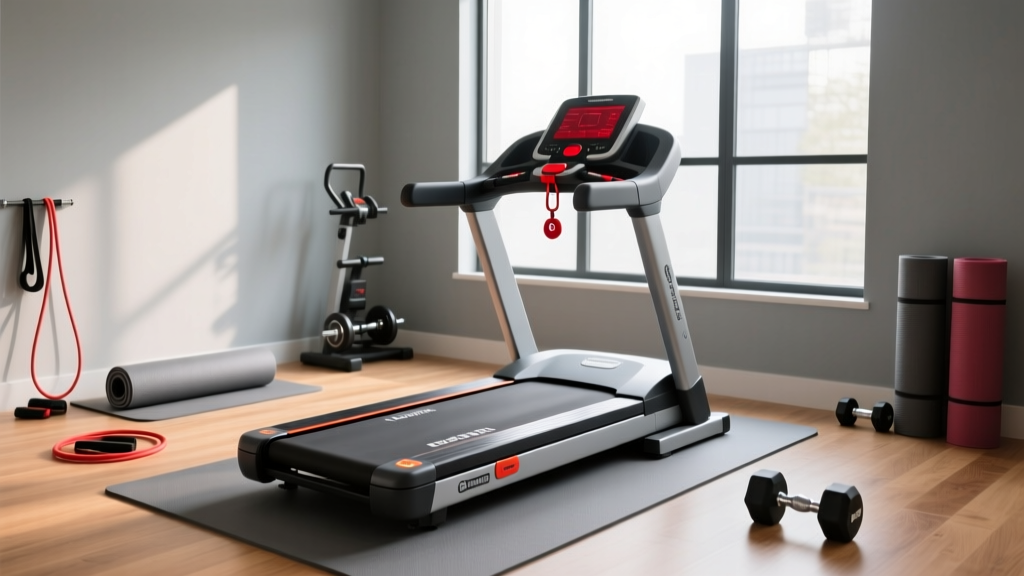
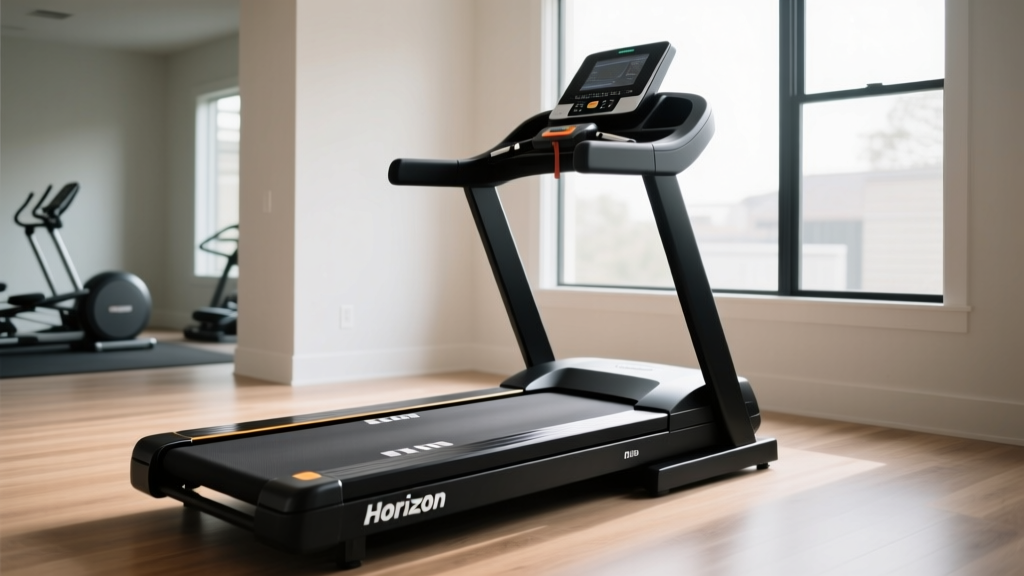
To cut through the marketing noise, we are using the Horizon T7 Elite treadmill as our benchmark for this in-depth motor sizing guide. Equipped with a robust 3.0 CHP motor, the Horizon T7 Elite represents the gold standard for heavy-duty residential use. By dissecting its architecture, we can establish a practical framework for evaluating any cardio machine on the market.
⚠️ Buyer Beware: If a treadmill spec sheet simply says 'Horsepower' or 'Peak HP' without explicitly stating 'Continuous Duty' or 'CHP', assume the continuous output is less than half of the advertised number.Decoding the Horizon T7 Elite Treadmill Motor Architecture
The Horizon T7 Elite treadmill utilizes a 3.0 CHP Direct Current (DC) motor. But what does that actually mean for your daily runs? Unlike alternating current (AC) motors found in commercial gym equipment—which are incredibly durable but require massive power draws and loud cooling fans—modern DC motors rely on advanced Pulse Width Modulation (PWM) controllers to deliver smooth, consistent torque at low speeds without surging.
The 3.0 CHP Sweet Spot
Why did Horizon engineer the T7 Elite with exactly 3.0 CHP? Biomechanical studies and fitness guidelines from the American College of Sports Medicine (ACSM) suggest that the average adult runner generates significant impact force and belt drag. A 3.0 CHP motor provides enough baseline torque to maintain a steady 12 MPH pace while supporting a user weight of up to 325 lbs, without pushing the motor's thermal limits. It operates at roughly 65% to 75% of its maximum capacity during a standard 8 MPH run, which drastically extends the lifespan of the internal copper windings and carbon brushes.
Motor Sizing Matrix: Matching CHP to Your Biomechanics
Selecting the right motor size is not just about user weight; it is a calculation of weight, speed, and incline frequency. The Mayo Clinic emphasizes that proper equipment matching is vital for maintaining consistent biomechanics and avoiding joint strain caused by a stuttering belt. Use the matrix below to determine your minimum CHP requirements.
| User Weight | Primary Activity | Minimum CHP Required | Horizon T7 Elite (3.0 CHP) Suitability |
|---|---|---|---|
| Under 180 lbs | Walking / Light Jogging | 2.0 CHP | Overkill (Excellent longevity) |
| 180 - 250 lbs | Interval Running / 10% Incline | 2.75 CHP | Ideal Match (Optimal thermal range) |
| 250 - 325 lbs | Sustained Running / Max Incline | 3.0 - 3.25 CHP | Highly Recommended |
| Over 325 lbs | Heavy Walking / Rehab | 3.5+ CHP (or Commercial AC) | Undersized (Look at commercial tiers) |
Flywheel Mass and Thermal Throttling: The Hidden Variables
Horsepower is only half the equation. The physical mass of the motor's flywheel dictates how smoothly the belt transitions from 0 to 12 MPH. Budget treadmills often use lightweight, plastic-cased flywheels that rely entirely on electrical torque to maintain momentum. When a 220-lb runner's foot strikes the deck, a lightweight flywheel micro-stutters, forcing the PWM controller to spike the voltage to compensate. This creates massive heat.
The Horizon T7 Elite Advantage
The Horizon T7 Elite employs a precision-balanced, heavy-duty steel flywheel. This kinetic mass acts as a mechanical battery, storing rotational energy and smoothing out the impact of footfalls. Because the mechanical momentum carries the belt through the 'dead zone' of each stride, the 3.0 CHP motor doesn't have to work as hard to maintain speed.
"In 2026, thermal throttling algorithms have become standard in premium home fitness equipment. If the internal thermistor detects the motor windings exceeding 140°F (60°C), the system will subtly limit max speed or incline to prevent a catastrophic short circuit. A heavier flywheel delays this thermal threshold significantly."
Real-World Failure Modes: When Undersized Motors Die
As fitness equipment technicians, we rarely see the actual copper windings of a 3.0 CHP motor burn out first. The true point of failure in improperly sized or poorly maintained treadmills is the PWM Controller Board. Here is the exact cascade of failure you must avoid:
- Increased Belt Friction: The user neglects to apply 100% silicone lubricant to the deck every 300 miles.
- Amp Draw Spike: The dry belt creates drag. The motor requires 15 amps to maintain 6 MPH instead of the normal 8 amps.
- Controller Overheating: The PWM board, rated for a 20-amp peak, operates constantly at 85% capacity, degrading its internal capacitors.
- Catastrophic Failure: The controller shorts out, often sending a raw, unregulated voltage spike back to the motor, frying both components simultaneously.
AC vs. DC Motors: Why the T7 Elite Chose DC
Some buyers wonder why they shouldn't just purchase a commercial treadmill with a 4.0 HP AC motor for their garage. While AC motors are virtually indestructible and require zero maintenance (no carbon brushes to replace), they come with severe drawbacks for residential environments:
- Power Requirements: AC motors often require dedicated 20-amp or 240V circuits, whereas the Horizon T7 Elite's DC motor runs safely on a standard 15-amp household outlet.
- Acoustic Pollution: AC motors require aggressive, high-RPM cooling fans that generate 65+ decibels of ambient noise, drowning out your television or podcasts.
- Low-Speed Stutter: AC motors struggle to provide smooth torque at speeds under 2 MPH, making them poor choices for walking pads or physical rehabilitation.
Expert Verdict: Is the Horizon T7 Elite Motor Worth the Premium?
Priced in the $1,299 to $1,499 range, the Horizon T7 Elite treadmill sits firmly in the premium residential tier. When you evaluate the 3.0 CHP motor alongside its heavy-duty steel flywheel and advanced thermal management, the value proposition becomes exceptionally clear. You are not just paying for a touchscreen or Bluetooth speakers; you are investing in a drivetrain engineered to survive 5,000+ miles of high-impact interval training without thermal throttling or controller burnout.
If your household includes runners over 200 lbs, or if you frequently utilize the 15% max incline for hill sprints, bypassing the 2.5 CHP 'bargain' models and stepping up to the Horizon T7 Elite's 3.0 CHP architecture is the most cost-effective decision you can make for your long-term fitness journey.
Frequently Asked Questions (FAQ)
Q: How often do I need to replace the carbon brushes in the Horizon T7 Elite motor?
A: Under normal residential use (3-4 hours per week), the carbon brushes in a premium DC motor like the T7 Elite will last between 5 to 7 years. Replacement is a relatively inexpensive maintenance procedure compared to replacing an entire motor.
Q: Can I upgrade a 2.0 CHP treadmill motor to a 3.0 CHP motor later?
A: No. The motor mount brackets, flywheel housing, and most importantly, the PWM controller board are specifically calibrated to the original motor's voltage and amperage. Upgrading requires a complete drivetrain overhaul, which exceeds the cost of a new machine.
More gear to consider
All reviews
Fitness Reality Treadmill Trends: Compact Portable Cardio for 2026

ProForm Treadmill Belt Setup & Feature Comparison Guide

Life Cycle Treadmill Maintenance: 2026 Belt Lubrication Trends
Sole S77 Treadmill: Complete Setup & Feature Comparison

NordicTrack Solaris Treadmill vs Stair Climber: Home Guide