Under Desk Treadmill Review & Incline Treadmill Weight Loss 2026
Discover how 2026 under desk treadmills compare to traditional incline treadmill weight loss. Expert review of top office models and NEAT vs EPOC data.

The 2026 Market Bifurcation: Office Walking vs. High-Incline Cardio
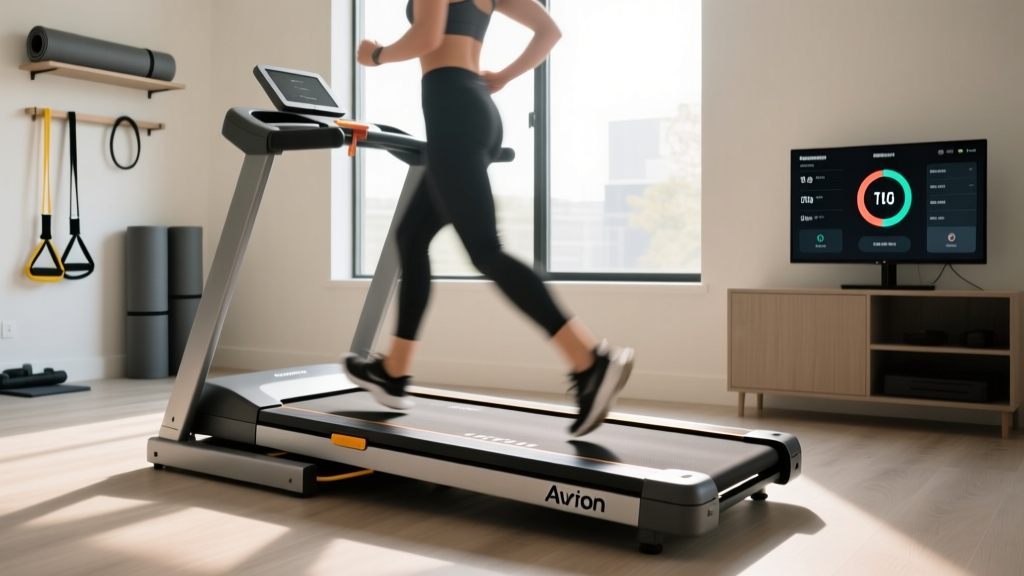
As we navigate the fitness equipment landscape in 2026, the cardio market has sharply bifurcated into two distinct consumer behaviors. On one side, the permanent adoption of hybrid work models has driven a massive surge in demand for the under desk treadmill for office use. On the other, the enduring popularity of high-intensity, grade-based protocols has cemented incline treadmill weight loss as a dominant home-gym pursuit. While both involve walking, the physiological mechanisms, equipment engineering, and metabolic outcomes are vastly different.
This trend report and market analysis dissects the engineering realities of top-tier under-desk treadmills, contrasts them with traditional incline machines, and provides a data-driven framework for optimizing your daily caloric expenditure.
Market Insight: According to 2026 industry retail data, under-desk treadmill sales have grown by 42% year-over-year, primarily driven by corporate wellness stipends. Conversely, premium incline treadmills (15%+ grade) remain the top-grossing segment in the dedicated home-gym category.Top Under Desk Treadmills for Office Use: 2026 Review
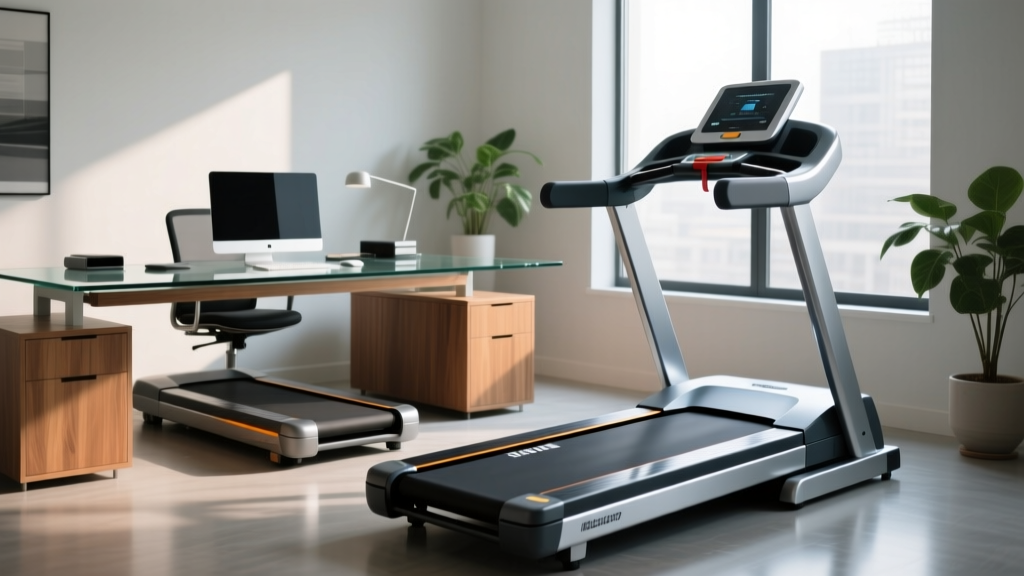
When evaluating an under desk treadmill for office use, the critical metrics differ entirely from standard cardio machines. We prioritize acoustic profiles (decibel output), continuous duty motor thresholds, belt dimensions, and console integration. Here is how the market leaders perform in 2026.
1. LifeSpan TR1200-DT5 (The Corporate Standard)
- Price: $1,399
- Motor: 2.25 CHP (Continuous Horsepower)
- Belt Size: 20" x 50"
- Acoustic Profile: < 50 dB at 2.0 mph
The LifeSpan TR1200-DT5 remains the undisputed heavyweight for dedicated office use. Unlike consumer-grade folding models, its 2.25 CHP motor is engineered for thermal management during prolonged, low-speed use. It can safely run for up to 6 hours continuously without triggering a thermal shutoff. The 20-inch belt width accommodates natural hip sway during typing, and the standalone console tracks steps and distance without requiring a smartwatch sync.
2. WalkingPad X21 (The Hybrid Commuter)
- Price: $549
- Motor: 1.5 HP
- Belt Size: 15.7" x 43.3"
- Acoustic Profile: 52 dB at 2.0 mph
For users with limited square footage, the WalkingPad X21's 180-degree dual-fold design is a market leader. However, the 15.7-inch belt width requires strict biomechanical discipline; drifting laterally while typing can result in stepping on the side rails. Furthermore, the 1.5 HP motor has a recommended continuous use limit of 90 minutes before requiring a cooldown period, making it better suited for interval walking rather than all-day use.
3. UREVO Strol 2E (The Budget Entry)
- Price: $279
- Motor: 1.25 HP
- Belt Size: 16.5" x 41.3"
The Strol 2E captures the budget-conscious remote worker. While it features a convenient steering wheel for moving the unit, its 1.25 HP motor and basic 2-ply belt mean it is strictly limited to walking speeds (max 4.0 mph) and lacks the shock absorption required for users over 200 lbs.
The Biomechanics: Why Under-Desk Units Can't Replace Incline Treadmill Weight Loss
A common misconception in the 2026 fitness community is that accumulating 10,000 steps on an under-desk treadmill yields the same fat-loss results as a dedicated incline walking session. To understand why this is false, we must look at the physiological differences between Non-Exercise Activity Thermogenesis (NEAT) and Excess Post-exercise Oxygen Consumption (EPOC).
According to research highlighted by Harvard Health Publishing, NEAT encompasses the calories burned through daily, low-intensity movements. Walking at 1.5 to 2.0 mph on a flat under-desk treadmill elevates your heart rate to roughly 90-100 BPM, keeping you firmly in Zone 1. This promotes baseline metabolic health and combats the vascular issues associated with prolonged sitting, as supported by the American Heart Association.
However, true incline treadmill weight loss relies on manipulating the biomechanical load. When you elevate a treadmill to a 12% or 15% grade, you force the posterior chain (glutes, hamstrings, and calves) to lift your body weight against gravity with every step. Data published by the National Institutes of Health (NIH) demonstrates that walking at a 10% incline increases energy expenditure by nearly 300% compared to walking on a flat surface at the same speed. Furthermore, high-incline walking pushes the heart rate into Zone 2 or Zone 3, triggering EPOC—meaning your body continues to burn calories at an elevated rate for hours after the workout concludes.
"Under-desk treadmills are tools for metabolic maintenance and joint lubrication. Incline treadmills are tools for cardiovascular conditioning and targeted lipolysis. They are complementary, not interchangeable."
Caloric Expenditure Matrix: Under Desk vs. Incline
To provide actionable specificity, we modeled the caloric burn for a 175 lb (79 kg) individual using both modalities. This matrix illustrates the stark contrast in time-efficiency and metabolic impact.
| Metric | Under-Desk Treadmill (Office Use) | Incline Treadmill (12% Grade) |
|---|---|---|
| Speed / Grade | 2.0 mph / 0% Incline | 3.0 mph / 12% Incline |
| Time Commitment | 2 Hours (Accumulated) | 30 Minutes (Continuous) |
| Average Heart Rate | 95 BPM (Zone 1) | 145 BPM (Zone 2/3) |
| Direct Caloric Burn | ~160 kcal (above resting) | ~280 kcal |
| EPOC (Afterburn) | Negligible (0-5 kcal) | ~45 kcal |
| Posterior Chain Activation | Low (Primarily Calves/Quads) | High (Glutes/Hamstrings) |
| Primary Benefit | NEAT, Posture, Blood Flow | Cardio, Fat Oxidation, Hypertrophy |
The Edge Cases and Failure Modes
When integrating an under desk treadmill for office use, consumers frequently encounter three failure modes:
- Ergonomic Degradation: Walking at 2.0+ mph while typing causes micro-oscillations in the torso, leading to cervical strain and a 30% increase in typing errors. The optimal 'typing speed' is strictly capped at 1.0 to 1.5 mph.
- Motor Burnout: Using a standard folding treadmill under a desk. Standard treadmills rely on the friction of foot strikes at higher speeds to move the belt. At 1.0 mph, the motor must do 100% of the work against the user's static weight, causing rapid overheating in units lacking high-torque, low-speed gearing.
- Static Loading: Standing still on an under-desk treadmill belt while on a video call. The concentrated static weight on a 2-ply belt over a small MDF deck will cause permanent belt warping within 60 days.
Strategic Implementation: The 2026 Hybrid Protocol
For consumers looking to maximize their return on investment, the most effective strategy is not choosing between an under-desk unit and an incline machine, but deploying both in a structured daily protocol.
The Hybrid Framework:1. 08:00 - 11:00 (Deep Work): Stand or use an ergonomic chair. No treadmill to maintain cognitive focus.
2. 11:00 - 12:30 (Admin/Emails): Under-desk treadmill at 1.2 mph. Capitalize on NEAT without disrupting keystroke accuracy.
3. 17:30 - 18:15 (Dedicated Cardio): Transition to a dedicated incline treadmill (e.g., NordicTrack T Series or Bowflex Treadmill 10). Execute a 30-minute 12% incline protocol at 3.0 mph to trigger EPOC and posterior chain conditioning.
Final Verdict and Purchasing Framework
The 2026 market offers exceptional engineering for both modalities, provided you align your purchase with your physiological goals. If your primary objective is to combat sedentary office fatigue, improve circulation, and incrementally increase your daily caloric baseline, invest in a heavy-duty under desk treadmill like the LifeSpan TR1200-DT5. Its continuous-duty motor and wide belt justify the $1,399 premium for daily corporate use.
However, if your primary search intent is incline treadmill weight loss, an under-desk unit will fundamentally fail you. You must allocate your budget toward a dedicated machine with a minimum 12% motorized incline, a 3.0 CHP motor, and a 20" x 55" running surface to safely accommodate the biomechanical demands of steep-grade walking. Understand the science of NEAT versus EPOC, respect the mechanical limits of your equipment, and structure your hybrid-work day to leverage the best of both worlds.
More gear to consider
All reviews
Stair Climber Machine Home Use Guide: Beyond Treadmill Accessories

Treadmill Weight Limit & Motor HP: A Troubleshooting Guide

Adjusting Treadmill Belt Tension: Sole F80 vs Horizon 7.4 Compared

Treadmill Guide: Incline Training Programs for Maximum Calorie Burn — TweekLyNutrition Edition
360 Treadmill VR vs Under Desk Treadmills: 2026 Office Review