
Home Stair Climber Guide: Better Than a Treadmill Workout Warm Up?
Discover the best home stair climbers for 2026. We compare top models and analyze if they outperform a traditional treadmill workout warm up.

When outfitting a home gym in 2026, the debate over the best cardiovascular equipment often narrows down to spatial footprint, joint health, and metabolic efficiency. While many fitness enthusiasts default to a standard treadmill workout warm up to elevate their core temperature before lifting, the modern stair climber machine has emerged as a superior, high-yield alternative. This in-depth buying guide breaks down the biomechanics of stair climbers for home use, compares the top models on the market, and helps you decide if it is time to retire the treadmill for your pre-lift routines.
Biomechanics: Stair Climber vs. Treadmill Workout Warm Up
Why consider replacing your treadmill routine? A traditional treadmill workout warm up primarily utilizes the sagittal plane, relying on walking or light jogging to increase blood flow. While effective for general circulation, it largely neglects the posterior chain and gluteal activation required for heavy compound lifts like squats or deadlifts.
Conversely, a stair climber forces continuous hip extension and knee flexion under load. According to Harvard Health Publishing, stair climbing burns significantly more calories per minute than walking on a flat surface, demanding immediate recruitment of the gluteus maximus, hamstrings, and calves. Furthermore, the American Heart Association notes that vigorous, weight-bearing cardio improves bone density and cardiovascular efficiency faster than low-intensity steady-state (LISS) treadmill walking. For home gym owners, a 7-minute stair climb primes the central nervous system and lubricates the hip joints far more effectively than a 15-minute treadmill stroll.
2026 Home Stair Climber Comparison Matrix
Not all climbers are built equally. The market is split between true revolving step-mills (simulating actual stairs) and pedal-based climbers (elliptical-style vertical movement). Below is a comparison of the top three home-rated units available this year.
| Model | Type | Step-Up Height | Footprint | 2026 Price |
|---|---|---|---|---|
| Bowflex Max Trainer M9 | Pedal Hybrid | 16 inches | 30" x 49" | $2,299 |
| StairMaster FreeClimber | True Step-Mill | 8 inches | 36" x 54" | $3,499 |
| NordicTrack FS10i | Variable Incline | Adjustable (up to 10") | 34" x 58" | $1,799 |
Deep Dive: Top Models for Home Gyms
1. Bowflex Max Trainer M9 (Best for Compact Spaces)
The Max Trainer series remains a dominant force in home cardio. The M9 utilizes a unique magnetic resistance system paired with a pedal-and-stride mechanism. Because it does not feature a revolving staircase, the ceiling clearance requirement is drastically reduced, making it ideal for basement gyms with 7-foot ceilings. The 16-inch vertical step-up height aggressively targets the glutes, but the fixed pedal path may feel restrictive for users over 6'2".
- Pros: Small footprint, integrated JRFD app connectivity, low ceiling clearance needed.
- Cons: Pedal-based movement lacks the natural biomechanical feel of real stairs.
2. StairMaster FreeClimber (Best Commercial-Grade Experience)
If you want the exact feel of your commercial gym, the FreeClimber is the gold standard. It features a patented alternating step motion that allows for a natural gait, reducing the shear force on the patellar tendon often reported in older step-mill models. Priced at a premium $3,499, it requires a dedicated 20-amp circuit and substantial floor space. However, its 300 lb user weight capacity and 10-year frame warranty make it a generational investment.
- Pros: Authentic revolving stairs, alternating step technology, extreme durability.
- Cons: Requires high ceilings (8.5+ feet), heavy (285 lbs), expensive.
3. NordicTrack FS10i (Best Versatility)
The FS10i bridges the gap between an elliptical, a treadmill, and a climber. Its 10-inch adjustable stride and variable incline allow you to mimic a flat walk or a steep mountain ascent. According to Mayo Clinic fitness guidelines, varying your exercise modalities prevents repetitive strain injuries. The FS10i allows users to transition from a low-impact warm-up to a high-intensity climb without changing machines.
- Pros: 3-in-1 functionality, iFIT interactive coaching, low joint impact.
- Cons: Complex assembly, large physical footprint.
Installation & Spatial Requirements: Avoiding Costly Mistakes
Before ordering a stair climber machine for home use, you must audit your space. The most common return reason for true step-mills is inadequate ceiling height. Use this formula to calculate your minimum ceiling requirement:
The Ceiling Formula: User Height + Step-Up Height + 6 Inches (Headroom Buffer) = Minimum Ceiling Height.
Example: A 6'0" user (72") on a StairMaster FreeClimber (8" step-up) needs 72 + 8 + 6 = 86 inches (7 feet, 2 inches) minimum ceiling height.
Additionally, ensure your flooring can support the dynamic load. A 250 lb user on a 250 lb machine generates over 600 lbs of downward force during a vigorous climb. We recommend placing high-density EVA foam mats or a 3/4-inch rubber horse-stall mat beneath the unit to distribute weight and dampen low-frequency vibrations.
Programming Your Warm-Up Protocol
Transitioning from a treadmill workout warm up to a stair climber requires a shift in pacing. Because the climber demands immediate anti-gravity exertion, starting at a high RPM will spike your heart rate too quickly, potentially compromising your subsequent weightlifting session.
The 8-Minute Posterior Chain Primer
- Minutes 0-2 (Acclimation): Set resistance to Level 2-3. Maintain a slow, deliberate cadence (40-50 steps per minute). Focus on driving through the heel to activate the gluteus maximus rather than pushing off the toes.
- Minutes 2-5 (Ramp Up): Increase resistance to Level 5. Add a slight forward hinge at the hips (keeping the spine neutral) to shift the load from the quadriceps to the hamstrings and glutes.
- Minutes 5-7 (CNS Activation): Perform 30-second intervals of high-cadence climbing (80+ SPM) followed by 30 seconds of slow recovery. This mimics the central nervous system arousal typically achieved through treadmill sprints, but without the joint impact.
- Minutes 7-8 (Cool Down & Transition): Drop to Level 1. Do not stop abruptly; allow the heart rate to descend gradually before stepping off to begin your lifting session.
Expert Verdict & Final Recommendations
For home gym owners prioritizing metabolic conditioning, posterior chain development, and space efficiency, the stair climber is a formidable upgrade. While a traditional treadmill workout warm up remains a viable tool for general circulation and upper-body mobility (since your hands are free to swing or hold light weights), the stair climber offers a vastly superior return on investment for lower-body priming and caloric expenditure.
If your home gym has low ceilings, the Bowflex Max Trainer M9 is your best option. If you have the space, budget, and ceiling height, the StairMaster FreeClimber provides an unmatched, commercial-quality experience that will serve you for decades.
More gear to consider
All reviews
Stair Climber vs. Arched Treadmill: Home Guide & Mistakes
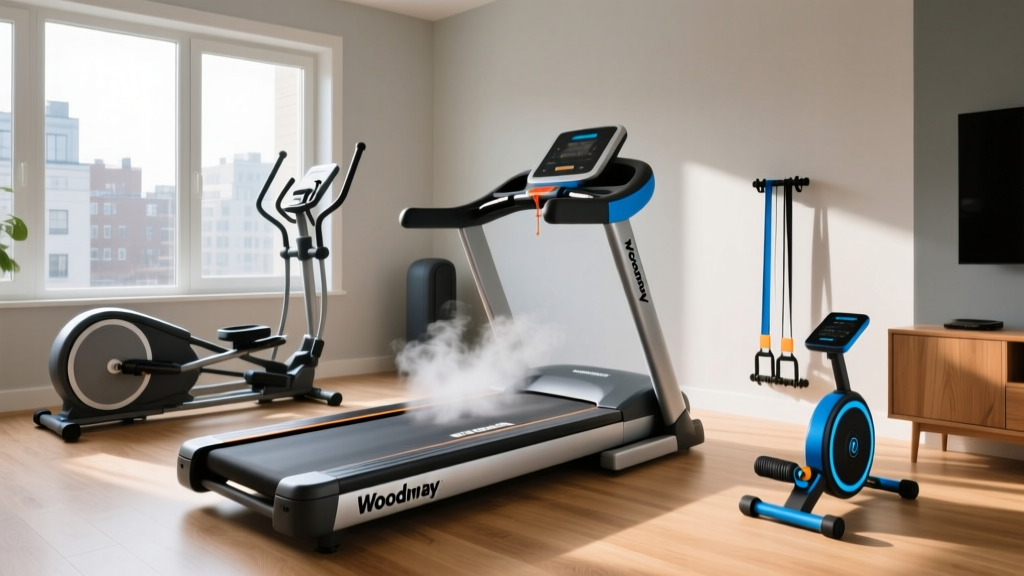
How Much Is a Woodway Treadmill? Compact Alternatives

Is an Incline Treadmill Better Than a Home Stair Climber?

Walking Pad Setup: Beating the Indoor Bike vs Treadmill Dilemma

Amazon Commercial Dad on Treadmill Cast & 2026 Air Bike vs Assault Bike Trends
