Home Gym With Punching Bag: Renovation Budget & Value Breakdown
Discover the true costs of remodeling a home gym with punching bag setups. We break down structural, flooring, and HVAC budgets for maximum value.

The Hidden Costs of Structural Reinforcement
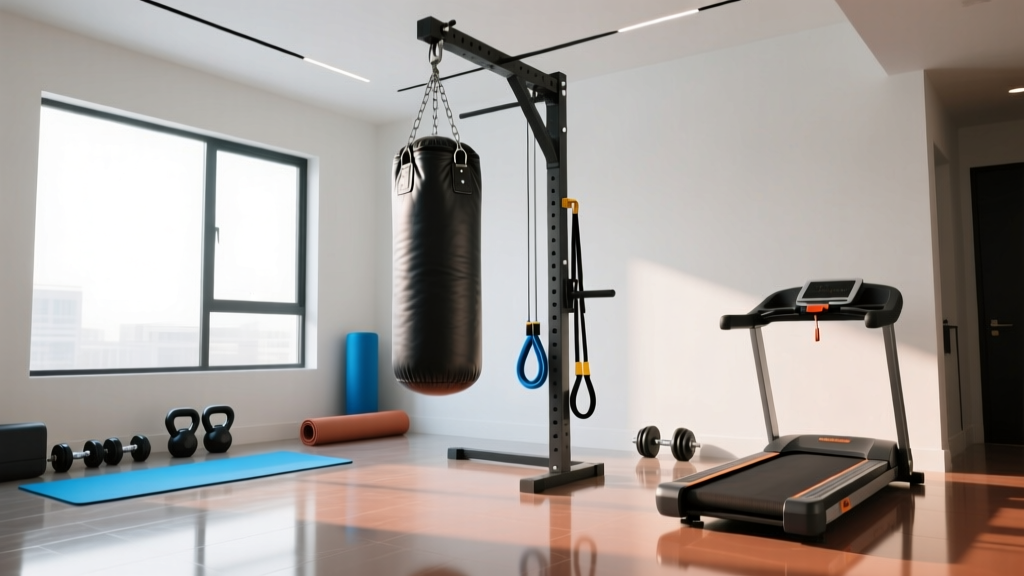
Designing a home gym with punching bag capabilities requires far more than simply buying a heavy bag and hanging it from the ceiling. The most critical—and frequently underestimated—phase of this renovation is structural reinforcement. A standard 100-pound heavy bag, when struck with full force, generates a dynamic lateral and vertical load that can easily exceed 400 pounds of sheer force. Standard residential ceiling drywall and lightweight engineered trusses are not rated for this repetitive impact.
⚠️ Critical Warning: Never mount a heavy bag directly into drywall anchors, standard ceiling joists without cross-bracing, or engineered floor trusses without consulting a structural engineer. The repetitive dynamic load will cause drywall tear-out, joist fatigue, and eventual catastrophic failure.Joist Analysis and Crossbeam Installation
Most modern homes use 2x6 or 2x8 ceiling joists spaced 16 or 24 inches on center (OC). To safely distribute the dynamic load of a swinging heavy bag, you must install a structural crossbeam. According to guidelines referenced by the Family Handyman structural guides, the most reliable DIY method involves sistering joists or mounting a 4x6 or 6x6 Douglas Fir crossbeam perpendicular to at least three existing joists using 3/8-inch structural lag screws.
For a 150-square-foot garage or basement conversion, expect to spend between $150 and $300 on structural lumber, heavy-duty joist hangers, and lag bolts. If your home features engineered I-joists or open-web trusses, you will likely need a contractor to install a steel I-beam trolley system, pushing the structural budget closer to $800–$1,200.
Comprehensive Budget Breakdown: 150 Sq. Ft. Combat & Lifting Space
Below is a realistic 2026 budget breakdown for remodeling a standard 10x15 foot garage bay or basement room into a fully functional home gym with punching bag infrastructure, assuming the space is already framed but unfinished.
| Renovation Category | Specific Materials & Scope | Estimated Cost |
|---|---|---|
| Structural Mounting | 4x6 Douglas Fir crossbeam, 3/8" lag screws, heavy-duty chain, elastomeric hanger | $280 |
| Flooring System | $550 | |
| HVAC & Ventilation | 12,000 BTU ductless mini-split (240V) or high-CFM exhaust system | $1,400 |
| Acoustic Treatment | Mass Loaded Vinyl (MLV) for shared walls, decoupling hardware | $320 |
| Electrical Upgrades | Dedicated 20A circuit for HVAC/treadmill, LED shop lighting | $450 |
| Total Remodeling Budget (Excluding Gym Equipment) | $3,000 | |
Flooring Dynamics: Impact Absorption vs. Barbell Durability
When integrating a heavy bag into a multi-use home gym, your flooring must survive two completely different types of abuse: the repetitive, grinding pivot of boxing footwork, and the blunt, high-impact shock of dropped dumbbells or kettlebells. Cheap EVA foam interlocking tiles will compress, tear, and permanently deform under a 100-pound bag within three months.
The Optimal Layered Flooring System
- Base Layer (Acoustic & Shock): Lay down a 1/2-inch rubber crumb underlayment or Mass Loaded Vinyl (MLV). This prevents the kinetic energy from the heavy bag's swing and dropped weights from transferring into the concrete slab or wood subfloor, which is critical for reducing structure-borne noise.
- Top Layer (Durability): Use 3/4-inch thick vulcanized rubber mats. Standard 4x6 foot horse stall mats (typically priced around $55–$75 each at agricultural supply stores) are the industry standard for budget-conscious builders. However, for a premium finish with lower odor and tighter seams, opt for interlocking 3/4-inch commercial-grade rubber tiles.
"The biggest mistake home gym builders make is placing a heavy bag directly over a seam in their rubber mats. The repetitive pivoting will catch the seam and roll the mat back. Always ensure your bag's 360-degree pivot zone rests entirely on a single, continuous mat, or use heavy-duty double-sided flooring tape to seal the seams."
Acoustic Treatments and HVAC Remodeling
Boxing and heavy bag work generate massive amounts of sweat and airborne humidity, while simultaneously creating low-frequency thuds that travel through a home's framing. Addressing both is non-negotiable for a comfortable, neighbor-friendly space.
Managing Structure-Borne Noise
The thud of a heavy bag is a low-frequency impact noise. According to acoustic specialists at Soundproof Cow, standard fiberglass insulation does virtually nothing to stop impact noise. You must decouple the bag mount. Installing an elastomeric rubber hanger between your structural crossbeam and the bag's chain will absorb up to 80% of the vibrational transfer before it reaches the home's framing. For shared walls, adding a layer of 1lb or 2lb Mass Loaded Vinyl (MLV) behind the drywall during the remodeling phase is the most cost-effective way to dampen sound transmission.
Ventilation and Climate Control
A 150-square-foot enclosed room with a working heavy bag can increase in temperature by 10 to 15 degrees within 20 minutes. Relying on your home's central HVAC is inefficient and risks pumping garage humidity and rubber odors into your main living spaces.
- The Premium Solution: Install a 12,000 BTU ductless mini-split system (such as the Pioneer or Mitsubishi M-Series). These require a dedicated 240V electrical line but offer precise climate control and dehumidification. Expect to pay $1,200–$1,800 for the unit and professional installation.
- The Budget Solution: Install a high-CFM ceiling exhaust fan (like the Panasonic WhisperCeiling series) paired with a heavy-duty oscillating pedestal fan. This creates negative pressure, pulling hot, humid air out of the gym, provided you have a way for make-up air to enter the room.
Electrical Upgrades: Avoiding the Tripped Breaker Trap
When remodeling your home gym with punching bag setups, electrical planning is often an afterthought. However, combat fitness routines frequently incorporate active recovery tools like treadmills, rowers, or air-conditioning units. A standard 15-amp residential circuit can only handle about 1,440 watts of continuous load. Running a 1,500W space heater or a high-draw treadmill on the same circuit as your lighting and mini-split will instantly trip the breaker.
Remodeling Action Step: Run a dedicated 20-amp circuit from your main panel specifically for your gym's HVAC and motorized cardio equipment. Use 12/2 Romex wire and install a 20A GFCI receptacle, especially if the gym is located in a garage or basement where moisture is present. This $300–$450 electrical upgrade ensures your workouts are never interrupted by power failures.
ROI and Value Analysis: Does a Combat Gym Add Home Value?
From a real estate perspective, highly customized home gyms can be a double-edged sword. If you permanently alter a bedroom by bolting steel rigs to the walls and installing specialized combat flooring, you may actually decrease the home's appraisal value by reducing the official bedroom count.
The Value-Add Strategy: To maximize Return on Investment (ROI), execute your home gym with punching bag remodeling in a garage, unfinished basement, or bonus room. Keep all structural modifications modular where possible. A 4x6 crossbeam bolted to existing joists in a garage adds a perceived value of a "premium finished multi-use space" to prospective buyers without altering the home's fundamental floor plan. According to recent real estate trends, finished garage gyms yield a 70% to 80% ROI upon home sale, provided the flooring is removable and the structural reinforcements are left intact and presented as heavy-duty storage or workshop capabilities.
Frequently Asked Questions
Do I need a building permit to reinforce my ceiling for a heavy bag?
In most municipalities, simply bolting a wooden crossbeam to existing exposed ceiling joists in a garage or basement does not require a permit, as it is considered a non-structural cosmetic addition. However, if you are opening up drywall, sistering joists, or altering engineered trusses, you must consult your local building authority and likely pull a structural modification permit.
Can I hang a heavy bag from a steel I-beam in my basement?
Yes, and this is arguably the safest mounting method. You will need to purchase a steel I-beam trolley or a specialized beam clamp rated for dynamic loads. Do not simply weld or drill into the structural steel beam yourself, as this can compromise its integrity and void structural warranties. Use a clamp-around beam mount designed specifically for heavy bags.
How much clearance do I need around a heavy bag?
For a standard 100-pound, 5-foot heavy bag, you need a minimum clearance radius of 4 feet in all directions (an 8-foot diameter circle) to allow for full-extension kicks, lateral footwork, and 360-degree bag swinging. Ensure your ceiling height is at least 9 feet to accommodate the bag's chain, the swivel mount, and the bag's bottom resting at least 12 inches off the floor.
More gear to consider
All reviews
Home Gym Dedication Act: 2026 Garage Air & Floor Trends

Home Gym Alternatives vs. Traditional Free Weights: A Practical, Space-Smart Comparison
Luxury Home Gym Ideas for Small Spaces: Complete Setup Walkthrough
The Rouge Home Gym Starter Kit: Best Rogue Gear 2026
Weight Selection Guide: Space Layouts & Home Gym Equipment Recall News