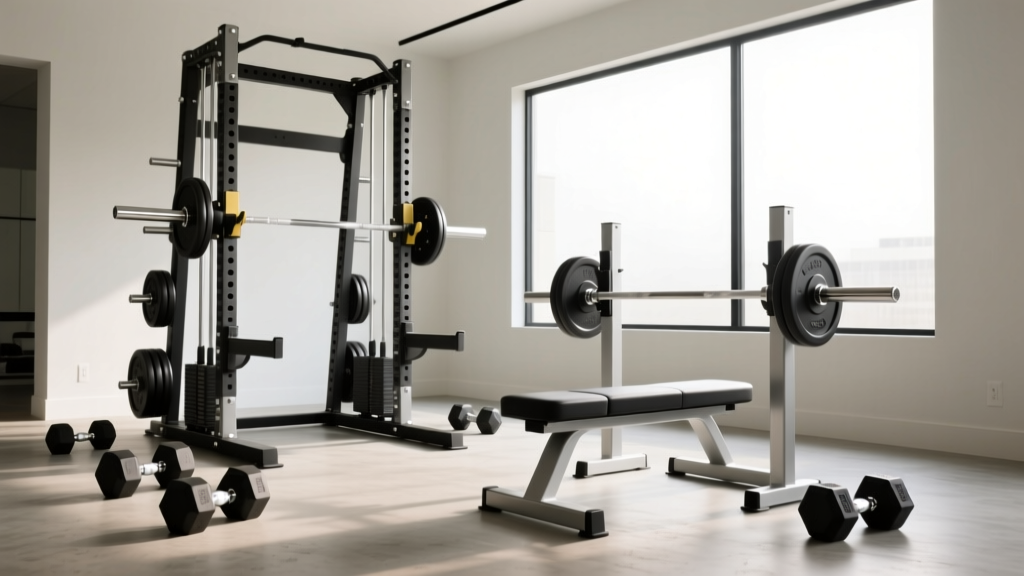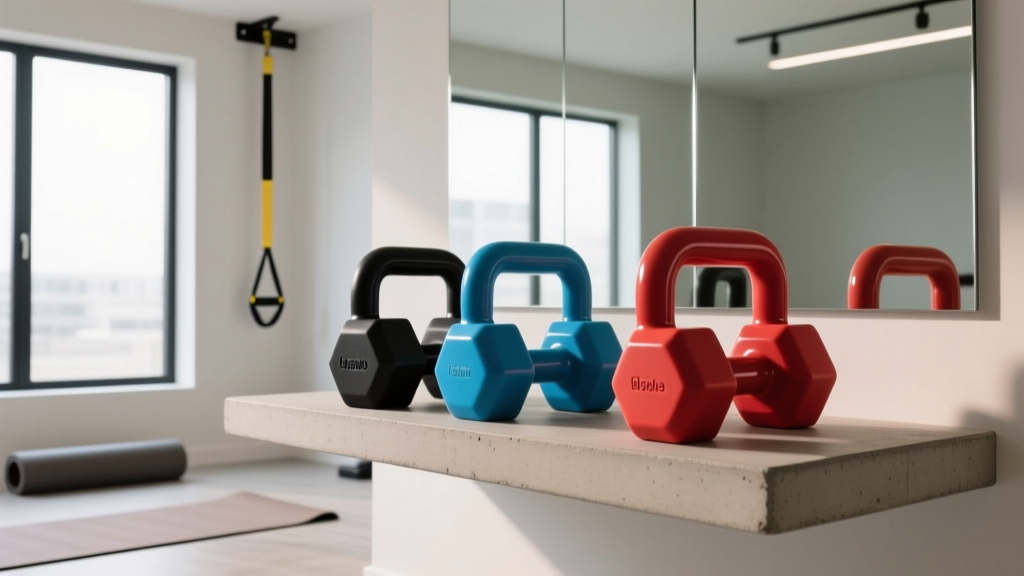
Space-Saving Dumbbells for Biceps and Triceps: Hex vs Urethane
Optimize your home gym layout. We compare rubber hex vs urethane dumbbells for space efficiency and the best dumbbell exercises for biceps and triceps.

The Spatial Dilemma: Material Choice in Compact Home Gyms
As urban living spaces shrink and garage gym footprints become increasingly constrained in 2026, every square inch of your weight room matters. When designing a high-density free weight zone, the debate between rubber hex dumbbells and urethane dumbbells extends far beyond mere aesthetics or drop-test durability. It fundamentally dictates your rack layout, shelf depth requirements, and the biomechanical clearance needed for isolation movements. For lifters prioritizing space optimization without sacrificing training quality, understanding the physical and environmental differences between these two materials is critical.
While adjustable dumbbells dominate the extreme micro-gym market, fixed-weight sets remain the gold standard for commercial-grade durability and rapid supersets. However, outfitting a 100-square-foot room with a full 5-to-50-pound set requires meticulous spatial planning. The choice between recycled rubber and virgin urethane will alter your A-frame rack spacing, ventilation requirements, and even the execution path of targeted arm movements.
Material Science: Shore A Durometer and Bounce Factors
To understand how these dumbbells interact with your floor and rack, we must look at the Shore A durometer scale, which measures material hardness. According to facility standards outlined by the National Strength and Conditioning Association (NSCA), flooring and equipment bounce ratings are critical for safety in confined spaces.
- Rubber Hex Dumbbells: Typically register between 70A and 75A on the durometer scale. This softer composition provides excellent floor protection but introduces a high rebound coefficient. If dropped from shoulder height, a 50lb rubber hex dumbbell can bounce 6 to 8 inches off a standard rubber mat, posing a severe hazard in tight walkways.
- Urethane Dumbbells: Usually rated between 85A and 90A. Urethane is significantly denser and harder. While it requires a high-quality dropped-weight floor mat (like 3/4-inch horse stall mats), its bounce is virtually non-existent. It lands with a dull, heavy thud and stays exactly where it impacts, making it vastly superior for narrow clearance zones.
Dimensional Footprint & Racking Density Matrix
The most profound impact on your gym layout comes from the physical dimensions of the dumbbell heads. Urethane is denser than rubber, meaning manufacturers can achieve the same weight with a smaller physical volume. Below is a comparative matrix based on standard 50lb models from leading 2026 manufacturers (e.g., Rep Fitness Rubber Hex vs. Rogue Urethane Hex).
| Specification | Standard Rubber Hex (50lb) | Premium Urethane Hex (50lb) | Spatial Impact |
|---|---|---|---|
| Head Diameter | 6.5 inches | 5.8 inches | 0.7-inch reduction per head |
| Overall Length | 14.5 inches | 13.2 inches | 1.3-inch lateral savings |
| Shelf Depth Required | 10.0 inches | 8.5 inches | Allows shallower wall racks |
| Price Per Pound (2026) | $1.60 - $1.90 | $3.80 - $4.50 | Urethane carries a 120% premium |
| Off-Gassing Profile | High (Initial 30 Days) | Negligible | Dictates HVAC/Ventilation needs |
When loading a standard 3-tier A-frame rack, the 1.3-inch difference in overall length allows you to fit five pairs of urethane dumbbells on a 42-inch shelf. The same shelf can only comfortably hold four pairs of rubber hex dumbbells without the handles overlapping, which accelerates knurling degradation and makes retrieval frustrating.
Biomechanical Clearance: Executing Arm Isolation Movements
When programming dumbbell exercises for biceps and triceps in a restricted floor plan, the physical bulk of the dumbbell heads directly interferes with your range of motion. According to biomechanical analyses published by the American Council on Exercise (ACE), joint angles and spatial constraints heavily influence muscle activation patterns in isolation lifts.
Triceps Extensions and Skull Crushers
Consider the lying triceps extension (skull crusher) performed on a flat bench in a room where the bench is positioned just 18 inches from a wall or power rack upright. When using wider rubber hex dumbbells, the 6.5-inch heads will physically collide at the bottom of the movement near your ears, or force your elbows to flare outward to avoid the clash. This elbow flaring shifts the load away from the long head of the triceps and places undue stress on the anterior deltoid. The slimmer 5.8-inch profile of urethane dumbbells allows for a true neutral, close-grip descent, maximizing triceps isolation without requiring a wider bench footprint.
Hammer Curls and Concentration Curls
For biceps, neutral-grip hammer curls require the dumbbells to travel parallel to the torso. In a narrow hallway gym or a corner setup, the wider rubber heads can scrape against your shorts or thighs, altering the vertical bar path. Furthermore, during seated concentration curls, the bulky rubber hex heads can strike the inner thigh of the working leg before the bicep reaches full contraction, artificially shortening your range of motion.
💡 Layout Pro-Tip: The 'Clash Test'
Before finalizing your dumbbell purchase for a small room, perform the 'Clash Test'. Hold two dumbbells of your target weight in a close-grip neutral position (as if preparing for a skull crusher). If the heads touch before your hands are within 4 inches of each other, the dumbbells are too bulky for your spatial layout. Urethane consistently passes this test for weights up to 60lbs, while rubber hex often fails past the 35lb mark.
Environmental Factors: Off-Gassing and Ventilation Layouts
Space optimization is not just about physical dimensions; it is also about air volume and environmental control. Recycled rubber dumbbells are notorious for off-gassing volatile organic compounds (VOCs), producing a strong, tire-like odor that can persist for weeks.
'In unventilated or basement home gyms under 150 square feet, the accumulation of VOCs from large rubber equipment sets can cause respiratory irritation and necessitate the installation of active exhaust fans, which eats into both your budget and your wall space.' — Indoor Environmental Quality Reports, 2025.
If your gym layout lacks cross-ventilation or operable windows, urethane is practically mandatory. Virgin urethane is virtually odorless upon unboxing. This allows you to pack the dumbbells tightly into enclosed storage closets or corner nooks without worrying about toxic gas buildup or the rubber degrading and sticking together due to poor air circulation.
Cost-to-Space Ratio: Is the Urethane Premium Justified?
At current 2026 market rates, outfitting a 5-50lb set (in 5lb increments) of Rogue Urethane Hex Dumbbells will cost approximately $2,800 to $3,200. A comparable rubber hex set from budget-friendly importers will run between $1,100 and $1,400.
However, when calculating the Cost-to-Space Ratio, urethane becomes highly competitive for urban dwellers. If upgrading to urethane allows you to downgrade from a massive 5-tier commercial A-frame rack ($600+) to a compact 3-tier wall-mounted shelf system ($250), and prevents the need for an active HVAC exhaust installation ($400+), the net premium of the urethane set is effectively cut in half. You are essentially buying back 4 to 6 square feet of usable floor space and reclaiming your room's air quality.
Final Layout Verdict
For lifters with expansive garage gyms and ample ventilation, rubber hex dumbbells remain a cost-effective, floor-friendly workhorse. But if your 2026 home gym design prioritizes maximum density, tight clearances for arm isolation movements, and zero off-gassing in windowless rooms, urethane is the undisputed champion of spatial efficiency. The slimmer head profiles ensure that your dumbbell exercises for biceps and triceps are governed by your anatomy, not the physical limitations of your equipment.
More gear to consider
All reviews
2026 Rack Trends: Storage for the Lateral Pull Down with Dumbbells

Best Dumbbell Racks for the Overhead Dumbbell Raise: 2026 Value Guide
2026 Market Trends: DBZ Dumbbells & Bumper vs Iron Plates
Olympic vs Standard Plates: Building the World's Heaviest Dumbbell
Olympic vs Standard Plates: 3 Day a Week Dumbbell Workout Setup