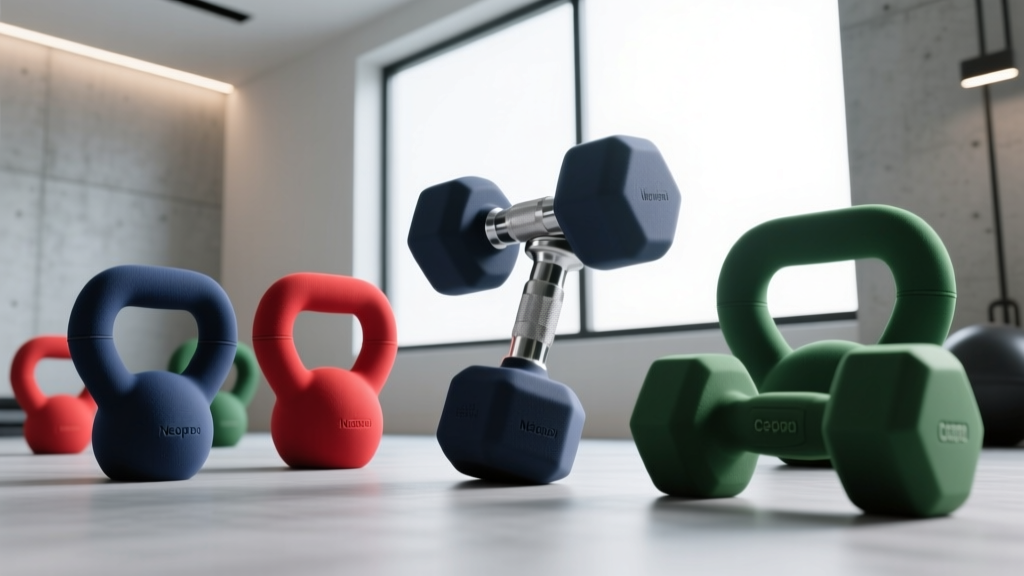
Rubber Hex vs Urethane: Best for Dumbbell Sumo Squats for Glutes
Compare rubber hex vs urethane dumbbells for home gym layouts. Discover which optimizes space and performs best for dumbbell sumo squats for glutes.

The Spatial Footprint: Rack Layouts and Storage Density
When designing a compact home gym, every square inch of floor space dictates your equipment choices. The debate between rubber hex dumbbells and urethane dumbbells is rarely just about aesthetics; it is fundamentally a conversation about volumetric density and storage geometry. As home fitness spaces shrink and multi-use layouts become the standard in 2026, understanding how these two materials impact your rack footprint is critical.
Rubber hex dumbbells, the traditional staple of commercial and garage gyms, feature a bulky, six-sided head. While the hexagonal shape prevents rolling—a major safety benefit—the flat edges create significant 'dead space' when stored on horizontal shelving. According to equipment specifications from REP Fitness, a standard 50 lb rubber hex dumbbell head measures approximately 6.5 inches in width. This forces gym owners to utilize wider 3-tier horizontal racks or vertical A-frames, both of which consume valuable floor real estate.
Urethane, conversely, offers superior volumetric density. Urethane is a highly resilient elastomer that allows manufacturers to mold heavier weights into more compact profiles. A 50 lb urethane dumbbell head typically measures between 5.5 and 5.8 inches in width. This 15% reduction in head width translates directly to storage efficiency. A standard 4-foot horizontal rack that maxes out at 1,000 lbs of rubber hex dumbbells can often accommodate up to 1,500 lbs of urethane, allowing you to consolidate your weight set and reclaim up to 8 square feet of floor space for movement.
Biomechanics and Clearance: Executing Dumbbell Sumo Squats for Glutes
Space optimization isn't just about where the equipment lives when you aren't using it; it's also about the spatial clearance required during complex, wide-stance movements. This is where the physical dimensions of your dumbbells directly impact your training efficacy, particularly when performing dumbbell sumo squats for glutes.
The sumo squat requires a stance that is 1.5 to 2 times shoulder-width, with toes pointed outward at a 45-degree angle. To maximize gluteus maximus and adductor magnus activation, the torso must remain relatively upright while the hips drop below the knees. As detailed in the biomechanical directories of ExRx, holding a heavy dumbbell vertically between the legs is the standard loading pattern for this movement.
Herein lies the clearance issue: as you descend into the eccentric phase of the sumo squat, the medial aspect of your thighs converges. If you are using bulky rubber hex dumbbells in the 60 lb to 100 lb range, the wide, angular heads frequently collide with the inner thighs or knees, artificially limiting your depth and reducing glute engagement. The sharp corners of the hex shape can also cause bruising or abrasion against the legs during high-rep sets.
Urethane dumbbells solve this spatial conflict. Because urethane is denser, the heads of a 70 lb urethane dumbbell are physically smaller and often feature rounded or 12-sided (dodecagonal) edges. This compact profile provides an extra 1.5 to 2 inches of medial clearance, allowing lifters to achieve full depth without the dumbbell heads pinching the inner thighs. Furthermore, premium urethane models from manufacturers like Rogue Fitness utilize ergonomic, contoured handles that improve grip security when the dumbbell is hanging vertically under heavy load.
| Metric (50 lb Dumbbell) | Rubber Hex | Urethane (12-Sided) |
|---|---|---|
| Head Width | ~6.5 inches | ~5.6 inches |
| Head Shape | Hexagonal (Sharp Edges) | Dodecagonal (Rounded Edges) |
| Handle Length | 5.0 - 6.0 inches | 4.5 - 5.5 inches |
| Medial Thigh Clearance | Poor (High collision risk) | Excellent (Full depth achievable) |
| Shore A Durometer | 70 - 75 (Softer) | 85 - 90 (Denser/Harder) |
Environmental Factors: Off-Gassing in Compact Layouts
When optimizing a small space—such as a basement, spare bedroom, or attached garage—air quality and environmental impact become crucial layout considerations. Rubber hex dumbbells are notorious for off-gassing volatile organic compounds (VOCs), producing a distinct, lingering chemical odor that can take months to dissipate. In a poorly ventilated, compact gym layout, this smell can make the space unusable for extended periods.
Urethane is virtually odorless and does not off-gas. If your space optimization strategy involves placing your dumbbell rack near living areas, HVAC returns, or in rooms with limited airflow, urethane is the only viable choice to maintain a breathable environment. Additionally, urethane is highly resistant to UV degradation and temperature fluctuations, meaning it won't crack or become brittle if your gym layout places the rack near a sunlit window or in an uninsulated garage.
Pro-Tip: The 12-Sided Urethane Advantage
When purchasing urethane for a space-optimized gym, specifically seek out 12-sided (dodecagonal) models rather than perfectly round ones. Round urethane dumbbells can roll on uneven flooring, requiring you to allocate extra 'safety buffer' zones around your lifting platform. The 12-sided design offers the compact density of urethane while maintaining the anti-roll safety of a hex shape, allowing you to safely store them on the floor mid-workout without sacrificing spatial efficiency.
Cost vs. Space ROI: Building Your 2026 Dumbbell Set
Financial investment must be weighed against spatial return on investment (ROI). As of 2026, the pricing gap between the two materials remains distinct:
- Rubber Hex: Averages $1.50 to $2.20 per pound. A full 5-50 lb set (pair) costs roughly $850 to $1,100.
- Urethane: Averages $3.50 to $5.50 per pound. A full 5-50 lb set (pair) costs roughly $1,900 to $2,500.
While rubber hex is undeniably cheaper upfront, the hidden cost lies in the storage infrastructure. Because rubber hex heads are bulkier, you may need to purchase a 5-tier rack or a massive A-frame, which can cost an additional $300 to $500 and consume 6 to 10 square feet of floor space. Urethane's compact nature allows you to use a sleek, wall-mounted folding rack or a compact 3-tier horizontal shelf, effectively paying for its own premium through space savings in high-cost-per-square-foot environments.
Recommended Storage Configurations for Tight Spaces
- Wall-Mounted Folding Racks (Urethane Only): Ideal for rooms under 150 sq ft. Folds flat against the wall when not in use. Only works with compact urethane heads.
- 3-Tier Horizontal Shelves (Urethane or Small Hex): Best for garage gyms. Keeps weights below waist height, preserving sightlines and making the room feel larger.
- Vertical A-Frames (Rubber Hex): Necessary if you buy rubber hex sets over 50 lbs, as the heads won't fit on standard horizontal tiers. Note that A-frames have a wider base footprint and can create tripping hazards in tight layouts.
Frequently Asked Questions
Can I use rubber hex dumbbells for sumo squats if I have a wide stance?
You can, but you will likely experience mechanical interference. The wide, angular heads of heavy rubber hex dumbbells (typically 50 lbs and above) will strike the inner thighs during the bottom position of a wide-stance sumo squat. This limits your range of motion and reduces the glute stretch necessary for hypertrophy. Urethane's smaller profile is highly recommended for this specific movement.
Does the handle length affect sumo squat mechanics?
Yes. A longer handle (6+ inches) pushes the heavy dumbbell heads further apart, which can actually help with inner-thigh clearance during sumo squats. However, longer handles reduce the total number of dumbbells you can fit on a standard horizontal rack, negatively impacting your gym's spatial layout. You must balance grip clearance with storage density.
Is urethane worth the extra cost for a small apartment gym?
Absolutely. In an apartment or small room, you are paying a premium for every square foot of space. Urethane allows you to store more weight on smaller, less obtrusive racks. Furthermore, the lack of off-gassing odors and the noise-dampening properties of high-durometer urethane make it vastly superior for shared living spaces where dropping weights and chemical smells are major concerns.
More gear to consider
All reviews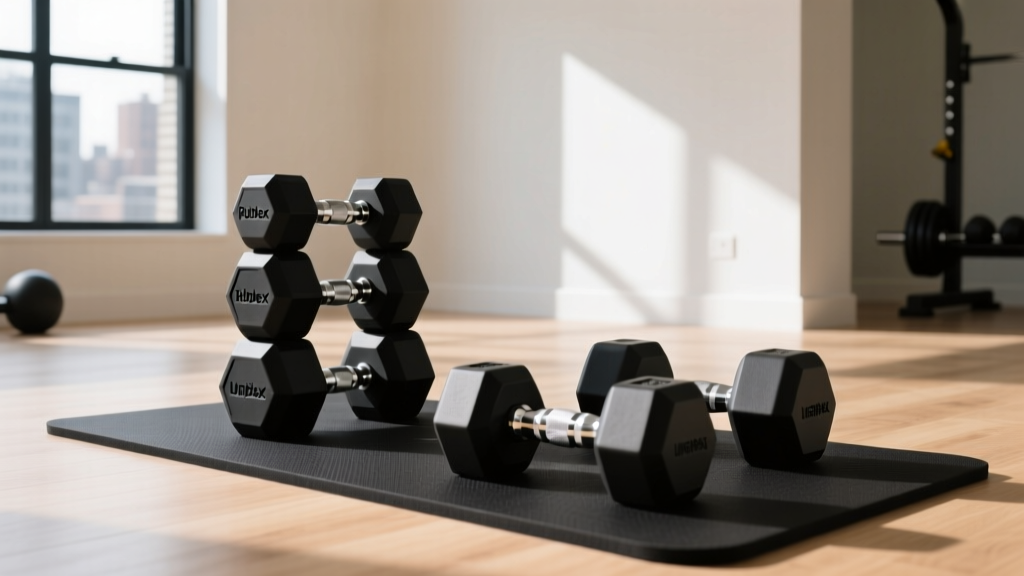
What's a Dumbbell Layout? Rubber Hex vs Urethane Space Guide

Top Loadable Dumbbells for Proper Incline Dumbbell Press Form

Best Dumbbell Racks for Your Forearm Workout with Dumbbells (2026)

Rubber Hex vs Urethane: Top Dumbbell Alternatives for Small Gyms
Power Rack vs Squat Rack vs Stand for Sitting Dumbbell Workouts