Rubber Hex vs Urethane: Bulgarian Split Squats One Dumbbell Care
Learn how to maintain rubber hex and urethane dumbbells for high-impact exercises like Bulgarian split squats with one dumbbell to maximize longevity.

The Unilateral Abuse: Why This Exercise Destroys Gear
When programming heavy unilateral movements, few exercises test both the lifter and the equipment quite like the Bulgarian split squat. While bilateral movements allow you to set weights down symmetrically, executing bulgarian split squats one dumbbell at a time introduces a unique, brutal wear pattern on your free weights. You are holding a massive load (often 70 to 120 lbs) in a single hand, generating intense localized sweat on one side of the knurling, and when muscular failure inevitably hits, you aren't gently placing the weight down—you are dropping it from waist height onto the floor.
The Drop-Shear Factor
Dropping a 90-pound dumbbell from 3.5 feet generates over 2,500 pounds of instantaneous impact force. With hex dumbbells, this force is rarely distributed evenly across the flat side; it concentrates on the outer rubber edges or the steel core lip. Over time, this specific drop-shear stress causes catastrophic failure modes that differ wildly depending on whether you are using budget rubber hex dumbbells or premium urethane models. Understanding these failure modes is the first step in implementing a maintenance routine that actually works.
Rubber Hex vs. Urethane: Material Science and Failure Modes
Before applying any cleaning agents or storage protocols, you must understand the molecular differences between the two dominant dumbbell coatings. Virgin rubber, recycled tire rubber, and cast polyurethane (urethane) all react differently to impact, UV exposure, and human sweat.
| Feature | Recycled Rubber Hex (e.g., CAP Barbell) | Cast Urethane (e.g., Rogue / Rep Fitness) |
|---|---|---|
| Average Cost | $1.20 - $1.80 / lb | $3.50 - $5.00 / lb |
| Drop Tolerance | Moderate (Edges chip, core separates) | Extremely High (Absorbs shock, bounces slightly) |
| Sweat/Corrosion Risk | High (Traps moisture against steel core) | Low (Dense seal prevents moisture ingress) |
| Primary Failure Mode | Inner lip tearing, handle rust, VOC off-gassing | Cosmetic scuffing, handle knurling wear |
| Expected Lifespan (Heavy Use) | 2 - 4 Years | 10+ Years |
According to equipment specs from Rogue Fitness, premium urethane is a thermoset polymer that resists tearing and abrasion far better than vulcanized rubber. However, the handle remains the Achilles heel for both types when subjected to the acidic pH of human sweat during grueling unilateral sets.
Maintenance Protocols for Rubber Hex Dumbbells
Rubber hex dumbbells are the undisputed kings of budget home gyms, but they require aggressive maintenance to survive the drop-heavy nature of split squats. The rubber compound is porous, meaning it absorbs dead skin, chalk, and sweat, which eventually breaks down the vulcanization process.
⚠️ The 'Simple Green' Warning: Never use harsh degreasers, bleach, or standard Simple Green on rubber hex dumbbells. These alkaline chemicals strip the natural oils from the rubber, accelerating the drying process and guaranteeing that the hex corners will crack upon impact within months.Step-by-Step Rubber Restoration
- Deep Clean: Mix warm water with a few drops of pH-neutral dish soap (like Dawn). Use a stiff nylon brush to scrub the hex heads, focusing on the inner lip where the rubber meets the steel handle.
- Dry Thoroughly: Use a microfiber towel to dry the dumbbell completely. Leaving moisture near the steel core ring is the primary cause of 'handle creep' rust.
- Condition the Rubber: Apply 303 Aerospace Protectant or a dedicated rubber conditioner. Spray it onto a rag (never directly on the weight, to avoid making the grip slippery) and wipe down the hex heads. This restores UV and moisture resistance.
- Handle Care: Wipe the chrome or bare steel handle with a light coat of 3-in-One oil or mineral oil to displace microscopic sweat residue left behind from your one-handed grip.
Urethane Longevity: Caring for the Premium Investment
If you have invested in urethane dumbbells, the rubber head is virtually indestructible to the drop-shear forces of a failed Bulgarian split squat. Urethane does not dry out, crack, or off-gas foul odors. Therefore, your maintenance focus must shift entirely to the handle and the cosmetic integrity of the polymer.
'Polyurethane is highly resistant to oils, greases, and solvents, making it the superior choice for commercial and heavy-duty home gym environments where equipment is subjected to constant impact and human contact.' — Journal of Polymer Science & Maintenance
Protecting the Knurling
When holding a single heavy dumbbell for split squats, your grip tightens immensely, grinding dead skin and chalk deep into the knurling. Over time, this creates a 'cement' that dulls the aggressive bite of the handle.
- Weekly Brushing: Use a brass wire brush to sweep the knurling in the direction of the grooves. Brass is softer than steel and will not damage the chrome or Cerakote finish.
- Chalk Removal: If you use liquid or block chalk, wipe the handle with a damp cloth immediately post-workout. Once chalk dries and mixes with sweat, it becomes highly corrosive to standard chrome finishes.
- Oil Application: Once a month, apply a thin layer of mineral oil to the handle, let it sit for 10 minutes, and wipe it off. This prevents oxidation and keeps the knurling sharp.
Storage Solutions to Mitigate Asymmetric Wear
How you store your dumbbells between sets of split squats dictates their lifespan just as much as how you clean them. Tossing them onto the floor or stacking them haphazardly compromises the structural integrity of the hex edges.
3-Tier Rack vs. Vertical Dumbbell Tree
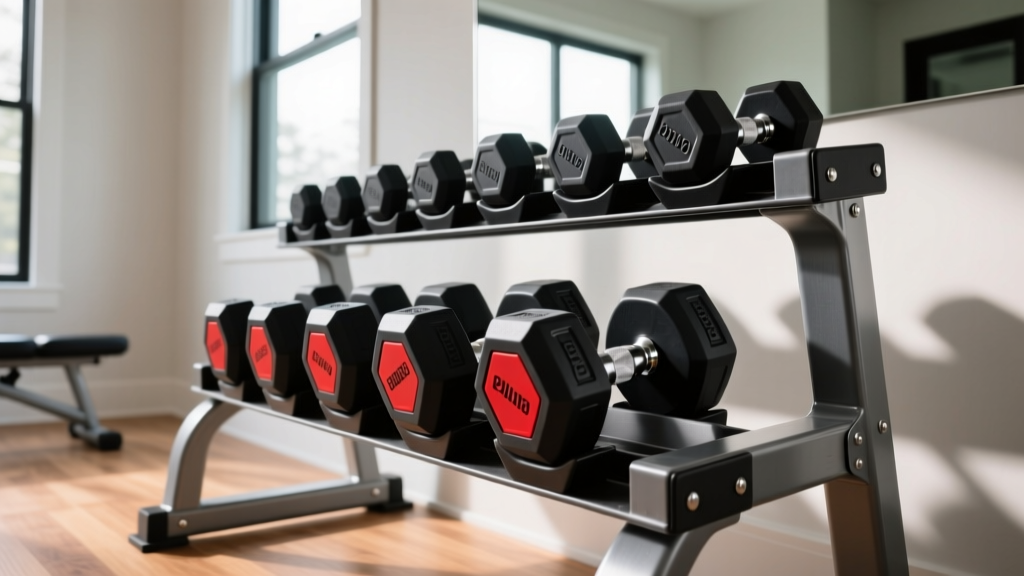
For heavy dumbbells (50 lbs and above) used in split squats, a 3-tier horizontal rack is vastly superior to a vertical dumbbell tree. Vertical trees require you to lift and twist the dumbbell into a cradle, often resulting in the rubber or urethane heads scraping against the metal uprights. Horizontal racks allow you to slide the dumbbell straight in, preserving the flat edges of the hex heads and ensuring the steel core isn't subjected to lateral twisting forces while being racked.
Final Verdict: Which Survives the Split Squat Test?
If your training heavily features the one-dumbbell Bulgarian split squat and you frequently drop the weight upon failure, urethane dumbbells are the only logical long-term investment. The initial cost is roughly 300% higher than rubber hex models, but the elimination of core-separation and edge-cracking means you will never need to replace them.
However, if budget constraints mandate the use of rubber hex dumbbells, strict adherence to a pH-neutral cleaning regimen, monthly rubber conditioning, and careful horizontal racking will extend their lifespan significantly. Treat your gear with the same respect you give your programming, and it will survive the most punishing unilateral leg days you can throw at it.
More gear to consider
All reviews
Best Shoulder Press Dumbbell for Home: Neoprene Matchup 2026
Protecting Your Rack: Tricep Extension Dumbbell Storage & Care

Space-Saving Loadable Dumbbells: Choosing the Right Dumbbell Spring
2026 Adjustable Dumbbell Guide: Mid Back Workout With Dumbbells

Cast Iron vs Competition Kettlebells & Dumbbell Exercises for Rounded Shoulders