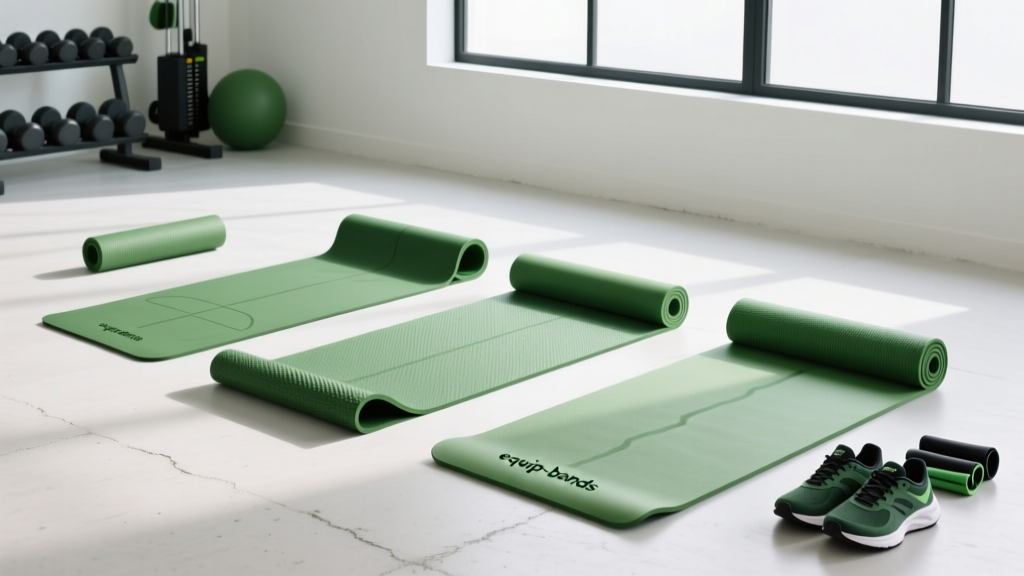
How to Choose the Right Green Yoga Mat: Thickness, Grip & Materials
Discover how to choose the perfect green yoga mat. Our beginner guide compares thickness, materials, and grip to find your ideal eco-friendly match.

Welcome to the World of Eco-Friendly Yoga
Transitioning to a sustainable yoga practice starts from the ground up. For decades, the industry standard was polyvinyl chloride (PVC), a plastic that releases toxic dioxins during production and takes centuries to decompose in landfills. Today, the shift toward a green yoga mat is not just a trend; it is a necessary evolution for eco-conscious practitioners. However, navigating the landscape of natural rubber, thermoplastic elastomers (TPE), and eco-polyurethanes can be overwhelming for beginners.
This step-by-step guide will demystify the material science, thickness metrics, and grip technologies behind today's top eco-friendly mats. By the end, you will have a practical decision framework to select a mat that supports both your physical practice and your environmental values.
💡 The 'Greenwashing' Warning
Not all mats labeled 'eco-friendly' are created equal. Some brands use a thin layer of natural rubber over a synthetic foam core, or market TPE as 'biodegradable' when it only degrades under highly specific industrial composting conditions. Always look for third-party certifications like OEKO-TEX or FSC (Forest Stewardship Council) to verify genuine sustainability claims.
Step 1: Decode the Materials (What Makes It Green?)
The core material dictates your mat's lifespan, environmental footprint, and tactile feedback. According to Yoga Journal's comprehensive gear guides, the market is currently dominated by three primary eco-materials:
1. Natural Tree Rubber
Harvested from rubber trees (Hevea brasiliensis), this material is biodegradable and offers exceptional density. Top Model: The JadeYoga Harmony (approx. $85) uses open-cell natural rubber. Failure Mode: Natural rubber is highly susceptible to photo-oxidation. Leaving it in direct sunlight or near a hot car window will cause the polymers to break down, leading to dry rot, flaking, and a loss of structural integrity within months.
2. Eco-Polyurethane (PU) & Rubber Blends
These mats feature a natural rubber base for cushioning and a top layer of eco-certified PU for supreme grip. Top Model: The Liforme Original (approx. $140) utilizes a proprietary eco-PU that biodegrades in landfill conditions within 1-5 years. Failure Mode: PU is highly absorbent (hydrophilic). Using lotions, essential oils, or harsh chemical cleaners will clog the microscopic pores, permanently destroying the wet-grip capability and trapping odors.
3. Thermoplastic Elastomer (TPE)
TPE is a synthetic blend that is fully recyclable and free from PVC, latex, and phthalates. While not naturally biodegradable, it is a massive step up from traditional plastics. Top Model: The Gaiam Essentials TPE Mat (approx. $25-$30) is a budget-friendly entry point. Failure Mode: TPE lacks the sheer density of natural rubber, meaning it tends to compress and bottom out during intense balancing poses over a 12-to-18-month period.
Step 2: Match Thickness and Density to Your Practice
Beginners often mistakenly believe that thicker equals better. In reality, REI's expert advice on yoga gear highlights that density is far more critical than pure thickness. A dense 4mm mat will protect your joints better than a fluffy, low-density 6mm mat.
| Thickness Category | Measurement | Best For | Stability vs. Comfort |
|---|---|---|---|
| Travel / Minimalist | 1.5mm - 2.5mm | Frequent flyers, hot yoga purists | Maximum ground feel; zero joint padding |
| Standard Versatile | 3mm - 4.5mm | Vinyasa, Hatha, everyday practice | Ideal balance of stability and cushioning |
| Restorative / Therapeutic | 5mm - 8mm+ | Yin, knee/wrist issues, beginners | High comfort; can cause ankle wobble in standing balances |
Physical Therapist Insight: If you have patellofemoral pain syndrome (runner's knee) or sensitive carpal joints, do not just buy a thick mat. Look for a high-density 5mm mat (like the Manduka eKO at 5mm, approx. $104) which absorbs impact without allowing your joints to sink unevenly into the foam.
Step 3: Analyze Grip and Surface Failure Modes
Grip is the most critical safety factor in your practice. Eco-friendly mats generally utilize two distinct surface technologies:
- Closed-Cell Surfaces (e.g., Manduka eKO Lite): The surface is sealed, preventing sweat and bacteria from entering the mat. Pros: Highly hygienic, easy to wipe down, lasts for years. Cons: Can become slippery during heavy sweat sessions unless paired with a microfiber yoga towel.
- Open-Cell / Hydrophilic Surfaces (e.g., Liforme, JadeYoga): The surface features microscopic pores that absorb moisture to create a suction-like grip. Pros: Unbeatable wet-grip; the sweatier you get, the stickier it becomes. Cons: Requires meticulous cleaning with pH-neutral solutions; absorbs oils and dirt easily.
Step 4: The Ultimate Green Yoga Mat Comparison Matrix
To synthesize the data, here is a direct comparison of the top eco-friendly models dominating the market in 2026:
| Model | Core Material | Thickness | Grip Type | 2026 Price Range |
|---|---|---|---|---|
| JadeYoga Harmony | Open-Cell Natural Rubber | 4.76mm (3/16") | Tacky Dry / Wet | $85 - $90 |
| Manduka eKO Lite | Closed-Cell Natural Rubber | 4mm | Dry (Needs towel for wet) | $92 - $100 |
| Liforme Original | Eco-PU / Natural Rubber Base | 4.2mm | Hydrophilic (Sweat-Activated) | $140 - $150 |
| Gaiam Essentials TPE | Recyclable TPE Foam | 5mm | Textured Dry Grip | $25 - $35 |
Step 5: Your Beginner Decision Framework
Use this rapid-fire checklist to finalize your purchase:
- Assess Your Sweat Level: If you practice Hot Yoga or sweat heavily, you must choose an open-cell PU/Rubber mat (like Liforme) or a closed-cell rubber mat paired with a high-quality microfiber towel. TPE will become a slip-hazard when wet.
- Evaluate Your Joint Health: If you are over 40, recovering from an injury, or practice a lot of kneeling lunges, bypass the 3mm travel mats and invest in a dense 5mm natural rubber option.
- Check Your Storage Environment: If your only storage space is a sunroom or the trunk of your car, avoid 100% natural rubber. The UV and heat exposure will destroy the mat. Opt for a TPE or a PU-blend which offers slightly higher resistance to thermal degradation.
- Define Your Budget: You do not need to spend $140 to be eco-friendly. A $30 TPE mat is a perfectly valid, non-toxic starting point for beginners who are still determining if yoga is a long-term commitment.
🧼 Expert Maintenance Protocol
To maximize the lifespan of your green yoga mat, never use bleach, alcohol, or tea-tree oil-based cleaners. These strip the natural lipids from rubber and clog PU pores. Instead, mix a solution of 75% distilled water and 25% white vinegar with a single drop of mild, unscented dish soap. Spray lightly and wipe with a microfiber cloth after every 3 sessions.
Final Thoughts on Sustainable Practice
Choosing a green yoga mat is an investment in both your physical alignment and the planet's health. By understanding the interplay between material density, surface porosity, and environmental vulnerability, you can select a mat that will safely support your practice for years to come. Remember that the most sustainable mat is ultimately the one you care for properly and use until the very end of its lifespan.
More gear to consider
All reviews
Yoga Mats at Walmart: Material, Grip & Setup Guide

Loop Band vs Tube Band: Longevity, Care & How to Wash a Yoga Mat
Jump Rope Types Troubleshooting & How to Strap a Yoga Mat

Medicine Ball Weight Selection & Yoga Mat Care Instructions

Medicine Ball Weight Selection Mistakes & Yoga Mat Hanging Rack Tips
