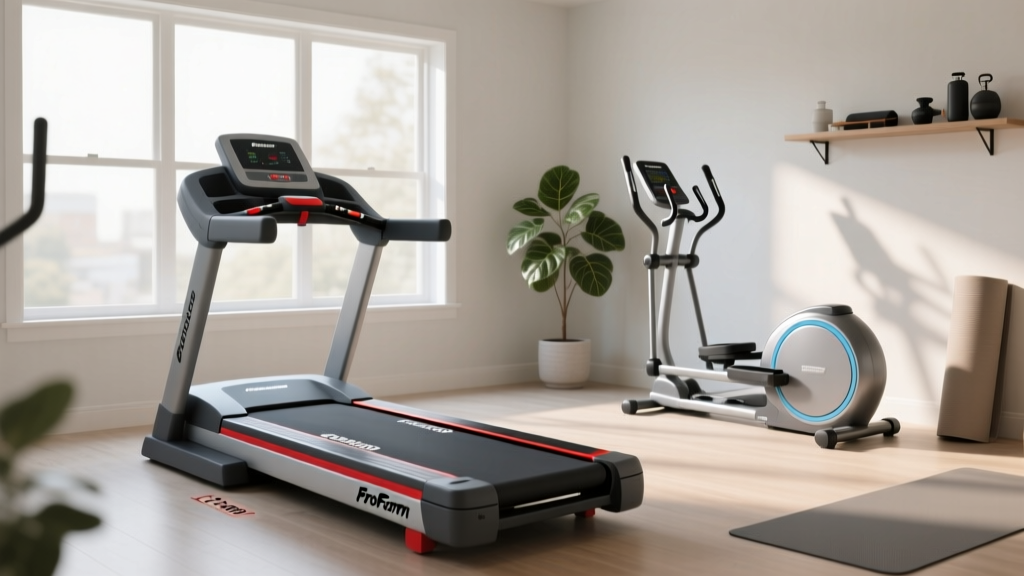
What's a Good Incline and Speed for Treadmill Walking Pads?
Discover what's a good incline and speed for treadmill walking pads. Our beginner guide compares top 2026 models with step-by-step routines.

The Walking Pad Evolution: Flat Decks vs. Incline Hybrids
For years, the under-desk walking pad was strictly a flat, low-speed device designed for casual step-counting while answering emails. But as remote work and home fitness have merged, the market has shifted dramatically. Today's beginners are no longer satisfied with just strolling at 2.0 mph on a flat surface; they want the metabolic benefits of hill climbing without sacrificing the compact footprint of a folding pad. This brings up a critical question for newcomers: what's a good incline and speed for treadmill workouts when you are using a compact walking pad versus a traditional full-sized machine?
In this step-by-step beginner's guide, we will break down the exact metrics you need to succeed, review the top hybrid incline walking pads of 2026, and provide a structured 4-week progression plan to help you transition safely from flat walking to incline training.
Beginner Baseline Metric: According to biomechanics data, a true beginner's 'sweet spot' for sustained cardiovascular health without joint strain is 2.8 to 3.2 mph at a 3% to 5% incline. This mimics the natural resistance of walking outdoors on varied terrain.Step 1: Answering the Core Question – What's a Good Incline and Speed?
When figuring out what's a good incline and speed for treadmill routines on a walking pad, you must account for the shorter deck length. Standard treadmills have 55-to-60-inch belts, allowing for long strides at high inclines. Walking pads typically feature 43-to-48-inch belts. If the speed is too high or the incline too steep, you risk stepping off the back of the belt.
The Speed-to-Incline Ratio for Pads
- Warm-up (0-5 mins): 2.0 mph at 0% to 2% incline.
- Fat-Burn Zone (5-25 mins): 2.8 to 3.4 mph at 4% to 6% incline. (This is the optimal zone for compact pads).
- High-Intensity Intervals (Advanced): 4.0 mph at 8%+ incline (Only recommended on 2026 hybrid models with extended handrails and 50-inch+ decks).
As noted by the Mayo Clinic, adding even a slight incline to your walking routine significantly increases muscle engagement in the glutes and hamstrings while keeping the low-impact benefits intact.
Step 2: Reviewing the Best Incline Walking Pads of 2026
To safely hit these incline metrics, you need a machine built for the torque. Standard flat walking pads (like the base Xiaomi or generic Amazon brands) will burn out their 1.0 HP motors if forced to push a user uphill. Here is how the top hybrid models compare.
1. UREVO Strol 2E (Best Overall Hybrid)
The UREVO Strol 2E bridges the gap between a true under-desk pad and a light treadmill. It features a manual incline adjustment up to 5%, which is perfect for the beginner metrics outlined above.
Specs: 2.5 CHP Motor | 7.6 mph Max Speed | 5% Manual Incline | 47-inch Deck
Price: ~$359
Expert Take: The manual incline requires you to stop and adjust the foot pins, which is actually a great safety feature for beginners, forcing intentional rest periods during interval training.
2. KingSmith WalkingPad X21 (Best Auto-Incline Tech)
KingSmith revolutionized the space with the X21, offering an automated incline system that adjusts up to 5% on the fly via remote control.
Specs: 2.0 HP Motor | 7.4 mph Max Speed | 5% Auto-Incline | 52-inch Deck
Price: ~$599
Expert Take: The slightly longer 52-inch deck makes the 5% incline feel much safer. The auto-incline allows for seamless programming of 'hill' workouts without breaking your stride.
Step 3: Walking Pad vs. Traditional Treadmill Comparison
Is a walking pad enough, or do you need a traditional treadmill to get the ideal incline and speed? Let's look at the data matrix comparing the top walking pads against a standard entry-level traditional treadmill.
| Feature | UREVO Strol 2E (Pad) | KingSmith X21 (Pad) | Sole F63 (Traditional) |
|---|---|---|---|
| Max Incline | 5% (Manual) | 5% (Auto) | 15% (Auto) |
| Max Speed | 7.6 mph | 7.4 mph | 12.0 mph |
| Deck Length | 47 inches | 52 inches | 60 inches |
| Footprint (Folded) | Under-bed capable | Under-bed capable | Requires dedicated corner |
| Ideal User | Beginners / Desk Workers | Intermediate Walkers | Runners / Advanced Hikers |
| Retail Price | $359 | $599 | $1,099 |
Step 4: Your 4-Week Beginner Incline Progression Plan
Now that you know what's a good incline and speed for treadmill walking pads, follow this step-by-step 4-week protocol to build your posterior chain strength and cardiovascular endurance safely.
- Week 1: The Adaptation Phase (Flat to Micro-Incline)
- Speed: 2.5 mph
- Incline: 0% to 2%
- Duration: 20 minutes daily
- Focus: Get used to the belt tension. Do not hold onto the console or handrails; let your arms swing naturally to engage your core.
- Week 2: The Glute Activation Phase
- Speed: 2.8 mph
- Incline: 3% to 4%
- Duration: 25 minutes daily
- Focus: Drive through your heels. You should feel a distinct burn in your hamstrings and glutes by minute 15.
- Week 3: The Endurance Builder
- Speed: 3.0 mph
- Incline: 5% (Max for most pads)
- Duration: 30 minutes daily
- Focus: Maintain a steady breathing rate. According to Harvard Health, brisk walking at an incline can burn up to 30% more calories than flat walking, making this 30-minute window highly efficient.
- Week 4: Interval Integration
- Speed: Alternate between 2.5 mph (recovery) and 3.5 mph (push).
- Incline: Keep steady at 4%
- Duration: 35 minutes (3 mins push / 2 mins recovery)
- Focus: Test the motor's response time to speed changes while under an incline load.
Step 5: Biomechanics and Form Corrections
The most common failure mode for beginners using incline walking pads is the 'console lean.' Because walking pads lack the robust, waist-high handrails of traditional treadmills, users often grip the front riser or desk edge and lean backward when the incline hits 5%.
'Holding onto the treadmill while on an incline completely negates the biomechanical benefits. It reduces caloric expenditure by up to 25% and forces the lumbar spine into an unnatural extension, which can lead to lower back pain over time.' — Corrective Biomechanics Guidelines
The Fix: If you find yourself needing to hold on at 3.0 mph and a 5% incline, lower the speed to 2.4 mph. It is always better to walk slower with perfect, upright posture (ears over shoulders, shoulders over hips) than to walk faster while hanging off the machine. Pump your arms at a 90-degree angle to naturally counterbalance the incline.
Frequently Asked Questions
Can I run on a 5% incline on a walking pad?
No. Running on a compact walking pad at a 5% incline is highly discouraged. The shortened deck (usually under 50 inches) means your stride will naturally overreach, and the incline shifts your center of gravity backward, drastically increasing the risk of falling off the rear of the belt. Keep incline work strictly to walking speeds (under 4.0 mph).
Does incline walking on a pad make the motor overheat?
It can, if you buy a cheap model. Incline walking increases the torque required from the motor by up to 40%. This is why we only recommend pads with a minimum of a 2.0 CHP (Continuous Horsepower) motor for incline work. Models with 1.0 or 1.25 HP motors will experience thermal shutoffs within 15 minutes of incline walking by a user over 150 lbs.
How do I measure the exact incline if my pad lacks a digital display?
If your walking pad only has manual pin-adjustments and no LED readout, you can use a free digital level app on your smartphone. Place the phone flat on the side rail of the deck. A 5% grade equates to roughly a 2.86-degree angle. This ensures you are accurately tracking your progressive overload week over week.
More gear to consider
All reviews
Treadmill Console Features Compared: 2026 Buying Guide

Life Fitness Treadmill Cost vs Home Stair Climbers: 2026 Guide
Stationary Bike Types: Budgeting to Improve Treadmill Times (2026)
NordicTrack T Series 8.5 S Treadmill Black: Feature Compare & Fixes

Best Walking Pads for a Zone 2 Treadmill Workout (2026)