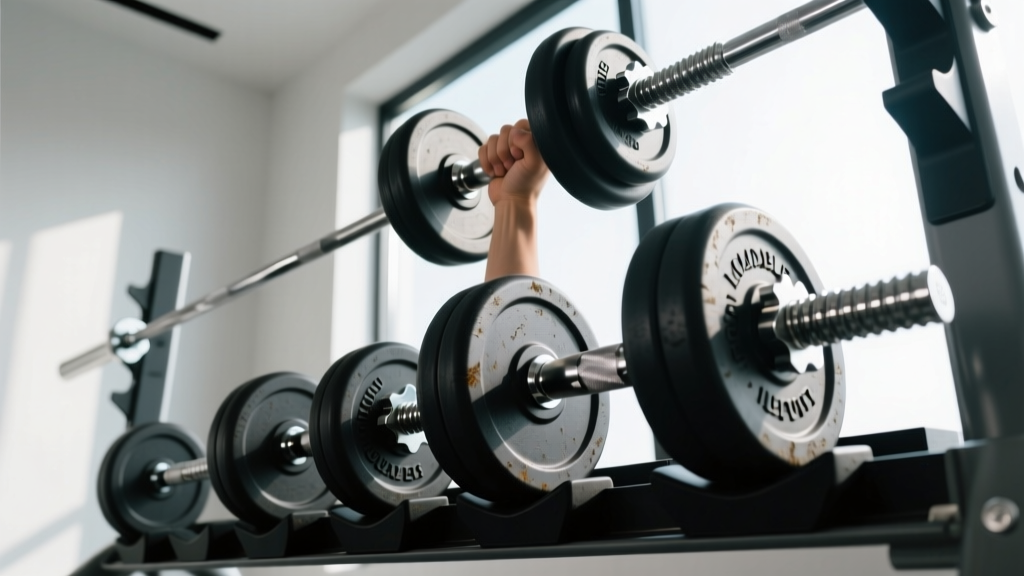
Static Dumbbell Holds: Maintaining Your Loadable Dumbbells
Discover how static dumbbell holds impact loadable dumbbells with interchangeable plates, and learn expert maintenance tips to prevent collar slippage and wear.

The Hidden Toll of Isometric Tension on Loadable Dumbbells
Loadable dumbbells with interchangeable plates—such as the Rogue Loadable Dumbbell Handles or the Titan Fitness Olympic Handles—are cornerstones of the modern garage gym. They offer unparalleled weight scalability and cost efficiency compared to fixed rubber or urethane dumbbells. However, most maintenance guides focus on the wear and tear caused by dynamic movements like snatches or heavy drops. Rarely do we discuss the unique, insidious stress placed on this equipment during static dumbbell holds.
Isometric exercises, such as heavy farmer's carries, goblet squat holds, or static bicep curls, subject your equipment to continuous, unyielding gravitational shear. When you perform a 60-second static hold with 80 lbs per hand, the locking collars, sleeve threads, and handle knurling endure sustained lateral torque without the release of dynamic momentum. According to equipment testing data from BarBend's comprehensive loadable dumbbell reviews, failure to account for this specific stress profile is the leading cause of premature collar slippage and thread degradation in interchangeable plate systems.
The Biomechanics of Equipment Stress During Static Holds
To understand why your maintenance routine needs to adapt, you must understand the physics of a static hold. During a dynamic repetition, the force vector changes continuously. During a static dumbbell hold, the force vector is fixed, and the equipment must resist gravity's constant downward pull on the loaded sleeves.
The Neuromuscular Tremor Effect
Here is a non-obvious mechanical reality: as your muscles fatigue during a prolonged static hold, your nervous system induces physiological tremors (typically between 8 to 12 Hz). These high-frequency micro-vibrations transfer directly from your grip, through the knurled steel shaft, and into the locking collars. Over weeks of heavy isometric training, these micro-vibrations can gradually back out standard threaded spinlock collars or loosen the set screws on pro-style dumbbells if the internal O-ring dampeners have degraded. This isn't just an equipment annoyance; a shifting 45lb plate during a heavy farmer's hold alters the center of mass, creating a severe rotational hazard for your rotator cuff and lumbar spine.
Locking Mechanism Vulnerabilities: A Comparative Matrix
Different loadable dumbbell designs react differently to the sustained tension of static dumbbell holds. Below is a breakdown of the most common interchangeable systems and their specific isometric failure modes.
| Mechanism Type | Common Models (2026) | Static Stress Failure Mode | Maintenance Frequency | Recommended Lubricant |
|---|---|---|---|---|
| Threaded Spinlock | Titan Fitness, CAP Barbell | Thread galling and micro-loosening due to tremor vibrations. | Weekly | PTFE Dry Lube |
| Lever / Quick-Lock | Ironmaster Quick-Lock V2 | Screw thread stripping if plates are not perfectly flush before tightening. | Bi-Weekly | White Lithium Grease |
| Pro-Style (Bolt-On) | Rogue, York Barbell | End-cap bolt fatigue and O-ring compression set under sustained shear. | Monthly | Anti-Seize Compound |
Step-by-Step Maintenance Protocol for Interchangeable Plates
If your programming heavily features static dumbbell holds, standard wipe-downs are insufficient. You must implement a targeted maintenance protocol to preserve the structural integrity of the sleeves and collars.
- De-Chalking and De-Greasing: Sweat and lifting chalk form an abrasive paste that settles into the sleeve threads. Once a month, spray the dumbbell sleeves with a non-corrosive degreaser like Simple Green Pro HD. Use a stiff nylon bristle brush to scrub the threads. Never use steel wire brushes on the threads, as they will strip the protective zinc or black oxide coating, leading to rapid oxidation.
- O-Ring Inspection: For spinlock and pro-style dumbbells, the rubber O-rings inside the collars act as shock absorbers against physiological tremors. Inspect these for flat spots or cracking. If an O-ring has lost its elasticity (compression set), replace it immediately. A $5 pack of replacement nitrile O-rings from a hardware store will save a $195 set of handles.
- Targeted PTFE Lubrication: Apply a lightweight PTFE (Teflon) dry lubricant to the sleeve threads and the interior bore of the collars. Avoid standard WD-40 or wet oils; they attract chalk dust and create a grinding compound that will destroy your threads during the tightening phase of your next heavy hold.
- Torque Verification (Pro-Style Only): If you use bolt-on pro-style dumbbells, the sustained shear of static holds can loosen the internal hex bolts. Use a calibrated torque wrench set to the manufacturer's specification (typically 45-50 ft-lbs for Rogue Loadable Handles) every 30 days to ensure the end-caps remain flush against the inner plate.
During heavy static dumbbell holds, never rely solely on the friction of cast-iron plates against the collar. If you are holding 100+ lbs per hand for time, always use a urethane bumper plate as the innermost plate against the handle shoulder. Urethane provides a higher coefficient of friction against the steel sleeve than bare cast iron, drastically reducing the risk of micro-slippage caused by isometric muscle tremors.
Knurling Care Under Sustained Grip Tension
The knurling on a loadable dumbbell handle takes a massive beating during static holds. Because your hands remain clamped in a single position for extended durations, sweat is forced deep into the knurl valleys under high pressure. This creates a highly localized, acidic environment that accelerates rust formation far faster than during dynamic reps where the grip is constantly shifting.
The Expert Fix: After any session featuring prolonged static holds, do not just wipe the handle with a dry towel. Spray the knurling lightly with a 50/50 mix of water and white vinegar to neutralize the alkaline salts in your sweat. Scrub vigorously with a brass wire brush (brass is softer than steel and will clean the rust without damaging the knurl peaks). Finish by wiping the handle down with a rag lightly dampened with mineral oil or 3-IN-ONE oil to displace any remaining moisture.
Troubleshooting: When Plates Rattle During Isometrics
A common complaint among athletes performing static dumbbell holds with loadable handles is an distracting "rattle" or vibration from the plates, even when the collar feels tight. This is usually caused by a mismatch in plate tolerances. According to Rogue Fitness equipment specifications, standard cast iron plates can have a center-hole tolerance variance of up to 1-2mm.
When you lock down a stack of plates for a heavy static hold, that 2mm gap allows the plates to oscillate microscopically against each other as your muscles tremor. The solution: Keep a set of 1mm and 2mm thick rubber shims or standard hardware store steel washers near your dumbbell station. If you detect rattle during a warm-up hold, loosen the collar, insert a shim between the outer plate and the collar, and re-tighten. This eliminates the air gap, deadens the vibration, and ensures the kinetic energy of your static hold is transferred entirely into your musculature, not wasted on shaking loose your equipment.
Final Thoughts on Equipment Longevity
Loadable dumbbells are an incredible investment for the home gym, but they demand a higher tier of mechanical sympathy than fixed-weight alternatives. By understanding the unique physical demands that static dumbbell holds place on your locking mechanisms, sleeves, and knurling, you can transition from reactive repairs to proactive preservation. Implement these targeted maintenance steps, and your interchangeable dumbbell system will easily survive a decade of grueling isometric abuse. For more foundational movement mechanics, refer to the ExRx.net exercise directory to ensure your static hold form isn't placing unnecessary asymmetrical torque on your gear.
More gear to consider
All reviews
2026 Storage Trends: Racks for 10 lbs Dumbbells & Light Sets
Olympic Barbell Buying Guide: Knurling & Dumbbell Pullover Exercise

Olympic vs Standard Plates Setup & Dumbbell Training Program PDF

Seated Dumbbell Shrugs Muscles Worked: Neoprene Home Gym Setup

Rubber Hex vs Urethane: Value & Single Arm Dumbbell Row GIF
