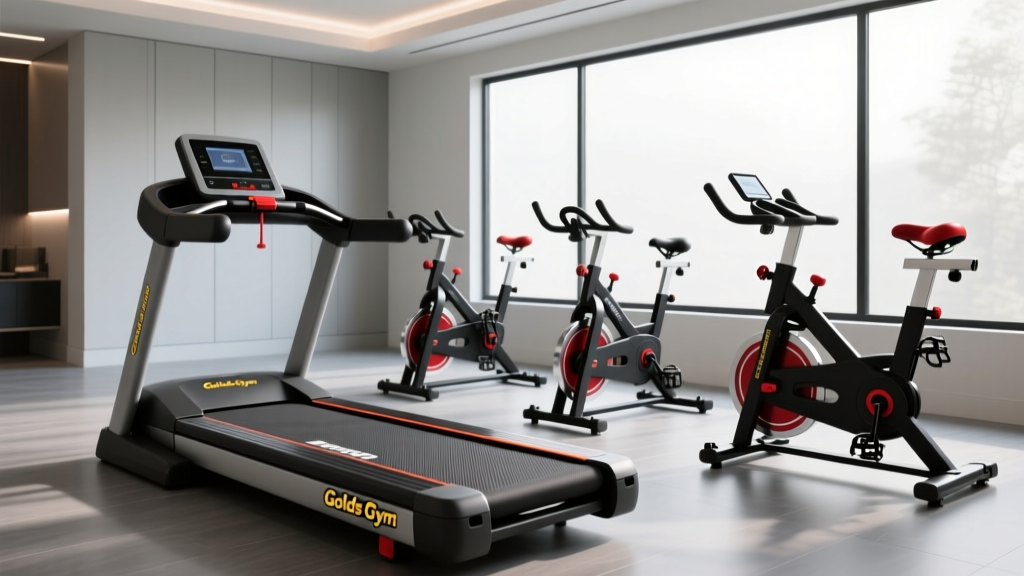
Maintaining Your Gold's Gym Treadmill 450 & Stationary Bike Types
Expert maintenance guide for the Gold's Gym Treadmill 450 and stationary bike types (upright, recumbent, spin). Maximize home gym equipment longevity.

Building a comprehensive home gym in 2026 often means mixing legacy workhorses with modern cardio staples. The Gold's Gym Treadmill 450 remains a popular budget-friendly or secondhand acquisition, while the triad of stationary bike types (upright, recumbent, and spin) offers diverse biomechanical benefits. However, mixing a belt-driven treadmill with various magnetic and friction-based cycles creates a complex maintenance matrix. Neglecting specific mechanical nuances leads to catastrophic failures, such as fried lower control boards or seized bottom brackets.
This guide provides deep-dive, actionable maintenance care and longevity tips tailored specifically to the Gold's Gym 450 and the three primary stationary bike types, ensuring your equipment survives the rigors of daily use.
The Gold's Gym Treadmill 450: Critical Longevity Protocols
The Gold's Gym 450 is typically equipped with a 1.5 Continuous Horsepower (CHP) motor. In the treadmill industry, a 1.5 CHP motor is considered entry-level, meaning it operates near its maximum thermal and electrical capacity during sustained running. This makes preventative maintenance not just a recommendation, but a strict requirement for survival.
1. Belt Tension and Amp-Draw Mitigation
The most common point of failure on the Gold's Gym 450 is the lower control board (LCB). When the running belt lacks proper lubrication or is over-tightened, friction against the medium-density fiberboard (MDF) deck increases. This forces the drive motor to work harder, causing the electrical amp-draw to spike from a normal 3–5 amps up to 12–15 amps. This spike instantly blows the MOSFETs (transistors) on the LCB.
⚠️ Warning: The WD-40 TrapNever use petroleum-based lubricants like standard WD-40 on your treadmill belt. Petroleum degrades the PVC and urethane layers of the belt, causing it to delaminate and melt onto the deck. Use only 100% pure silicone treadmill lubricant (typically costing $10–$15 per 4oz bottle).
- Lubrication Schedule: Apply 0.5 oz of pure silicone under the belt every 150 miles or every 3 months.
- Tension Test: You should be able to lift the center of the belt 2 to 3 inches off the deck. If it requires more force, loosen the rear roller adjustment bolts by a quarter-turn counter-clockwise.
2. Motor Compartment Dust Mitigation
The 450's motor hood is prone to trapping ambient dust and pet hair, which acts as an insulator around the motor windings and the LCB heat sink. According to equipment safety and facility standards outlined by the International Health, Racquet & Sportsclub Association (IHRSA), thermal buildup is a leading cause of premature cardio equipment death. Every 6 months, unplug the machine, remove the motor hood (usually 4 to 6 Phillips-head screws), and use a vacuum with a soft brush attachment, followed by compressed air to clear the LCB fins.
Stationary Bike Types: Upright, Recumbent, and Spin Maintenance
While treadmills suffer from high-impact friction, stationary bikes suffer from sweat corrosion, bearing degradation, and electronic sensor drift. Maintenance varies wildly depending on the specific bike architecture.
Spin Bikes (Indoor Cycles): Sweat and Drivetrain Defense
Spin bikes (e.g., Schwinn IC4, Peloton, NordicTrack S-series) are designed for high-intensity interval training (HIIT) and out-of-the-saddle climbing. This riding style generates massive amounts of sweat, which drips directly onto the flywheel, resistance mechanism, and bottom bracket.
- Galvanic Corrosion Prevention: Human sweat contains urea and chloride ions (salt). When this sits on steel flywheels or aluminum frames, it causes rapid galvanic corrosion. Wipe down the frame and flywheel housing after every session using a 50/50 mixture of distilled water and white vinegar, or a specialized enzyme-based fitness cleaner. Avoid bleach-based wipes, which accelerate metal oxidation.
- Bottom Bracket Bearing Inspection: Every 6 months, grab the crank arms and push/pull them laterally. Any 'play' or clicking indicates bottom bracket bearing wear. Replacing a standard square-taper bottom bracket cartridge costs roughly $20–$35 in parts, but ignoring it will destroy the frame's bottom bracket shell threads.
- Belt vs. Chain Drive: If your spin bike uses a Gates Carbon Drive belt, check tension using a smartphone frequency app (target: 45-60 Hz). If it uses a chain, apply dry PTFE bicycle chain lube monthly to prevent rust without attracting dust.
Upright Bikes: Magnetic Resistance and Ergonomic Wear
Upright bikes (e.g., ProForm, Nautilus U616) utilize magnetic resistance systems and a vertical seat post. The primary longevity threats here are electronic sensor drift and galvanic seizure of the adjustable components.
- Servomotor Calibration: Upright bikes use a small servomotor to move a magnet closer to or further from the flywheel. If your resistance feels stuck or uneven, the servomotor cable (often a thin ribbon cable) may be pinched or the potentiometer may be dusty. Use compressed air to clean the resistance mechanism housing.
- Seat Post Seizure: The steel seat post sliding into an aluminum or steel frame tube is a prime spot for galvanic corrosion, eventually freezing the adjustment mechanism. Annually, remove the seat post, wipe it down, and apply a thin layer of marine-grade lithium grease before reinserting.
Recumbent Bikes: Track Alignment and Pedal Assembly
Recumbent bikes (e.g., Schwinn 270, Nautilus R616) feature a step-through frame and a horizontal seat track. They are heavily favored for rehabilitation and low-impact cardio, as supported by biomechanical guidelines from the American Council on Exercise (ACE).
Expert Insight: The most frequent DIY repair mistake on recumbent bikes occurs during pedal replacement. Remember that the left pedal is reverse-threaded (turns clockwise to loosen, counter-clockwise to tighten). Forcing it with standard threading will strip the crank arm, requiring a $60+ replacement part.
Maintain the horizontal seat track by vacuuming dust and hair from the nylon rollers weekly. Dust buildup on the track causes the seat carriage to bind, putting excessive strain on the manual pop-pin or the electronic linear actuator used for seat adjustments.
Comparative Maintenance Matrix: Treadmill vs. Bike Types
Use this matrix to schedule your home gym maintenance routines efficiently. The American College of Sports Medicine (ACSM) emphasizes that structured equipment care reduces injury risks associated with sudden mechanical failures.
| Equipment Type | Primary Failure Mode | Critical Maintenance Task | Interval |
|---|---|---|---|
| Gold's Gym Treadmill 450 | LCB MOSFET Blowout (Amp Spike) | 100% Silicone Belt Lubrication | Every 3 Months |
| Spin Bike | Sweat-Induced Galvanic Corrosion | Enzyme Clean & Bottom Bracket Check | Post-Ride / 6 Months |
| Upright Bike | Seat Post Seizure & Sensor Drift | Lithium Grease on Post & Ribbon Check | Annually |
| Recumbent Bike | Carriage Binding & Crank Arm Strip | Track Vacuum & Reverse-Thread Awareness | Weekly / As Needed |
Environmental Controls for Home Gym Longevity
In 2026, modern cardio machines are packed with sensitive printed circuit boards (PCBs) and Bluetooth/Wi-Fi modules. The environment in which you keep your Gold's Gym 450 and stationary bikes dictates their electronic lifespan.
- Humidity Control: Maintain your gym space between 40% and 50% Relative Humidity (RH). Humidity above 60% accelerates PCB trace corrosion and causes MDF treadmill decks to swell and warp, increasing belt friction exponentially.
- Surge Protection: Never plug a treadmill or smart bike directly into a wall outlet. A standard $25 surge protector is insufficient for the inductive loads generated by a treadmill motor. Invest in a surge protector with a minimum energy rating of 2,000 Joules and EMI/RFI filtering to protect the console's logic boards from voltage sags.
- UV Degradation: Direct sunlight degrades the PVC on treadmill belts and makes plastic console shrouds brittle. Position equipment away from south-facing windows or use UV-blocking window films.
FAQ: Troubleshooting Common Cardio Machine Failures
Why does my Gold's Gym 450 treadmill stop abruptly after 10 minutes?
This is a classic thermal overload symptom. The motor's internal thermal breaker is tripping because it is overheating. This is almost always caused by a dry belt causing excessive amp-draw, or a clogged motor hood preventing airflow. Lubricate the belt and vacuum the motor compartment immediately to prevent permanent motor damage.
My spin bike's resistance won't go above level 15. Is the console broken?
Rarely is the console at fault. The issue is usually a stretched tension cable (on manual magnetic bikes) or a stripped servomotor gear (on electronic bikes). Check the physical linkage near the flywheel first. Replacing a tension cable costs under $10, whereas a new console can exceed $150.
How do I fix a squeaking recumbent bike pedal?
Do not use liquid oil, which will attract grit. Remove the pedal, clean the threads with a wire brush, apply a generous amount of waterproof bicycle bearing grease, and reinstall. Remember the left pedal is reverse-threaded. Torque to approximately 30 Nm to ensure it does not back out during heavy pushing phases.
More gear to consider
All reviews
Curved Manual vs Motorized Treadmills: ProForm 505 CST Compared

Air Bike vs Assault Bike Value & What Are Curved Treadmills Called
Escaping the Hedonistic Treadmill: Motor Size & HP Guide

Farmers Walk on Treadmill & Stationary Bike Types: 2026 Review

Treadmill Overheating? Rowing Machine Buying Guide & Technique
