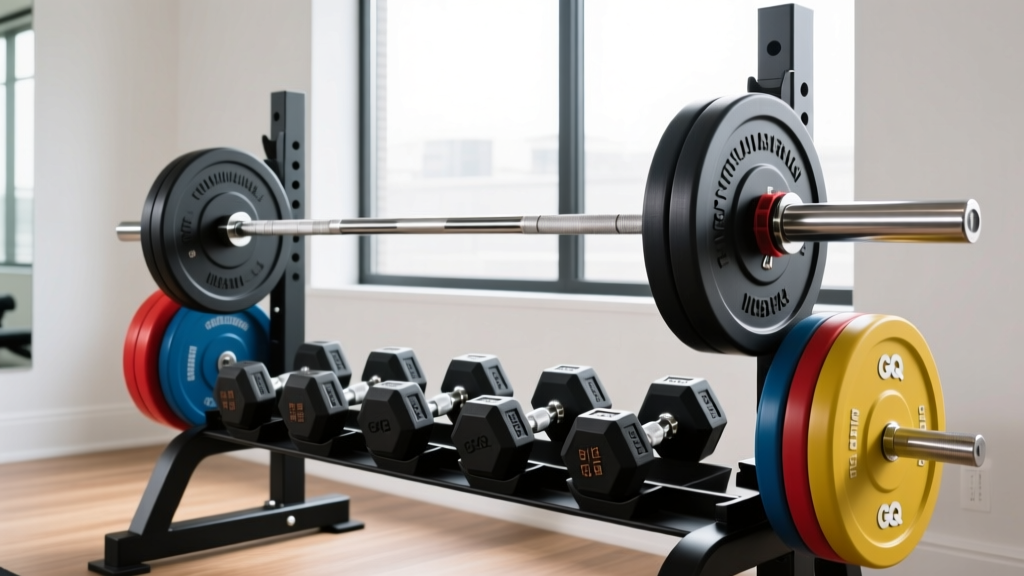
Rack Troubleshooting: Dumbbell Low Row & Power Rack vs Squat Stand
Troubleshoot your home gym setup. We compare power rack vs squat rack vs squat stand, focusing on clearance, stability, and the dumbbell low row.

The Home Gym Dilemma: Beyond the Squat
When outfitting a home gym, the debate between a power rack, a squat rack, and a squat stand usually revolves around heavy barbell squats and bench presses. However, as of 2026, the modern home gym ecosystem demands versatility. Lifters are increasingly incorporating unilateral accessory movements, and one of the most common points of failure in rack selection is how the equipment handles exercises like the dumbbell low row. Whether you are performing a freestanding bilateral low row targeting the lower latissimus dorsi, or a chest-supported variation inside the rig, the dimensions and stability of your rack dictate your biomechanical success.
This troubleshooting guide dissects the common mistakes lifters make when matching their rack type to their movement profile, offering concrete solutions for clearance, stability, and attachment compatibility.
The Core Differences: Dimensions, Stability, and Cost
Before troubleshooting specific movement failures, we must establish the baseline specifications of the three primary rig categories. The market has standardized around 11-gauge steel and 3x3-inch uprights for mid-tier racks, but the footprints vary drastically.
| Category | Representative Model (2026) | Interior Width | Depth (Front-to-Back) | Avg. Price Range | Best For |
|---|---|---|---|---|---|
| Power Rack | Rep Fitness PR-4000 | 47.0 inches | 41.0 - 47.0 inches | $699 - $899 | Full enclosures, heavy band work, supported rows |
| Squat Rack (Open Back) | Rogue S-2 Squat Stand | 49.0 inches | 47.5 inches | $695 - $750 | Barbell lifting with easier plate loading |
| Squat Stand (Dual Post) | Titan Fitness T-2 Series | 48.0 inches | 24.0 inches | $349 - $399 | Small spaces, basic squats, and presses |
According to Barbend's comprehensive power rack testing, the interior width and overall depth are the most frequent culprits for movement restriction, particularly when benches and dumbbells are introduced into the cage.
Mistake #1: Ignoring Interior Clearance for Unilateral Rows
The most frequent troubleshooting ticket we see regarding power racks involves the chest-supported dumbbell low row. Lifters will place an adjustable FID (Flat/Incline/Decline) bench inside a standard 41-inch deep power rack, set the backrest to 30 or 45 degrees, and attempt to row heavy dumbbells (e.g., 80-100 lbs) toward their hips.
⚠️ Troubleshooting Alert: Elbow ClippingIf you are taller than 6'0" and using a standard 41-inch deep power rack, your elbows will inevitably strike the rear uprights or the safety spotter arms during the concentric phase of a low row. This forces you to flare your elbows outward, shifting the tension from the lower lats to the rear delts and rhomboids, completely defeating the purpose of the exercise.
The Solution: Depth and Attachment Swaps
If you already own a shallow power rack, you have two troubleshooting options:
- Reverse the Bench Orientation: Straddle the bench facing the rear uprights. This utilizes the rack's depth in reverse, but limits your ability to use the safety straps for drop sets.
- Switch to a Landmine Setup: Abandon the bench-supported dumbbell low row inside the cage. Instead, use a landmine attachment on the exterior base of the rack to perform Meadows rows or landmine low rows, which require zero interior clearance.
Mistake #2: The "Dumbbell Low Row" Biomechanical Clash on Squat Stands
Many lifters purchase dual-post squat stands (like the Titan T-2) to save space and money, assuming they can perform all their dumbbell work in the open space between the uprights. This leads to a severe troubleshooting issue regarding the freestanding dumbbell low row.
A proper freestanding dumbbell low row requires a deep hip hinge (torso nearly parallel to the floor) to target the iliocostal lumborum and lower lats. As noted in ExRx's biomechanical breakdown of supported and unsupported rows, maintaining a neutral spine under load requires significant foot stagger and lateral balance.
The Failure Mode: Wobble and Weight Storage
When you finish a heavy set of freestanding low rows inside or immediately adjacent to a lightweight squat stand, re-racking the dumbbells or bumping the uprights can cause the entire rig to wobble. Squat stands lack the 4-point ground contact and crossmembers of a power rack. According to Garage Gym Labs' squat stand stability analysis, dual-post stands with a 24-inch depth are highly susceptible to tipping if lateral force is applied near the top of the uprights.
Troubleshooting Fix: If your training heavily features dumbbell rows and you are constrained to a squat stand, you must upgrade to a flat-foot model with rear weight storage pegs (such as the Rogue SML-2C). Loading 45lb bumper plates on the rear storage pegs lowers the center of mass and acts as a counterbalance, eliminating the wobble caused by dropping heavy dumbbells onto adjacent floor racks.
Mistake #3: Overlooking Upright Hole Spacing and Pin Heights
Hole spacing seems irrelevant to a dumbbell exercise, but it directly impacts your ability to troubleshoot and set up makeshift row stations.
- Standard Spacing (2-inch): Common on budget squat stands. Makes it difficult to set safety spotter arms at the exact height needed to rest a barbell for a low-row variation or to act as a dead-stop for dumbbell renegade rows.
- Westside Spacing (1-inch in the bench zone): Standard on modern power racks like the Rep PR-4000. Allows you to set safety pins precisely 1 inch below your chest, enabling you to perform low-row dead-stops or floor presses without joint strain.
The Mistake: Buying a rack with 2-inch spacing and attempting to use the safety arms as a physical stop for chest-supported dumbbell rows, only to find the arms sit either too high (restricting range of motion) or too low (providing no safety catch if a dumbbell slips).
Troubleshooting Matrix: Rack Wobble, Clearance, and Flow
Use this diagnostic matrix to identify and resolve the most common friction points when integrating dumbbell back work into your rack ecosystem.
| Symptom / Failure | Root Cause | Hardware Solution |
|---|---|---|
| Dumbbells clipping uprights during low rows | Interior width is under 47 inches; bench is off-center. | Upgrade to a 52-inch wide rack (e.g., Titan T-3 Short) or move row variations outside the cage. |
| Rack lifts off the floor during heavy re-racks | Upright height exceeds base depth ratio; no bolting. | Install rear weight storage horns and load with minimum 100 lbs of bumper plates. |
| Bench backrest hits crossmember | Low-profile rear crossmember interferes with 45-degree incline. | Remove rear crossmember (if rig stability allows) or switch to a freestanding row station. |
| Elbows strike safety straps on the eccentric | Straps are pulled too taut across the 47-inch interior. | Swap nylon straps for pin-pipe safeties to open up the lateral interior space. |
Expert Verdict: Matching the Rack to Your Movement Profile
The decision between a power rack, squat rack, and squat stand should not be made solely on your 1-rep max squat. It must be made on your accessory movement profile.
The 2026 Home Gym Rule of Thumb: If your programming includes heavy, supported unilateral dumbbell work (like the chest-supported dumbbell low row), the interior volume of a full power rack is non-negotiable. The 47-inch width and 41+ inch depth provide the necessary envelope for elbow clearance and bench placement. If your programming relies on freestanding low rows and space is at a premium, a heavy-duty, flat-foot squat stand with integrated weight storage is the superior, safer choice.
Stop treating your rack as merely a place to store a barbell. By troubleshooting your spatial requirements for the dumbbell low row and similar hinge movements, you will eliminate biomechanical compromises, protect your joints, and build a home gym that supports your training for the next decade.
More gear to consider
All reviews
Maintaining Tone Arms Dumbbells: Rubber Hex vs Urethane

Rubber Hex vs Urethane: Best for Rear Shoulder Dumbbell Exercises?
Budget Storage for Leg Workouts with Dumbbells: Female Guide

Standard vs Olympic Plates for a Dumbbell Hip Thrust Floor Setup
Power Rack vs Squat Stand: Oblique Exercises with Dumbbells Mistakes