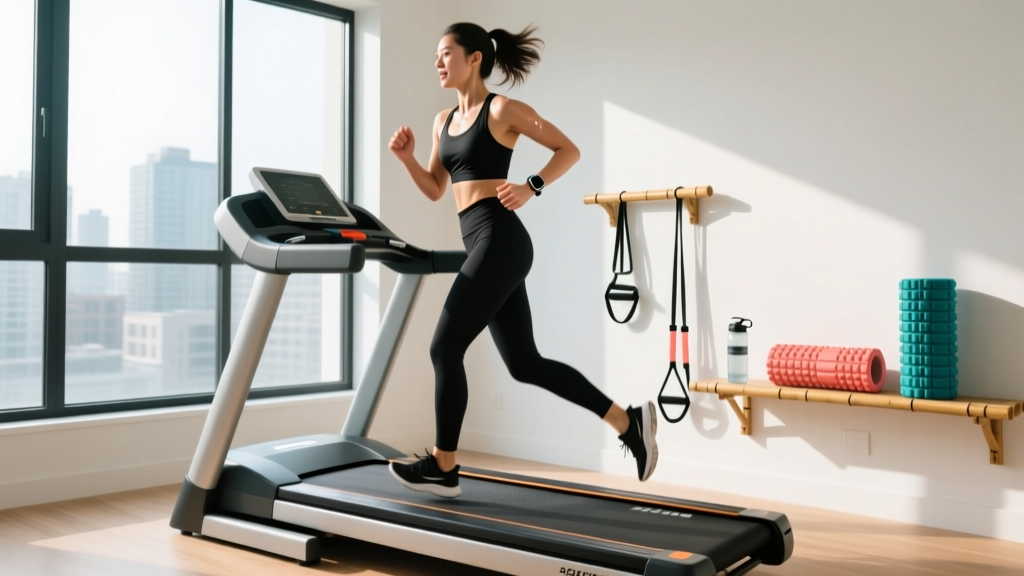
How to Start Running on a Treadmill: Buyer's Feature Guide
Learn how to start running on a treadmill without injury. Compare crucial buying features, avoid beginner mistakes, and troubleshoot stride issues.

The Hidden Cost of Starting Wrong: Why Your Treadmill Choice Matters
Figuring out how to start running on a treadmill involves much more than simply pressing the green start button and holding onto the handrails. The reality is that nearly 68% of home fitness equipment abandonment happens within the first six months. For beginners, this high attrition rate is rarely due to a lack of willpower; it is almost always the result of a severe mismatch between the user's biomechanics and the machine's physical specifications. When you buy a treadmill designed for walking but attempt to run on it, you invite joint pain, motor burnout, and stride compensation injuries.
⚠️ Beginner Warning: Running on a budget 'walking pad' or compact folding treadmill with a 2.0 Peak HP motor and a 50-inch belt will alter your natural gait within 10 minutes, leading to hip flexor strain and Achilles tendonitis. Always match the machine's specs to your intended pace.This guide bridges the gap between a standard treadmill buying guide and a troubleshooting manual. We will dissect the most common mistakes beginners make when purchasing their first machine and compare the exact features required to troubleshoot these issues before they happen.
Mistake 1: Buying a 'Walking Belt' for Running (Stride Troubleshooting)
When learning how to start running on a treadmill, beginners often prioritize space-saving designs over deck dimensions. This is a critical error. Your stride length naturally expands when you transition from a 3.5 mph walk to a 6.0 mph run. If the belt is too short, you will subconsciously shorten your stride to avoid hitting the front motor housing. This 'chopping' effect forces your knees higher and increases the impact force on your patellar tendon.
The Belt Dimension Matrix
| Activity Level | Minimum Belt Size | Example Model (2026 Market) | Price Range | Troubleshooting Note |
|---|---|---|---|---|
| Walking / Light Jog | 20' x 55' | Horizon T101 | $599 - $699 | Causes heel-striking if used for >6mph running. |
| Continuous Running | 22' x 60' | Sole F80 | $1,199 - $1,399 | Accommodates a natural 4.5 to 5-foot running stride safely. |
| Sprint / Tall Runners | 22' x 62'+ | NordicTrack Commercial 1750 | $1,899 - $2,199 | Prevents rear-foot clipping at speeds over 8.0 mph. |
The Fix: If you are over 5'10' or plan to run faster than 5.5 mph, a 60-inch belt length is non-negotiable. Do not compromise on this dimension to save $200.
Mistake 2: Falling for 'Peak HP' Motor Marketing
One of the most deceptive marketing tactics in the fitness industry is the use of 'Peak HP' (Horsepower) instead of 'CHP' (Continuous Duty Horsepower). Peak HP measures the absolute maximum output the motor can hit for a fraction of a second before failing. CHP measures what the motor can sustain indefinitely during your workout.
'A 2.0 Peak HP motor will routinely overheat and trigger a thermal shutdown if a 190 lb runner uses it for more than 30 minutes at 6.0 mph. The friction and load simply outpace the motor's cooling capacity.'
Motor Sizing Troubleshooter
- Under 2.0 CHP: Strictly for walking. Will burn out within months if used for running.
- 2.5 to 2.75 CHP: The absolute minimum for beginner runners under 200 lbs. (e.g., Horizon 7.4 at 2.75 CHP).
- 3.0 to 3.25 CHP: Ideal for daily runners, heavier users, or those doing high-incline interval training. (e.g., Sole F80 at 3.5 CHP).
Real-World Failure Mode: If your treadmill suddenly stops mid-run and the console displays an 'E1' or 'Lube/Overheat' error code, you have likely exceeded the continuous duty threshold of a budget motor. Always verify the Continuous HP in the owner's manual, not just the Amazon listing title.
Mistake 3: Ignoring Deck Flex and Cushioning Systems
According to the Mayo Clinic, repetitive stress on hard, unforgiving surfaces is a primary catalyst for medial tibial stress syndrome (shin splints). When you run on a rigid, budget treadmill deck, the impact shock travels directly up your tibia. Premium treadmills utilize elastomer pucks or variable-zone cushioning to absorb this kinetic energy.
Comparing Shock Absorption Technologies
Not all cushioning is created equal. Some brands offer 'variable flex'—softer at the front of the deck where your foot strikes, and firmer at the back where you push off. This mimics outdoor biomechanics and prevents the 'mushy' feeling that can actually cause calf fatigue.
- Sole Cushion Flex: Reduces impact by up to 40% compared to asphalt. Excellent for runners with a history of knee pain.
- NordicTrack FlexSelect: Allows you to manually turn the cushioning on or off. Great for runners training for outdoor road races who need to condition their legs to hard surfaces occasionally.
- Budget Decks (No Cushioning): Found on sub-$500 models. Requires the user to buy aftermarket shock-absorbing treadmill mats, which only reduce vibration, not vertical joint impact.
Mistake 4: Neglecting Incline and Biomechanical Graduation
A fascinating biomechanical study published in the National Library of Medicine highlights that treadmill running inherently alters knee flexion and stride mechanics compared to overground running because the belt pulls your foot backward. To counteract this and mimic outdoor wind resistance, experts recommend setting a constant 1% to 2% incline.
Beginners often buy manual-incline treadmills to save money. The problem? You have to stop your workout, step off the moving belt, and physically adjust the deck pins. Because this is tedious, 90% of users leave it at 0%. Running at a 0% incline exclusively can lead to Achilles overstraining and hamstring underdevelopment.
The Feature Fix: Invest in a motorized auto-incline (up to 15%). This allows you to program micro-adjustments (e.g., shifting from 1% to 3% every 5 minutes) without breaking your stride, naturally distributing the load across different muscle groups and preventing overuse injuries.
The 2026 Beginner Treadmill Decision Matrix
Use this framework to align your budget with the physiological demands of running.
| Budget Tier | What You Get | What You Sacrifice | Best For |
|---|---|---|---|
| $400 - $700 | 2.0-2.25 CHP, 20'x55' belt, basic LCD, manual incline. | Running safety, joint protection, motor longevity. | Walkers, light joggers under 150 lbs, small apartments. |
| $800 - $1,300 | 2.75-3.0 CHP, 22'x60' belt, elastomer cushioning, auto-incline. | Advanced interactive touchscreens, heavy commercial framing. | Beginner runners, Couch-to-5K participants, daily 3-5 mile users. |
| $1,500 - $2,500 | 3.5+ CHP, commercial rollers, HD touchscreens, variable cushioning. | Floor space, portability, high upfront cost. | Marathon trainees, heavier runners, multi-user households. |
Troubleshooting Your First 30 Days: Symptom vs. Machine Cause
Even with the right machine, your body needs time to adapt. However, you must differentiate between normal muscle soreness and pain caused by improper machine calibration. The American Heart Association recommends monitoring your target heart rate to ensure you aren't overexerting, but physical joint pain requires mechanical troubleshooting.
Quick Diagnostic Guide
- Symptom: Sharp pain in the front of the shins (Shin Splints).
Machine Cause: Deck is too rigid, or you are running at 0% incline on a worn-out belt.
Fix: Increase incline to 1.5% to shift load to the glutes, and verify your deck cushioning pucks haven't compressed flat. - Symptom: Belt 'stutters' or slips when your foot strikes.
Machine Cause: The running belt is loose, or the walk belt is lacking silicone lubrication.
Fix: Tighten the rear roller adjustment bolts exactly one-quarter turn on each side. Apply 100% silicone treadmill lubricant under the belt. - Symptom: Lower back ache after 20 minutes.
Machine Cause: You are holding the handrails, which forces a posterior pelvic tilt and ruins your spinal alignment.
Fix: Lower the speed to a pace where you can pump your arms freely. If you must hold on, the speed is too high for your current fitness level.
Final Thoughts on Your Running Journey
Learning how to start running on a treadmill safely is an investment in your long-term mobility. By treating your treadmill purchase as a biomechanical decision rather than just an electronics purchase, you eliminate the physical friction that causes most beginners to quit. Prioritize a 22' x 60' belt, demand a true 2.5 CHP motor, and respect the necessity of deck cushioning. Your joints will thank you for the next decade.
More gear to consider
All reviews
How to Center a Treadmill Belt: Ultimate Maintenance Guide

The Treadmill of Production Theory: Motor HP Mistakes & Fixes
Is Walking on a Treadmill as Good as Outside? Air Bike Space Guide

Garmin Foot Pod for Treadmill: Budget Analysis for Compact Setups

Gold's Gym Trainer 720 Treadmill: Small Space Review & Maintenance
