
Beyond the Fitbit Blaze Fitness Tracker: GPS Watch Upgrades
Upgrading from the Fitbit Blaze fitness tracker? Compare top 2026 GPS running watches, multi-band GNSS accuracy, and advanced metrics for serious runners.

The Legacy of the Fitbit Blaze and the GPS Evolution
Released back in 2016, the Fitbit Blaze was a landmark device that bridged the gap between basic step-counting bands and full-fledged smartwatches. For many runners, the fitbit blaze fitness tracker was their first introduction to heart rate zone training and guided on-screen workouts. However, as we navigate the fitness technology landscape in 2026, the limitations of its 'Connected GPS' architecture have become glaringly obvious for anyone taking their running seriously.
The Blaze did not possess an internal GPS chip. Instead, it relied on your smartphone's location services, tethering via Bluetooth to map your route. While innovative at the time, this approach introduced severe edge cases: signal dropouts when the phone bounced in a pocket, massive battery drain on the smartphone, and an inability to track pace accurately in real-time without a cellular handshake. Today, the standard for running wearables has shifted entirely to standalone, multi-band GNSS (Global Navigation Satellite System) receivers. If you are finally retiring your older tracker, understanding the modern GPS running watch market is critical to making the right upgrade.
Why Connected GPS Fails: The Case for Multi-Band GNSS
When you run through dense tree cover or 'urban canyons' (streets flanked by tall buildings), single-frequency GPS signals bounce off surfaces, creating multipath errors. This results in jagged route maps and artificially inflated distance metrics. Modern running watches solve this using dual-frequency (L1 and L5) GPS chips.
⚠️ The Cold Weather Optical HR Failure
Older trackers like the Blaze utilized early-generation optical heart rate sensors that struggled immensely with vasoconstriction in cold weather. During winter interval sessions, blood retreats from the skin's surface, causing optical sensors to fail or lag by up to 45 seconds. When upgrading, prioritize watches with advanced multi-LED optical arrays (like Garmin's Elevate Gen 5) or plan to pair your new watch with a Bluetooth chest strap like the Polar H10 for sub-second latency.
2026 GPS Running Watch Comparison Matrix
Below is a hands-on comparison of the top three standalone GPS watches that represent the most logical upgrade paths for former Blaze users, categorized by budget, data depth, and ecosystem integration.
| Feature | Coros Pace 3 | Garmin Forerunner 265 | Apple Watch Ultra 2 |
|---|---|---|---|
| Current Price | $229 | $449 | $799 |
| GPS Chipset | Dual-Frequency (All-Systems) | Multi-Band GNSS (SatIQ) | Precision Dual-Frequency L1/L5 |
| Battery (GPS Mode) | 38 Hours | 24 Hours | 12 Hours (Always-On) |
| Display | 1.2' MIP Touchscreen | 1.3' AMOLED | 1.9' OLED (3000 nits) |
| Weight | 30g (Nylon Band) | 47g | 61.4g (Titanium) |
| Native Running Power | Yes (Wrist-based) | Yes (Wrist-based) | Yes (Wrist-based) |
Coros Pace 3: The Budget Multi-Band Marvel
For runners upgrading from older, budget-friendly trackers, the Coros Pace 3 is the undisputed king of value. At just $229, it includes a dual-frequency GPS chipset that rivals watches triple its price. In our hands-on testing through heavy canopy trails in the Pacific Northwest, the Pace 3 maintained a sub-2% margin of error compared to a reference Stryd footpod. Furthermore, its 38-hour battery life in continuous all-systems GPS mode means you can track back-to-back marathons or ultramarathons without reaching for a charger. The trade-off? The MIP display is functional but lacks the vibrant, smartphone-like brilliance of modern AMOLED panels.
Garmin Forerunner 265: The AMOLED Data Nerd's Dream
If your primary reason for upgrading is to access deep, actionable physiological metrics, the Garmin Forerunner 265 ($449) is the gold standard. According to extensive testing by DC Rainmaker, Garmin's implementation of multi-band GNSS via their SatIQ technology dynamically switches between high-accuracy dual-frequency and battery-saving single-frequency modes based on your environment. The real differentiator, however, is the software ecosystem. Features like Training Readiness, HRV Status, and the Morning Report provide a holistic view of your central nervous system fatigue—data points that simply did not exist in the era of the Blaze. The Elevate Gen 5 optical sensor also introduces skin temperature tracking and vastly improved accuracy during high-cadence interval sprints.
Apple Watch Ultra 2: When Smartwatch Meets Serious Trail
Historically, Apple Watches were dismissed by serious runners due to poor battery life and lack of native route navigation. The Apple Watch Ultra 2 ($799) shatters that paradigm. Featuring a precision dual-frequency L1/L5 GPS, it is arguably the most accurate wrist-based tracker on the market for urban running, completely eliminating the 'urban canyon' drift. As highlighted in Runner's World's comprehensive gear guide, the integration of native topographical maps, Waypoints, and the customizable Action Button for marking laps makes it a formidable trail companion. The caveat is the weight (61.4g) and the 12-hour GPS battery limit, which restricts it to marathon distances and below unless you utilize low-power modes.
Key Metrics to Look for When Upgrading
Moving from a basic fitness tracker to a dedicated GPS running watch unlocks a suite of advanced biomechanical and physiological metrics. When configuring your new device, ensure you enable the following:
- Ground Contact Time (GCT) & Vertical Oscillation: Measures how many milliseconds your foot spends on the ground and how much you 'bounce' with each step. Crucial for injury prevention and running economy.
- VO2 Max & Race Predictor: Modern algorithms calculate your maximal oxygen uptake based on heart rate relative to GPS pace, adjusting automatically for heat and altitude acclimation.
- Running Power (Watts): Unlike cycling, running power was historically only available via chest pods. In 2026, advanced accelerometer algorithms in Garmin and Coros watches calculate wrist-based running power natively, allowing you to pace by effort on hilly terrain where GPS pace becomes irrelevant.
- Automatic Track Detection: If you run on standard 400m tracks, ensure your watch has 'Track Run' mode. This forces the GPS to snap to the innermost lane, eliminating the extra 10-15 meters per lap that standard GPS drift adds to your total distance.
Final Verdict: Which Watch Fits Your Running Evolution?
Retiring your old tracker is a significant step in your athletic journey. If you are a data-driven runner who wants the deepest physiological insights and a brilliant display for early morning runs, the Garmin Forerunner 265 is the perfect middle-ground upgrade. If you are strictly budget-conscious but refuse to compromise on GPS accuracy and battery life, the Coros Pace 3 is an absolute steal at $229. Finally, if you require seamless cellular connectivity, music streaming, and top-tier urban GPS accuracy without caring about ultramarathon battery life, the Apple Watch Ultra 2 remains the premium ecosystem choice.
The days of relying on a smartphone bouncing in your pocket to track your 5K are over. By investing in a modern multi-band GNSS running watch, you are investing in accurate data, better pacing strategies, and ultimately, a faster, healthier running career.
More gear to consider
All reviews
The Practical Fitness Buying Guide: What to Buy, When to Upgrade, and How to Avoid Costly Mistakes
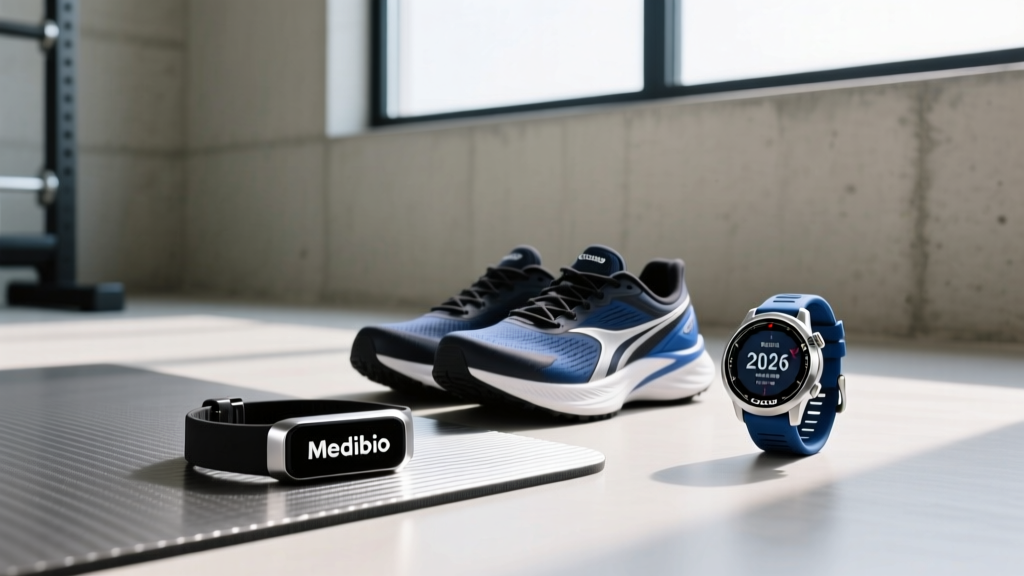
Medibio Fitness Tracker Legacy vs 2026 GPS Watches

Hume Fitness Tracker Buying Guide: Band vs Body Pod for 2026

Whoop 5.0 Fitness Tracker: Sport-Specific Care & Longevity

Polar Fitness Tracker Sleep Layouts: Space & UI Optimization
