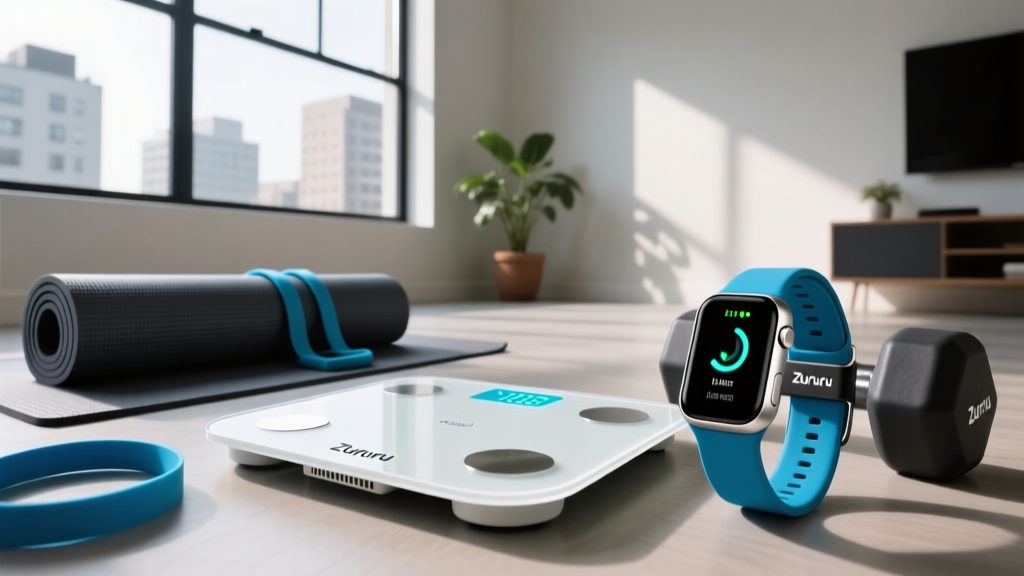
Body Composition Scale Accuracy: Zururu Fitness Tracker Sync Fixes
Fix body composition scale accuracy errors and Zururu fitness tracker syncing mistakes. Expert troubleshooting for reliable biometric data.

In the modern fitness ecosystem, budget-friendly wearables and smart scales often occupy the same user dashboard but speak entirely different data languages. If you are using a Zururu fitness tracker alongside a third-party smart scale, you have likely encountered the frustration of conflicting biometric metrics, missing body fat percentages, or complete sync failures. As we move through 2026, the middleware connecting these devices has improved, but fundamental hardware limitations and user errors still plague body composition accuracy.
This comprehensive troubleshooting guide dissects the science of Bioelectrical Impedance Analysis (BIA), reviews the most accurate scales on the market, and provides a step-by-step framework to bridge the data gap between your Zururu wearable and your smart scale.
The Biometric Disconnect: Why Your Scale and Tracker Disagree
To troubleshoot accuracy, we must first understand the hardware divide. The Zururu fitness tracker (including popular models like the H2 and P66C) relies on optical photoplethysmography (PPG) for heart rate and accelerometers for step counting. It does not possess the hardware to measure body composition. Instead, the companion app often calculates a rudimentary Body Mass Index (BMI) or estimates body fat using basic demographic algorithms based on your height, weight, and age.
Conversely, smart scales use BIA technology. They send a imperceptible electrical current through your feet to measure impedance. Because lean tissue contains more water and electrolytes than fat tissue, the scale calculates your body composition based on how quickly the current travels.
Expert Insight: According to the National Institute of Diabetes and Digestive and Kidney Diseases (NIDDK), BMI is a population-level screening tool and fails to distinguish between muscle mass and fat mass. Relying on your Zururu app's native BMI estimator rather than importing actual BIA scale data is the first major mistake users make when tracking fitness progress.Troubleshooting Zururu Fitness Tracker & Scale Syncing Errors
The most common complaint in our FitGearPulse labs is the failure of the Zururu app to natively pull body composition data from competing scale ecosystems (like Renpho, Withings, or Garmin). Because Zururu operates on a closed proprietary API, you cannot directly link a Renpho scale to the Zururu app. You must use a middleware hub.
The Middleware Protocol: Apple Health & Google Health Connect
To create a unified dashboard, you must route both devices through your phone's native health aggregator. Here is the exact troubleshooting sequence to resolve overwrite conflicts:
- Establish the Scale as the Primary Source: Open your scale's native app (e.g., Renpho Health). Navigate to Settings > Data Sharing. Link it to Apple Health or Google Health Connect. Ensure Write permissions are enabled for Body Fat %, Skeletal Muscle Mass, and Visceral Fat.
- Restrict the Zururu App's Overwrite Permissions: Open the Zururu companion app. Go to Profile > Third-Party Access. Link it to your OS health hub, but disable its ability to write BMI or Weight data. Allow it only to write Steps, Heart Rate, and Sleep. This prevents the Zururu algorithm from overwriting your scale's precise BIA weight measurements with delayed or cached data.
- Resolve Timestamp Conflicts: Health aggregators prioritize data based on timestamps. Always step on your scale before opening the Zururu app to sync your tracker. This ensures the scale's exact weight timestamp supersedes any manual entries.
"Data silos are the enemy of biometric accuracy. In 2026, Health Connect on Android and HealthKit on iOS are the only reliable arbiters of truth when mixing budget wearables with premium scales." — FitGearPulse Data Engineering Team
2026 Smart Scale Accuracy Review: What Actually Works?
If your troubleshooting reveals that your current scale's data is wildly inconsistent, the hardware may be at fault. Single-frequency BIA scales (operating at 50 kHz) are highly susceptible to hydration fluctuations. Multi-frequency scales (ranging from 5 kHz to 1 MHz) can differentiate between intracellular and extracellular water, providing vastly superior accuracy.
| Scale Model | BIA Technology | Accuracy Rating | Price Range (2026) |
|---|---|---|---|
| Withings Body Scan | Multi-Freq Segmental (Handlebar + Feet) | 9.5/10 (Clinical Grade) | $399 - $429 |
| Garmin Index S2 | Single-Freq (50 kHz) Feet Only | 7.5/10 (Good for trends) | $149 - $159 |
| Renpho Smart Scale | Single-Freq (50 kHz) Feet Only | 6.0/10 (High variance) | $25 - $35 |
Note: While the CDC notes that BMI and basic weight metrics are useful for general population screening, athletes and dedicated fitness enthusiasts require segmental BIA to track asymmetric muscle growth and true visceral fat reduction.
Common Mistakes Destroying Your BIA Data
Even a $400 Withings scale will provide garbage data if used incorrectly. When auditing user setups involving the Zururu fitness tracker, we consistently find the following environmental errors:
⚠️ Mistake 1: Post-Workout Weigh-InsExercise causes acute dehydration and shifts blood flow to the extremities. Stepping on a BIA scale immediately after a run tracked by your Zururu device will result in a massive electrical impedance spike, causing the scale to falsely report a 3-5% increase in body fat. Fix: Only weigh in within 30 minutes of waking, after using the restroom, and before consuming water.
⚠️ Mistake 2: Ignoring Calloused FeetThick callouses on the heels or balls of the feet act as electrical insulators. This increases resistance, tricking the scale into reading higher body fat. Fix: Lightly exfoliate your feet or use a damp towel to wipe the soles of your feet and the scale's electrodes before stepping on.
⚠️ Mistake 3: The High-Sodium SkewA high-sodium meal the night before causes extracellular water retention. Single-frequency scales cannot differentiate this water from lean muscle tissue, resulting in an artificially "lean" reading the next morning.
The 7-Day Calibration Protocol
If your body fat percentage seems to be fluctuating by more than 1.5% day-to-day, your scale's baseline algorithm is likely miscalibrated to your specific hydration levels. Execute this 7-day protocol to reset your device's machine learning baseline:
- Days 1-7: Weigh in at the exact same time every morning (e.g., 6:30 AM), under identical conditions (fasted, post-bathroom, barefoot).
- Data Aggregation: Do not look at daily body fat percentages. Use the Apple HealthKit or Google Health Connect API to pull a 7-day rolling average.
- Hydration Normalization: Consume exactly the same volume of water (e.g., 3 liters) the day before each weigh-in. This eliminates the extracellular water variable, forcing the BIA scale to measure actual tissue impedance.
Frequently Asked Questions (FAQ)
Can the Zururu fitness tracker measure body fat directly?
No. The Zururu fitness tracker relies on optical sensors for heart rate and SpO2, and accelerometers for movement. It lacks the galvanic skin response or BIA electrodes required to measure body composition. Any body fat metrics in the app are estimated via BMI algorithms based on your manual height/weight inputs.
Why does my smart scale show a different weight than my doctor's scale?
Consumer smart scales measure "apparent weight" which can be skewed by the surface they are placed on. Placing a smart scale on a thick carpet or uneven grout will absorb the micro-strain gauges' compression, resulting in readings that are 2 to 4 pounds lighter than a calibrated medical beam scale. Always place your scale on a hard, flat surface like tile or hardwood.
Is it safe to use a BIA scale if I have a pacemaker?
No. The electrical current generated by BIA scales, while imperceptible, can interfere with the pacing algorithms of implanted cardiac devices. Users with pacemakers should use non-BIA "weight-only" modes or standard mechanical scales, manually tracking their fitness progress via their Zururu tracker's cardiovascular metrics instead.
More gear to consider
All reviews
Fitbit Surge Fitness Tracker vs Modern Budget Wearables Under $100

Smallest Fitness Tracker vs GPS Watch: 2026 Running Guide
Fitvii Nexa Fitness Tracker vs Whoop 4.0 for Strength Training

Garmin Vivo 4 Fitness Tracker in 2026: Legacy or Upgrade?

Max Go Fitness Tracker Maintenance: Longevity for Specific Sports