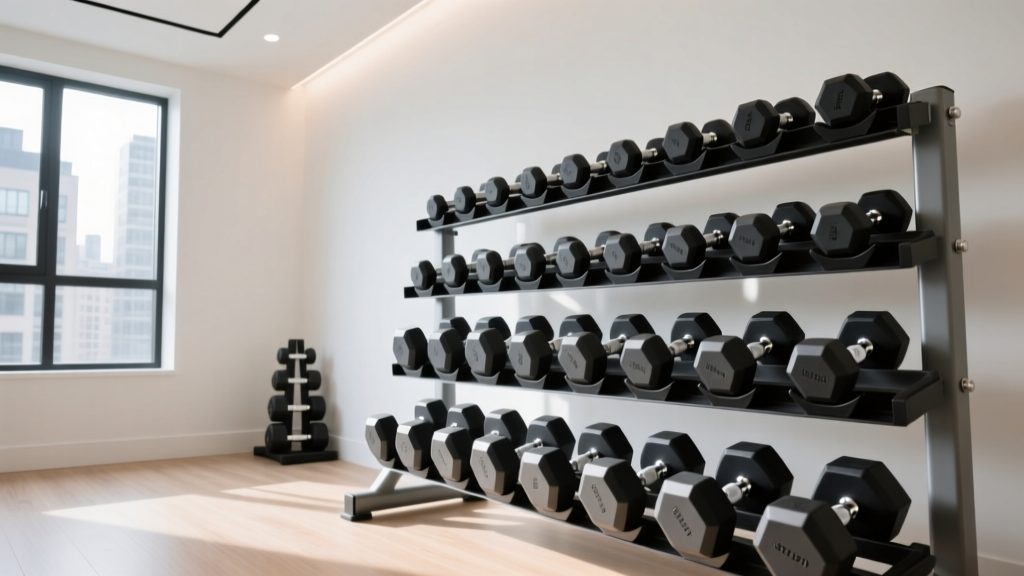
Bumper vs Iron Plates: Layouts & Great Arm Exercises with Dumbbells
Compare bumper vs iron plates for home gym space optimization, storage layouts, and designing a zone for great arm exercises with dumbbells.

The Spatial Dilemma: Bumper Plates vs. Iron Plates in Home Gyms
When designing a home gym in 2026, square footage is your most expensive asset. Whether you are converting a single-car garage or carving out a corner in a basement, the equipment footprint dictates your layout. The most foundational decision you will make—often before buying a rack or barbell—is choosing between bumper plates and traditional cast iron plates. This choice cascades through your entire spatial strategy, influencing everything from wall-mounted storage solutions to the necessity of dedicated drop zones.
While Olympic lifting necessitates bumpers, many hybrid athletes are re-evaluating their plate choices to reclaim valuable floor space. By understanding the dimensional differences between these two plate types, you can optimize your gym's layout, freeing up enough square footage to build a dedicated isolation zone for great arm exercises with dumbbells without compromising your heavy compound lifts.
Dimensional Analysis: How Plate Thickness Dictates Storage
The primary spatial differentiator between bumper and iron plates is thickness, which directly impacts barbell sleeve capacity and storage tree footprints. Let's look at the exact specifications of two industry standards: the Rogue Echo Bumper Plates and the Rogue Machined Iron Plates.
| Feature | 45lb Bumper Plate (Echo) | 45lb Iron Plate (Machined) | Spatial Impact |
|---|---|---|---|
| Thickness | 3.25 inches | 1.3 inches | Iron plates are 60% thinner, drastically reducing storage depth. |
| Diameter | 17.7 inches (450mm) | 14.5 inches | Iron plates allow for tighter wall-clearance on mounted racks. |
| Max on 16.5" Sleeve | ~4 plates (180 lbs) | ~10 plates (450 lbs) | Iron allows heavy loading without needing multiple barbells. |
| Approx. Cost (2026) | $2.25 / lb | $1.50 / lb | Iron saves capital that can be redirected to space-saving racks. |
Rack and Wall-Mounted Storage Solutions
If you opt for bumper plates, a standard 3-peg wall-mounted storage tree will quickly become inadequate. A pair of 45lb, 35lb, and 25lb bumpers will max out a standard wall tree, forcing you to invest in a freestanding A-frame plate tree. An A-frame requires a minimum 3x3 foot footprint and creates dead space around it for safe loading and unloading, effectively consuming 9 to 12 square feet of usable floor space.
Conversely, a full set of iron plates (up to 300 lbs) can easily be stored on a compact, heavy-duty wall-mounted peg system attached directly to the uprights of your squat rack or flush against a stud-reinforced wall. This vertical integration keeps the floor entirely clear, a critical optimization for smaller rooms.
Layout Pro-Tip: If your ceiling height is under 84 inches, avoid storing bumper plates on high rack pegs. The 17.7-inch diameter of a bumper plate can interfere with standard J-cup placement and pull-up bar clearances on shorter racks. Iron plates, with their smaller 14.5-inch profile, offer superior clearance in low-ceiling basement gyms.Floor Layouts: Drop Zones and Traffic Flow
Bumper plates are engineered to be dropped. This biomechanical reality demands a dedicated lifting platform—typically a 4x8 foot (32 square feet) or 4x6 foot (24 square feet) horse-stall mat and plywood sandwich. In a 200-square-foot garage gym, a 32-square-foot platform consumes 16% of your total real estate. Furthermore, the American Council on Exercise (ACE) recommends a minimum of 36 inches of clearance on all sides of a lifting platform to ensure safe traffic flow and spotter access, effectively cordoning off a massive section of the room.
Iron plates, however, demand control. Because dropping cast iron will shatter the plates, damage your barbell sleeves, and crack concrete subfloors, iron plate users naturally adopt a "controlled eccentric" training style. This eliminates the need for a massive, dedicated drop-zone platform. You can perform heavy deadlifts and squats directly on 3/4-inch interlocking rubber floor tiles, allowing your lifting zone to seamlessly blend into the rest of the room when the barbell is racked.
Reclaiming Space: The Compact Dumbbell Zone
By choosing iron plates and utilizing wall-mounted storage, you can easily reclaim 40 to 50 square feet of floor space compared to a bumper-and-platform setup. This reclaimed real estate is the perfect footprint for a dedicated dumbbell station. Having a designated zone with an adjustable bench and a compact rack of hex dumbbells is essential for executing great arm exercises with dumbbells without constantly clipping your elbows against the uprights of a power rack.
When laying out this dumbbell zone, position an adjustable FID (Flat/Incline/Decline) bench at a 45-degree angle to the wall. This orientation allows for bilateral arm movements without requiring the 6-foot lateral clearance needed when the bench is placed parallel to a wall.
4 Great Arm Exercises with Dumbbells for Tight Spaces
Once your space-optimized dumbbell zone is established, you can perform highly effective isolation work that requires a minimal spatial footprint. Here are four spatially efficient arm movements:
- Cross-Body Hammer Curls: Unlike traditional lateral dumbbell curls that require wide elbow flaring, cross-body hammers keep the dumbbells tucked close to your torso's centerline. You can perform these standing in a space no wider than your own shoulders, making them perfect for tight corners.
- Seated Concentration Curls: By sitting on your adjustable bench and bracing your tricep against your inner thigh, you completely eliminate momentum and the need for a wide stance. This exercise requires zero lateral clearance and isolates the bicep peak with surgical precision.
- Overhead Dumbbell Triceps Extension (Seated): Standing overhead extensions require significant vertical clearance and often result in the dumbbell striking low ceilings or overhead rack crossmembers. Performing these seated on a bench with a high backrest safely contains the movement within a 3-foot vertical cylinder.
- Incline Dumbbell Skull Crushers: Set your bench to a 45-degree incline. Holding the dumbbells with a neutral grip, lower them toward your ears. The incline bench naturally restricts the range of motion and prevents the dumbbells from drifting backward into your wall or equipment rack, keeping the exercise safely contained within the bench's immediate footprint.
"Efficient gym design isn't just about what fits in the room; it's about how the equipment dictates human movement. Choosing thinner iron plates allows for high-density wall storage, transforming the floor from a cluttered storage yard into a functional training arena."
Final Verdict: Balancing Your Gym's Footprint
The decision between bumper and iron plates is ultimately a decision about how you want to interact with your space. If your training revolves around Olympic weightlifting, CrossFit, or high-volume barbell cycling, the spatial tax of bumper plates and a 4x8 platform is a mandatory investment. However, for powerlifters, bodybuilders, and general fitness enthusiasts focused on controlled eccentrics and hypertrophy, iron plates offer a massive spatial advantage.
By leveraging the thin profile of machined iron plates, utilizing vertical rack storage, and skipping the sprawling drop-zone platform, you can engineer a highly efficient 2026 home gym layout. Most importantly, this spatial optimization grants you the luxury of a dedicated, uncluttered dumbbell zone—ensuring you always have the room necessary to perform great arm exercises with dumbbells safely and effectively.
More gear to consider
All reviews
Home Gym Layouts: Kettlebell Guide & Leg Extension with Dumbbells
Olympic Barbell Knurling: Weight, Grip & Incline Dumbbell Curl Angle

Bumper vs Iron Plates: Budgeting for Lean Away Dumbbell Lateral Raise

Perfecting the Dead Bug with Dumbbells: Top Neoprene Picks 2026
Barbell Collar Types Compared: Slippage & 12.5 lb Dumbbell Hacks